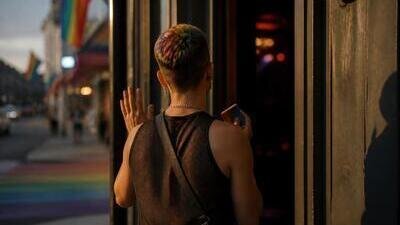
Stop Surveillance in LGBTQ+ Spaces
The Issue
Protect the Castro without sacrificing our civil liberties.
For generations, the Castro has been more than a neighborhood—it has been a refuge. It is a place where LGBTQ+ people and our allies gather, celebrate, build community, and, for many, feel safe being themselves.
Several Castro bars now require patrons to surrender a government-issued ID to be scanned before they can enter. These networked surveillance systems scan and collect information from those IDs—including names, addresses, dates of birth, driver's license numbers, gender markers, physical descriptors, and other identifying information—capture patron images, and allow participating venues to share incident reports and patron flags across a connected network. A decision made at one venue can potentially follow a patron to every other venue using the same system.
Supporters argue the technology improves safety. We agree that everyone deserves to feel safe in our bars and public spaces. But creating databases of people who enter LGBTQ+ venues raises profound privacy and civil liberties concerns. We do not have to give up one for the other.
Many members of our community—including people who are not publicly out, transgender people, immigrants, and those fleeing abusive relationships—have legitimate reasons to worry about how their personal information could be collected, retained, shared, or misused. Even when used with good intentions, systems like these can be vulnerable to human error, retaliation, mission creep, or data breaches.
PatronScan, the company behind the system being used in the Castro, says it does not use facial recognition or collect biometric data in North America. However, the company previously resolved litigation in Illinois involving allegations that it collected scans of facial geometry without the notice and consent required under Illinois law. A settlement does not establish guilt, but it raises serious questions around trust.
Whether these systems currently rely on facial recognition, biometric verification, or another form of identity verification is ultimately beside the point. The Castro should never become a place where entering a bar requires surrendering sensitive personal information to a private company.
Our Demands
We call on Castro businesses to:
- Immediately stop using PatronScan and similar surveillance technologies.
- Work with the community to develop safety measures that do not rely on collecting and sharing patrons' personal information.
We call on San Francisco elected officials to:
- Investigate the use of networked ID-scanning technologies in nightlife venues.
- Consider legislation restricting or prohibiting the use of systems that collect and share patrons' identifying information across venues.
- Establish strong transparency, consent, data retention, and accountability standards for any venue that collects personal information from patrons.
Finally, we call on City leaders to address the legitimate safety concerns of the Castro community by investing in solutions that protect people without compromising their civil liberties. That includes restoring dedicated foot and beat patrols in the neighborhood and supporting the return of community-based safety programs like Castro on Patrol.
Our Message
The Castro became a symbol of freedom because generations before us fought for the right to live openly, gather without fear, and exist without government or private surveillance.
We refuse to accept the false choice between safety and freedom.
The Castro deserves both.
Sign this petition if you believe LGBTQ+ spaces should remain places of community—not surveillance.

392
The Issue
Protect the Castro without sacrificing our civil liberties.
For generations, the Castro has been more than a neighborhood—it has been a refuge. It is a place where LGBTQ+ people and our allies gather, celebrate, build community, and, for many, feel safe being themselves.
Several Castro bars now require patrons to surrender a government-issued ID to be scanned before they can enter. These networked surveillance systems scan and collect information from those IDs—including names, addresses, dates of birth, driver's license numbers, gender markers, physical descriptors, and other identifying information—capture patron images, and allow participating venues to share incident reports and patron flags across a connected network. A decision made at one venue can potentially follow a patron to every other venue using the same system.
Supporters argue the technology improves safety. We agree that everyone deserves to feel safe in our bars and public spaces. But creating databases of people who enter LGBTQ+ venues raises profound privacy and civil liberties concerns. We do not have to give up one for the other.
Many members of our community—including people who are not publicly out, transgender people, immigrants, and those fleeing abusive relationships—have legitimate reasons to worry about how their personal information could be collected, retained, shared, or misused. Even when used with good intentions, systems like these can be vulnerable to human error, retaliation, mission creep, or data breaches.
PatronScan, the company behind the system being used in the Castro, says it does not use facial recognition or collect biometric data in North America. However, the company previously resolved litigation in Illinois involving allegations that it collected scans of facial geometry without the notice and consent required under Illinois law. A settlement does not establish guilt, but it raises serious questions around trust.
Whether these systems currently rely on facial recognition, biometric verification, or another form of identity verification is ultimately beside the point. The Castro should never become a place where entering a bar requires surrendering sensitive personal information to a private company.
Our Demands
We call on Castro businesses to:
- Immediately stop using PatronScan and similar surveillance technologies.
- Work with the community to develop safety measures that do not rely on collecting and sharing patrons' personal information.
We call on San Francisco elected officials to:
- Investigate the use of networked ID-scanning technologies in nightlife venues.
- Consider legislation restricting or prohibiting the use of systems that collect and share patrons' identifying information across venues.
- Establish strong transparency, consent, data retention, and accountability standards for any venue that collects personal information from patrons.
Finally, we call on City leaders to address the legitimate safety concerns of the Castro community by investing in solutions that protect people without compromising their civil liberties. That includes restoring dedicated foot and beat patrols in the neighborhood and supporting the return of community-based safety programs like Castro on Patrol.
Our Message
The Castro became a symbol of freedom because generations before us fought for the right to live openly, gather without fear, and exist without government or private surveillance.
We refuse to accept the false choice between safety and freedom.
The Castro deserves both.
Sign this petition if you believe LGBTQ+ spaces should remain places of community—not surveillance.
The Decision Makers


Supporter Voices
Petition Updates
Share this petition
Petition created on June 26, 2026