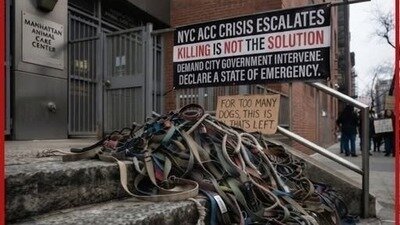
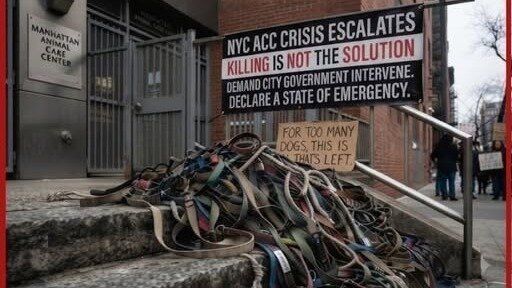
Stop killing innocent, healthy young, adoptable dogs!
The Issue
Dear Risa Weinstock:
I am writing to express my profound concern and outrage regarding the euthanasia practices, medical care, behavioral assessments, shelter-capacity decisions, and overall leadership of Animal Care Centers of NYC.
Young, healthy, and potentially adoptable dogs appear to be euthanized at an alarming rate, often without being given a meaningful amount of time to be seen by the public, fostered, rescued, or adopted.
These animals enter ACC completely dependent upon the organization entrusted with protecting them. They should not be treated as disposable inventory that can simply be cleared out when additional kennel space is needed.
Animals Entering Healthy and Becoming Ill
One of the most disturbing issues is the apparent deterioration of some animals after they enter ACC.
There are animals whose intake examinations reportedly describe them as healthy or substantially healthy, yet shortly thereafter they become sick, lose weight, develop diarrhea, respiratory illness, viral infections, or other medical problems, and are subsequently placed at risk of euthanasia.
That raises a simple but extremely serious question:
What is happening to these animals between intake and euthanasia?
Many illnesses commonly encountered in shelter environments are treatable. Diarrhea, respiratory infections, gastrointestinal illness, and many infectious conditions should not automatically become death sentences.
If an animal enters ACC healthy and becomes sick while confined within an ACC facility, the public has every right to know:
what condition the animal was in upon admission;
when symptoms first appeared;
what veterinary treatment was provided;
when that treatment was provided;
whether appropriate nutrition, hydration, medication, isolation, and supportive care were provided;
and why euthanasia was ultimately considered medically necessary.
Shelter-acquired, or nosocomial, illness should prompt aggressive prevention and treatment—not become a convenient justification for euthanasia.
The Animal Welfare Institute's Definition of Animal Cruelty
The Animal Welfare Institute defines animal cruelty as conduct involving harm, injury, or killing of an animal and specifically recognizes that cruelty can also take the form of neglect, including failure to provide adequate food, water, shelter, or medical treatment.
That definition is highly relevant to the concerns being raised here.
If animals are entering ACC healthy and subsequently becoming malnourished, seriously ill, or medically compromised while in ACC custody; if treatable illnesses are not being adequately treated; or if animals are being euthanized after deteriorating from conditions that could reasonably have been prevented or treated, those circumstances warrant serious scrutiny.
They raise legitimate questions about whether the care being provided meets the basic standards expected of an organization whose very purpose is to protect companion animals.
ACC cannot ask the public to regard it as an animal-welfare organization while simultaneously dismissing concerns regarding inadequate nutrition, insufficient medical treatment, disease prevention, sanitation, shelter conditions, or preventable deterioration of animals entrusted to its care.
These are not minor administrative matters.
They go directly to the fundamental question of whether animals in ACC custody are receiving the food, shelter, medical care, humane treatment, and protection they should receive.
If ACC disputes these concerns, then it should produce the records necessary to address them, including intake examinations, daily medical notes, feeding and weight records, medication records, veterinary treatment histories, behavioral evaluations, and euthanasia determinations.
The public should not simply be asked to trust that adequate care was provided.
ACC should be prepared to prove it.
Behavioral Labels Must Be Scrutinized
I am equally concerned about serious behavioral classifications being assigned to animals after they have entered the shelter environment.
A frightened dog confined in an unfamiliar kennel, surrounded by constant barking, unfamiliar people, strange smells, illness, stress, and fear cannot necessarily be expected to behave as that same dog would behave in a home or foster environment.
When an animal enters without documentation of a serious behavioral problem and is later assigned a grave behavioral designation that contributes to a euthanasia decision, ACC should be required to substantiate that determination.
The public deserves to know:
who conducted the behavioral assessment;
that person's qualifications;
what standardized protocol was used;
how long the animal had been in the shelter before being evaluated;
whether illness, fear, medication, confinement, or shelter stress was considered;
whether the animal was reassessed;
and whether an experienced rescue organization, foster, trainer, or independent behavioral professional was given an opportunity to evaluate the animal before euthanasia.
Behavioral diagnoses must never become administrative labels used to make euthanasia easier to justify.
Animals Must Be Given a Genuine Opportunity to Live
Healthy and treatable animals should be provided a reasonable period of time to be seen, adopted, fostered, or transferred to rescue organizations.
If an animal is euthanized so quickly that the rescue community and general public have little meaningful opportunity to intervene, then the system is failing at its most basic mission.
The purpose of an animal shelter should be to shelter animals.
The goal should be preservation of life whenever reasonably possible—not rapid processing from intake to euthanasia.
Shelter Closures and the Failure to Create Adequate Temporary Capacity
It is particularly unacceptable to blame high euthanasia numbers simply on a lack of shelter space when facilities have been closed or unavailable.
If ACC leadership knew that the closure or unavailability of shelter facilities would significantly reduce capacity, where was the contingency plan?
Where were the temporary satellite adoption facilities?
Where were the emergency kenneling locations?
Where were the temporary commercial properties?
Where were expanded partnerships with veterinary hospitals, boarding facilities, rescue organizations, foster networks, and other animal-welfare organizations?
New York City contains enormous amounts of commercial and institutional real estate. Temporary properties can be leased. Modular facilities can be established. Emergency partnerships can be created.
Animals should not have to die because leadership failed to develop sufficient contingency capacity.
A lack of permanent kennel space is a management problem. It should not become an animal's death sentence.
Do Not Blame These Failures on a Lack of Funding
Nor should ACC attempt to excuse these problems by simply claiming that it lacks adequate funding.
According to ACC's Fiscal Year 2025 Form 990, the organization reported approximately $41.7 million in annual revenue and $35.8 million in expenses, meaning revenue exceeded expenses by approximately $5.9 million.
ACC also reported approximately $96.8 million in total assets and approximately $23.3 million in net assets.
Furthermore, the New York City Comptroller has reported that ACC operates under a long-term contract with the City's Department of Health and Mental Hygiene having a total not-to-exceed value of approximately $1.9 billion through 2052. After excluding funding allocated for construction and outfitting of the Queens Animal Care Center, the Comptroller calculated the contract at an average of approximately $53.7 million per year.
In July 2025, New York City also announced an additional $1 million investment in ACC, specifically intended to increase shelter capacity, improve shelter conditions, and support the hiring and training of additional staff.
With resources of this magnitude, ACC cannot simply invoke "lack of funding" as a complete explanation for overcrowding, insufficient veterinary treatment, inadequate temporary capacity, or euthanasia of animals that could potentially have been treated, fostered, rescued, or adopted.
Instead, the public deserves answers.
Where is the money going?
Why was sufficient emergency shelter capacity not established?
Why are animals reportedly becoming seriously ill after admission?
Why are treatable medical conditions resulting in euthanasia?
Why are animals receiving severe behavioral classifications after entering an extraordinarily stressful environment?
Why are temporary facilities and satellite locations not being used aggressively when permanent shelter capacity is inadequate?
Why are foster, adoption, rescue, medical, and emergency-placement programs apparently unable to prevent so many animals from reaching the euthanasia list?
If ACC believes that its existing funding is inadequate, then leadership should publicly document exactly how much additional funding is required, what that money would be used for, and why existing resources cannot meet the organization's responsibilities.
If adequate resources exist but are being allocated ineffectively, then the issue becomes one of management and priorities.
Either way, the animals should not be paying for those failures with their lives.
Transparency and Accountability
ACC should make available meaningful records permitting the public to evaluate what is occurring.
At a minimum, ACC should disclose:
euthanasia numbers and the stated reason for each euthanasia;
intake medical findings compared with the animal's condition before euthanasia;
veterinary treatment provided while each animal was in ACC custody;
dates and details of behavioral assessments;
qualifications of those conducting behavioral evaluations;
the amount of time each animal was available for adoption or fostering;
rescue organizations contacted before euthanasia;
whether euthanasia decisions were influenced by kennel capacity;
the number of animals euthanized for treatable medical conditions;
the number euthanized following deterioration occurring after intake;
and the emergency-capacity measures undertaken while shelter facilities were closed or unavailable.
ACC should also permit meaningful independent review of medical records, euthanasia practices, behavioral classifications, shelter sanitation and infection-control procedures, and capacity-management decisions.
These Animals Are Not Statistics
Every animal represented in ACC's statistics was a living, sentient being.
Every one of them experienced fear, hunger, comfort, pain, trust, and attachment.
They arrived at ACC with no understanding of why they had been abandoned, surrendered, lost, or removed from the only homes they knew.
They were entirely dependent upon human beings to protect them.
If an animal becomes ill, the response should be treatment.
If an animal is frightened or stressed, the response should be patience, competent evaluation, foster placement, and rescue outreach.
If shelters are overcrowded, the response should be competent planning, emergency facilities, temporary satellite locations, expanded fostering, adoption outreach, and rescue partnerships.
If funding is insufficient, leadership should fight publicly and relentlessly for additional resources.
What should never become the routine answer is euthanasia simply because it is faster, cheaper, or administratively easier.
An unnecessary euthanasia cannot be reversed.
Once that animal is dead, no later explanation, policy revision, press release, or apology can restore its life.
Leadership Must Answer for the Results
Those entrusted with operating New York City's animal shelter system carry an extraordinary responsibility.
That includes ACC leadership and every individual with responsibility for veterinary policy, animal-care standards, behavioral assessments, shelter capacity, placement policies, financial priorities, and euthanasia decisions.
Leadership should not be judged solely by how many animals enter the system.
It should be judged by what happens to those animals after they arrive.
The public should not be asked merely to accept assurances that everything possible is being done.
Show us.
Show the medical records.
Show the treatment protocols.
Show the behavioral evaluations.
Show the rescue outreach.
Show the foster efforts.
Show the emergency-capacity plans.
Show where the tens of millions of dollars are being spent.
And most importantly, show that euthanasia is truly being used only as a last resort after every reasonable lifesaving alternative has been exhausted.
The taxpayers who fund ACC, the rescuers and fosters who work tirelessly to save these animals, the members of the public who adopt them, and the animals themselves deserve transparency and accountability.
New York City can and must do better.
These animals deserve far better than a system in which entering a shelter can become a swift path toward illness, behavioral labeling, and death.
I am asking for meaningful answers, meaningful accountability, and immediate corrective action.
Sincerely,
Barbara DeStasio

683
The Issue
Dear Risa Weinstock:
I am writing to express my profound concern and outrage regarding the euthanasia practices, medical care, behavioral assessments, shelter-capacity decisions, and overall leadership of Animal Care Centers of NYC.
Young, healthy, and potentially adoptable dogs appear to be euthanized at an alarming rate, often without being given a meaningful amount of time to be seen by the public, fostered, rescued, or adopted.
These animals enter ACC completely dependent upon the organization entrusted with protecting them. They should not be treated as disposable inventory that can simply be cleared out when additional kennel space is needed.
Animals Entering Healthy and Becoming Ill
One of the most disturbing issues is the apparent deterioration of some animals after they enter ACC.
There are animals whose intake examinations reportedly describe them as healthy or substantially healthy, yet shortly thereafter they become sick, lose weight, develop diarrhea, respiratory illness, viral infections, or other medical problems, and are subsequently placed at risk of euthanasia.
That raises a simple but extremely serious question:
What is happening to these animals between intake and euthanasia?
Many illnesses commonly encountered in shelter environments are treatable. Diarrhea, respiratory infections, gastrointestinal illness, and many infectious conditions should not automatically become death sentences.
If an animal enters ACC healthy and becomes sick while confined within an ACC facility, the public has every right to know:
what condition the animal was in upon admission;
when symptoms first appeared;
what veterinary treatment was provided;
when that treatment was provided;
whether appropriate nutrition, hydration, medication, isolation, and supportive care were provided;
and why euthanasia was ultimately considered medically necessary.
Shelter-acquired, or nosocomial, illness should prompt aggressive prevention and treatment—not become a convenient justification for euthanasia.
The Animal Welfare Institute's Definition of Animal Cruelty
The Animal Welfare Institute defines animal cruelty as conduct involving harm, injury, or killing of an animal and specifically recognizes that cruelty can also take the form of neglect, including failure to provide adequate food, water, shelter, or medical treatment.
That definition is highly relevant to the concerns being raised here.
If animals are entering ACC healthy and subsequently becoming malnourished, seriously ill, or medically compromised while in ACC custody; if treatable illnesses are not being adequately treated; or if animals are being euthanized after deteriorating from conditions that could reasonably have been prevented or treated, those circumstances warrant serious scrutiny.
They raise legitimate questions about whether the care being provided meets the basic standards expected of an organization whose very purpose is to protect companion animals.
ACC cannot ask the public to regard it as an animal-welfare organization while simultaneously dismissing concerns regarding inadequate nutrition, insufficient medical treatment, disease prevention, sanitation, shelter conditions, or preventable deterioration of animals entrusted to its care.
These are not minor administrative matters.
They go directly to the fundamental question of whether animals in ACC custody are receiving the food, shelter, medical care, humane treatment, and protection they should receive.
If ACC disputes these concerns, then it should produce the records necessary to address them, including intake examinations, daily medical notes, feeding and weight records, medication records, veterinary treatment histories, behavioral evaluations, and euthanasia determinations.
The public should not simply be asked to trust that adequate care was provided.
ACC should be prepared to prove it.
Behavioral Labels Must Be Scrutinized
I am equally concerned about serious behavioral classifications being assigned to animals after they have entered the shelter environment.
A frightened dog confined in an unfamiliar kennel, surrounded by constant barking, unfamiliar people, strange smells, illness, stress, and fear cannot necessarily be expected to behave as that same dog would behave in a home or foster environment.
When an animal enters without documentation of a serious behavioral problem and is later assigned a grave behavioral designation that contributes to a euthanasia decision, ACC should be required to substantiate that determination.
The public deserves to know:
who conducted the behavioral assessment;
that person's qualifications;
what standardized protocol was used;
how long the animal had been in the shelter before being evaluated;
whether illness, fear, medication, confinement, or shelter stress was considered;
whether the animal was reassessed;
and whether an experienced rescue organization, foster, trainer, or independent behavioral professional was given an opportunity to evaluate the animal before euthanasia.
Behavioral diagnoses must never become administrative labels used to make euthanasia easier to justify.
Animals Must Be Given a Genuine Opportunity to Live
Healthy and treatable animals should be provided a reasonable period of time to be seen, adopted, fostered, or transferred to rescue organizations.
If an animal is euthanized so quickly that the rescue community and general public have little meaningful opportunity to intervene, then the system is failing at its most basic mission.
The purpose of an animal shelter should be to shelter animals.
The goal should be preservation of life whenever reasonably possible—not rapid processing from intake to euthanasia.
Shelter Closures and the Failure to Create Adequate Temporary Capacity
It is particularly unacceptable to blame high euthanasia numbers simply on a lack of shelter space when facilities have been closed or unavailable.
If ACC leadership knew that the closure or unavailability of shelter facilities would significantly reduce capacity, where was the contingency plan?
Where were the temporary satellite adoption facilities?
Where were the emergency kenneling locations?
Where were the temporary commercial properties?
Where were expanded partnerships with veterinary hospitals, boarding facilities, rescue organizations, foster networks, and other animal-welfare organizations?
New York City contains enormous amounts of commercial and institutional real estate. Temporary properties can be leased. Modular facilities can be established. Emergency partnerships can be created.
Animals should not have to die because leadership failed to develop sufficient contingency capacity.
A lack of permanent kennel space is a management problem. It should not become an animal's death sentence.
Do Not Blame These Failures on a Lack of Funding
Nor should ACC attempt to excuse these problems by simply claiming that it lacks adequate funding.
According to ACC's Fiscal Year 2025 Form 990, the organization reported approximately $41.7 million in annual revenue and $35.8 million in expenses, meaning revenue exceeded expenses by approximately $5.9 million.
ACC also reported approximately $96.8 million in total assets and approximately $23.3 million in net assets.
Furthermore, the New York City Comptroller has reported that ACC operates under a long-term contract with the City's Department of Health and Mental Hygiene having a total not-to-exceed value of approximately $1.9 billion through 2052. After excluding funding allocated for construction and outfitting of the Queens Animal Care Center, the Comptroller calculated the contract at an average of approximately $53.7 million per year.
In July 2025, New York City also announced an additional $1 million investment in ACC, specifically intended to increase shelter capacity, improve shelter conditions, and support the hiring and training of additional staff.
With resources of this magnitude, ACC cannot simply invoke "lack of funding" as a complete explanation for overcrowding, insufficient veterinary treatment, inadequate temporary capacity, or euthanasia of animals that could potentially have been treated, fostered, rescued, or adopted.
Instead, the public deserves answers.
Where is the money going?
Why was sufficient emergency shelter capacity not established?
Why are animals reportedly becoming seriously ill after admission?
Why are treatable medical conditions resulting in euthanasia?
Why are animals receiving severe behavioral classifications after entering an extraordinarily stressful environment?
Why are temporary facilities and satellite locations not being used aggressively when permanent shelter capacity is inadequate?
Why are foster, adoption, rescue, medical, and emergency-placement programs apparently unable to prevent so many animals from reaching the euthanasia list?
If ACC believes that its existing funding is inadequate, then leadership should publicly document exactly how much additional funding is required, what that money would be used for, and why existing resources cannot meet the organization's responsibilities.
If adequate resources exist but are being allocated ineffectively, then the issue becomes one of management and priorities.
Either way, the animals should not be paying for those failures with their lives.
Transparency and Accountability
ACC should make available meaningful records permitting the public to evaluate what is occurring.
At a minimum, ACC should disclose:
euthanasia numbers and the stated reason for each euthanasia;
intake medical findings compared with the animal's condition before euthanasia;
veterinary treatment provided while each animal was in ACC custody;
dates and details of behavioral assessments;
qualifications of those conducting behavioral evaluations;
the amount of time each animal was available for adoption or fostering;
rescue organizations contacted before euthanasia;
whether euthanasia decisions were influenced by kennel capacity;
the number of animals euthanized for treatable medical conditions;
the number euthanized following deterioration occurring after intake;
and the emergency-capacity measures undertaken while shelter facilities were closed or unavailable.
ACC should also permit meaningful independent review of medical records, euthanasia practices, behavioral classifications, shelter sanitation and infection-control procedures, and capacity-management decisions.
These Animals Are Not Statistics
Every animal represented in ACC's statistics was a living, sentient being.
Every one of them experienced fear, hunger, comfort, pain, trust, and attachment.
They arrived at ACC with no understanding of why they had been abandoned, surrendered, lost, or removed from the only homes they knew.
They were entirely dependent upon human beings to protect them.
If an animal becomes ill, the response should be treatment.
If an animal is frightened or stressed, the response should be patience, competent evaluation, foster placement, and rescue outreach.
If shelters are overcrowded, the response should be competent planning, emergency facilities, temporary satellite locations, expanded fostering, adoption outreach, and rescue partnerships.
If funding is insufficient, leadership should fight publicly and relentlessly for additional resources.
What should never become the routine answer is euthanasia simply because it is faster, cheaper, or administratively easier.
An unnecessary euthanasia cannot be reversed.
Once that animal is dead, no later explanation, policy revision, press release, or apology can restore its life.
Leadership Must Answer for the Results
Those entrusted with operating New York City's animal shelter system carry an extraordinary responsibility.
That includes ACC leadership and every individual with responsibility for veterinary policy, animal-care standards, behavioral assessments, shelter capacity, placement policies, financial priorities, and euthanasia decisions.
Leadership should not be judged solely by how many animals enter the system.
It should be judged by what happens to those animals after they arrive.
The public should not be asked merely to accept assurances that everything possible is being done.
Show us.
Show the medical records.
Show the treatment protocols.
Show the behavioral evaluations.
Show the rescue outreach.
Show the foster efforts.
Show the emergency-capacity plans.
Show where the tens of millions of dollars are being spent.
And most importantly, show that euthanasia is truly being used only as a last resort after every reasonable lifesaving alternative has been exhausted.
The taxpayers who fund ACC, the rescuers and fosters who work tirelessly to save these animals, the members of the public who adopt them, and the animals themselves deserve transparency and accountability.
New York City can and must do better.
These animals deserve far better than a system in which entering a shelter can become a swift path toward illness, behavioral labeling, and death.
I am asking for meaningful answers, meaningful accountability, and immediate corrective action.
Sincerely,
Barbara DeStasio
The Decision Makers

Petition Updates
Share this petition
Petition created on August 24, 2026