Stop Government Spying: Kenya Information and Communications (Amendment) Bill, 2025
The Issue
While not openly labeled as spying, this bill gives the government and ISPs the tools to monitor, record, and report on individual internet activity with minimal checks and balances. That fits the definition of a state surveillance mechanism,especially if used for purposes beyond billing.
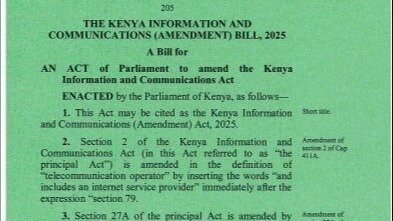
The Kenya Information and Communications (Amendment) Bill, 2025 introduces amendments that require internet service providers (ISPs) to implement a meter billing system with the following functions:
Assigning unique and identifiable meter numbers to customers.
Monitoring customer usage.
Converting usage into readable billing details.
Generating invoices based on consumption.
Allowing user verification of invoices.
Submitting annual reports on billing systems to the Authority, including internet meter numbers.
Implications on Citizens' Privacy and Security
1. Collection and Storage of Personal Data
ISPs will collect, store, and process more granular data on individual users' internet usage.
The requirement to assign a “unique and identifiable meter number” can lead to permanent tracking mechanisms per customer, resembling digital surveillance.
If poorly anonymized, these identifiers can link users’ identities to browsing habits and consumption patterns, raising concerns over profiling.
2. Surveillance and Monitoring Risks
Real-time monitoring of usage allows ISPs or authorities to infer sensitive information (e.g., personal interests, political beliefs, or health concerns) based on visited sites or accessed content.
Without strong safeguards, this could lead to government overreach or misuse by malicious insiders or cybercriminals.
3. Increased Cybersecurity Threat Surface
With more detailed customer information stored digitally (meter numbers, usage logs, billing records), the risk of data breaches increases.
Hackers could exploit vulnerabilities to access or manipulate this data, causing identity theft, financial fraud, or privacy leaks.
4. Accountability and Transparency Challenges
The requirement for ISPs to submit reports to the Authority annually raises the issue of data handling transparency:
What data is shared?
Is it anonymized?
How is it protected during transmission and storage?
5. Consent and User Autonomy
The bill does not specify how customer consent will be obtained for data collection and monitoring.
Without explicit consent frameworks and opt-out mechanisms, it may violate data protection principles enshrined in Kenya’s Data Protection Act, 2019.
6. Potential for Misuse
If meter numbers become a national identifier for digital services, they could be exploited for mass surveillance, censorship, or social control.
In politically sensitive environments, this kind of monitoring might be used to target dissenters or activists.
The proposed Kenya Information and Communications (Amendment) Bill, 2025 can be interpreted as enabling surveillance, and here's why:
Why It Resembles Spying or Surveillance
Unique Identifiable Meter Numbers
Requiring ISPs to assign unique and trackable identifiers to each user creates a permanent digital fingerprint.
This allows anyone with access (government or third parties) to track an individual's online activities over time.
Mandatory Monitoring of Customer Usage
ISPs are obligated to monitor internet usage, a core characteristic of surveillance systems.
This isn't just for billing,it provides continuous visibility into what citizens are doing online, which websites they visit, how much data they consume, and when.
Data Reporting to Authorities
The law requires ISPs to submit usage reports to a government Authority annually.
Depending on how detailed those reports are, this could hand over citizens' behavioral data to state agencies without their knowledge or consent.
No Mention of Data Privacy or Consent
The bill does not address safeguards such as user consent, data anonymization, or limits on what the Authority can do with the data.
This opens the door for the collected data to be used beyond billing, possibly for political profiling, suppression of dissent, or targeted manipulation.
Vague Purpose Beyond Billing
While the stated goal is to improve billing accuracy, the tools and data collected go far beyond what's strictly necessary for billing.
This raises red flags about hidden intentions or future misuse.
10
The Issue
While not openly labeled as spying, this bill gives the government and ISPs the tools to monitor, record, and report on individual internet activity with minimal checks and balances. That fits the definition of a state surveillance mechanism,especially if used for purposes beyond billing.
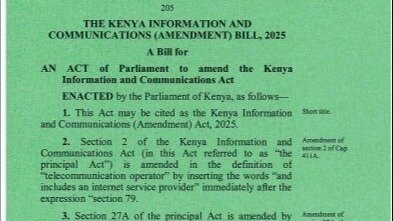
The Kenya Information and Communications (Amendment) Bill, 2025 introduces amendments that require internet service providers (ISPs) to implement a meter billing system with the following functions:
Assigning unique and identifiable meter numbers to customers.
Monitoring customer usage.
Converting usage into readable billing details.
Generating invoices based on consumption.
Allowing user verification of invoices.
Submitting annual reports on billing systems to the Authority, including internet meter numbers.
Implications on Citizens' Privacy and Security
1. Collection and Storage of Personal Data
ISPs will collect, store, and process more granular data on individual users' internet usage.
The requirement to assign a “unique and identifiable meter number” can lead to permanent tracking mechanisms per customer, resembling digital surveillance.
If poorly anonymized, these identifiers can link users’ identities to browsing habits and consumption patterns, raising concerns over profiling.
2. Surveillance and Monitoring Risks
Real-time monitoring of usage allows ISPs or authorities to infer sensitive information (e.g., personal interests, political beliefs, or health concerns) based on visited sites or accessed content.
Without strong safeguards, this could lead to government overreach or misuse by malicious insiders or cybercriminals.
3. Increased Cybersecurity Threat Surface
With more detailed customer information stored digitally (meter numbers, usage logs, billing records), the risk of data breaches increases.
Hackers could exploit vulnerabilities to access or manipulate this data, causing identity theft, financial fraud, or privacy leaks.
4. Accountability and Transparency Challenges
The requirement for ISPs to submit reports to the Authority annually raises the issue of data handling transparency:
What data is shared?
Is it anonymized?
How is it protected during transmission and storage?
5. Consent and User Autonomy
The bill does not specify how customer consent will be obtained for data collection and monitoring.
Without explicit consent frameworks and opt-out mechanisms, it may violate data protection principles enshrined in Kenya’s Data Protection Act, 2019.
6. Potential for Misuse
If meter numbers become a national identifier for digital services, they could be exploited for mass surveillance, censorship, or social control.
In politically sensitive environments, this kind of monitoring might be used to target dissenters or activists.
The proposed Kenya Information and Communications (Amendment) Bill, 2025 can be interpreted as enabling surveillance, and here's why:
Why It Resembles Spying or Surveillance
Unique Identifiable Meter Numbers
Requiring ISPs to assign unique and trackable identifiers to each user creates a permanent digital fingerprint.
This allows anyone with access (government or third parties) to track an individual's online activities over time.
Mandatory Monitoring of Customer Usage
ISPs are obligated to monitor internet usage, a core characteristic of surveillance systems.
This isn't just for billing,it provides continuous visibility into what citizens are doing online, which websites they visit, how much data they consume, and when.
Data Reporting to Authorities
The law requires ISPs to submit usage reports to a government Authority annually.
Depending on how detailed those reports are, this could hand over citizens' behavioral data to state agencies without their knowledge or consent.
No Mention of Data Privacy or Consent
The bill does not address safeguards such as user consent, data anonymization, or limits on what the Authority can do with the data.
This opens the door for the collected data to be used beyond billing, possibly for political profiling, suppression of dissent, or targeted manipulation.
Vague Purpose Beyond Billing
While the stated goal is to improve billing accuracy, the tools and data collected go far beyond what's strictly necessary for billing.
This raises red flags about hidden intentions or future misuse.
Petition Updates
Share this petition
Petition created on 25 May 2025