

Stop Discrimination Against Cats
The Issue
Recognize Qualified Medical Service Cats Under the ADA
Current federal regulations recognize service dogs and, in limited circumstances, miniature horses. Yet qualified medical service cats—animals that can perform trained medical alert and assistance tasks—remain excluded regardless of their demonstrated abilities.
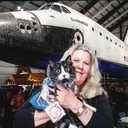
My name is Linda Rheinstein. I am a Sports Broadcasting Hall of Fame inductee, five-time Emmy Award-winning producer, entrepreneur, cancer survivor, and founder of the Space Games Federation®.
For more than a decade, I have advocated for recognition of qualified medical service cats after experiencing firsthand the life-changing assistance provided by my own medically trained service cat, Nicky.
Nicky repeatedly alerted me when my immune system was crashing, allowing me to seek medical attention before conditions became severe. His abilities helped me continue traveling, working, and living independently despite ongoing health challenges.
Despite physician documentation, veterinary records, specialized training, and years of successful travel, we continue to face discrimination because current regulations do not recognize cats as service animals.
We are not asking for special treatment.
We are asking that qualified medical service animals be evaluated based on training, demonstrated performance, and medical necessity—not species alone.
We call upon the Department of Justice, Department of Transportation, and policymakers to modernize existing regulations by creating a pathway for qualified medical service cats to be recognized when they meet rigorous standards, including physician verification, veterinary certification, documented training, annual renewals, and behavioral requirements.
The answer is stronger standards and accountability—not exclusion.
If a medical service animal can perform legitimate, measurable tasks that mitigate a person's disability, it deserves consideration based on merit.
Please sign this petition and help bring recognition, dignity, and equal access to individuals who depend on qualified medical service cats.
1,091
The Issue
Recognize Qualified Medical Service Cats Under the ADA
Current federal regulations recognize service dogs and, in limited circumstances, miniature horses. Yet qualified medical service cats—animals that can perform trained medical alert and assistance tasks—remain excluded regardless of their demonstrated abilities.
My name is Linda Rheinstein. I am a Sports Broadcasting Hall of Fame inductee, five-time Emmy Award-winning producer, entrepreneur, cancer survivor, and founder of the Space Games Federation®.
For more than a decade, I have advocated for recognition of qualified medical service cats after experiencing firsthand the life-changing assistance provided by my own medically trained service cat, Nicky.
Nicky repeatedly alerted me when my immune system was crashing, allowing me to seek medical attention before conditions became severe. His abilities helped me continue traveling, working, and living independently despite ongoing health challenges.
Despite physician documentation, veterinary records, specialized training, and years of successful travel, we continue to face discrimination because current regulations do not recognize cats as service animals.
We are not asking for special treatment.
We are asking that qualified medical service animals be evaluated based on training, demonstrated performance, and medical necessity—not species alone.
We call upon the Department of Justice, Department of Transportation, and policymakers to modernize existing regulations by creating a pathway for qualified medical service cats to be recognized when they meet rigorous standards, including physician verification, veterinary certification, documented training, annual renewals, and behavioral requirements.
The answer is stronger standards and accountability—not exclusion.
If a medical service animal can perform legitimate, measurable tasks that mitigate a person's disability, it deserves consideration based on merit.
Please sign this petition and help bring recognition, dignity, and equal access to individuals who depend on qualified medical service cats.
The Decision Makers


Supporter Voices
Petition Updates
Share this petition
Petition created on February 23, 2020