Spreading Lies Faster Than Facts
Spreading Lies Faster Than Facts
The Issue
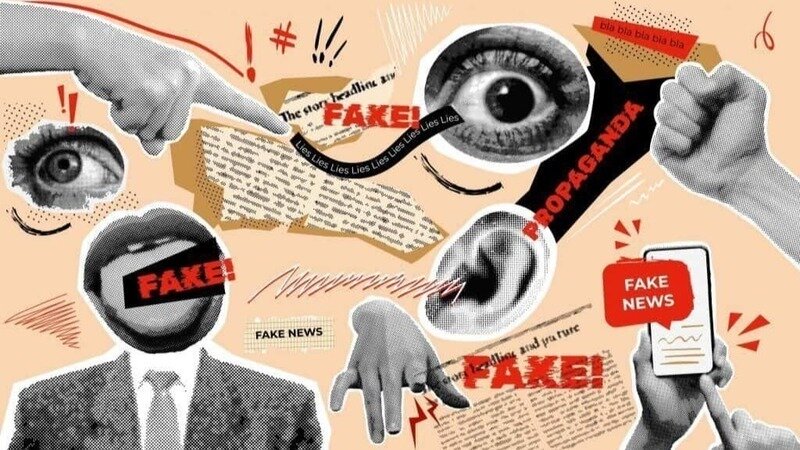
Misinformation in the digital age remains a serious issue, where false or misleading content spreads faster than verified facts. In a world where people react and share instantly, one habit continues to dominate—“Share agad kahit hindi sure.”—yet the truth is clear: misinformation is not caused by technology itself, but by the conscious choice to spread unverified information.
Misinformation is still common in society. Many individuals share posts without checking their accuracy, focusing more on speed than truth. This mindset leads to confusion, misunderstanding, and even conflict among people. It also affects how individuals form opinions, make decisions, and understand important social and political issues. As a result, it becomes harder for people to distinguish what is true from what is false.
According to the Reuters Institute for the Study of Journalism, a large number of young people rely on social media as their main source of news, making them more vulnerable to misleading content. Similarly, UNESCO emphasizes that the lack of digital literacy and fact-checking skills contributes to the rapid spread of misinformation online. These findings show that the issue is not just about access to information, but about how people choose to evaluate and share it.
Real-Life Example: Election Misinformation in the Philippines
During election periods in the Philippines, false and misleading information often spreads widely on social media. The Commission on Elections has repeatedly warned the public about fake news, as it can influence voter decisions and distort public understanding of important national issues.
Real-Life Example: Viral Fake News Posts
There have been multiple cases where fake news posts gained thousands of shares before being proven false. Many users believed and spread the information without verification, showing how easily misinformation can influence public opinion.
Real-Life Example: Edited Photos and Misleading Content
Edited images and out-of-context videos often go viral, making people believe in false narratives. These types of content are especially dangerous because they appear convincing, even when they are not true.
Misinformation has no place in a responsible digital society. Sharing unverified information is never harmless—the responsibility always lies with the person who chooses to spread it.
Let’s shift the mindset from “Share agad” to “Check muna bago mag-share.”
Let us remember:
“Information is powerful—but only when it is true. Verify before you share.”
“Hindi lahat ng nakikita online ay tama. Ang responsableng paggamit ng ICT ay nagsisimula sa tamang pag-iisip.”
#ThinkBeforeYouShare
#StopMisinformation
#DigitalResponsibility

524
The Issue
Misinformation in the digital age remains a serious issue, where false or misleading content spreads faster than verified facts. In a world where people react and share instantly, one habit continues to dominate—“Share agad kahit hindi sure.”—yet the truth is clear: misinformation is not caused by technology itself, but by the conscious choice to spread unverified information.
Misinformation is still common in society. Many individuals share posts without checking their accuracy, focusing more on speed than truth. This mindset leads to confusion, misunderstanding, and even conflict among people. It also affects how individuals form opinions, make decisions, and understand important social and political issues. As a result, it becomes harder for people to distinguish what is true from what is false.
According to the Reuters Institute for the Study of Journalism, a large number of young people rely on social media as their main source of news, making them more vulnerable to misleading content. Similarly, UNESCO emphasizes that the lack of digital literacy and fact-checking skills contributes to the rapid spread of misinformation online. These findings show that the issue is not just about access to information, but about how people choose to evaluate and share it.
Real-Life Example: Election Misinformation in the Philippines
During election periods in the Philippines, false and misleading information often spreads widely on social media. The Commission on Elections has repeatedly warned the public about fake news, as it can influence voter decisions and distort public understanding of important national issues.
Real-Life Example: Viral Fake News Posts
There have been multiple cases where fake news posts gained thousands of shares before being proven false. Many users believed and spread the information without verification, showing how easily misinformation can influence public opinion.
Real-Life Example: Edited Photos and Misleading Content
Edited images and out-of-context videos often go viral, making people believe in false narratives. These types of content are especially dangerous because they appear convincing, even when they are not true.
Misinformation has no place in a responsible digital society. Sharing unverified information is never harmless—the responsibility always lies with the person who chooses to spread it.
Let’s shift the mindset from “Share agad” to “Check muna bago mag-share.”
Let us remember:
“Information is powerful—but only when it is true. Verify before you share.”
“Hindi lahat ng nakikita online ay tama. Ang responsableng paggamit ng ICT ay nagsisimula sa tamang pag-iisip.”
#ThinkBeforeYouShare
#StopMisinformation
#DigitalResponsibility
524
Petition Updates
Share this petition
Petition created on March 25, 2026