Save The Teesta
The Issue
Who are we?
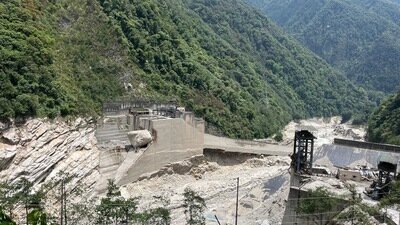
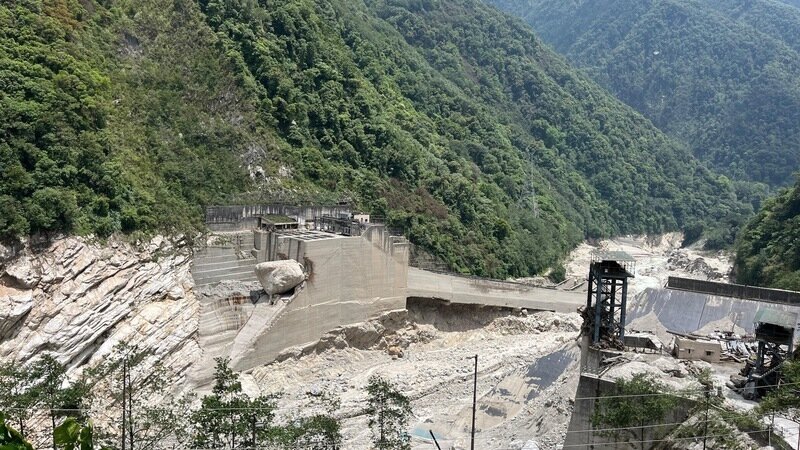
"Save the Teesta" is an environmental movement led by groups like the Affected Citizens of Teesta (ACT) in Sikkim to oppose destructive mega-hydropower dams, demand fresh environmental and social impact assessments, and protect the fragile Himalayan river ecosystem and the rights of Indigenous Peoples. Background Over the last 19 years the basin has seen widespread devastation from earthquakes, landslides, floods, tunnel blasts and the devastating Glacial Lake Outburst Flood of 2023 and floods of 2024.
The infrastructure heavy developement projects that require blasting and tunnelling through our fragile landscape has exacerbated issues for communities living along the river. Cracks in homes, threats of homes sliding, constant road blocks due to landslides have made life difficult.
Our demands :
1. Permanent scrap of the 520 MW Teesta Stage IV HEP & 280 MW Panam HEP on the Teesta and Rongyoung Rivers respectively.
2. Declaration of a river sanctuary from Phidang to Sakyoung Pentong on the Teesta & the entire River Rongyoung.
3. Fresh studies and environmental impact assessments (EIA) by independent consultants for the following: - The under-construction Teesta Stage VI HEP - The repair work on Teesta Stage V HEP - The repair work to recommission the broken Teesta Stage III HEP Old studies and assessments conducted prior to the GLOF are invalid as the basin topography has been heavily altered post the floods.
4. Permanent STOP to all pipeline hydropower projects in Sikkim. Why are these are demands?
The core issue behind "Save the Teesta" is about the long-term ecological, cultural, and economic resilience of the Teesta basin in the fragile Himalayan landscape. It is not just an issue of hydropower development.
1. Ecological integrity: Multiple dams and diversions have altered the river's natural flow. Aquatic biodiversity and fish migration have been disrupted. Sediment transport has been interrupted, affecting river morphology and downstream ecosystems. Reduced environmental flows have degrade riparian habitats.
2. Climate and geological risk: The Teesta basin is already highly prone to earthquakes, landslides, and glacial hazards. The 2023 Glacial Lake Outburst Flood (GLOF) demonstrated how cascading failures can occur when extreme events interact with badly planned and managed infrastructure. Climate change is increasing in uncertainty through glacier retreat and more intense rainfall.
3. Water security: The river is the primary freshwater source for communities, agriculture, and ecosystems. Managing the basin for long-term water security requires balancing energy production with ecological needs.
4.Community livelihoods: Communities depend on the Teesta for farming, fisheries, tourism, rafting, and local businesses. Changes to river flow are affecting traditional livelihoods and emerging nature-based economies.
5. Cultural and spiritual significance: For many communities in Sikkim and the eastern Himalayas, the Teesta is a sacred river and part of their cultural identity. The river is woven into local histories, festivals, oral traditions, and landscapes.
6. Economic development choices: The debate is increasingly about what kind of development best serves the region. One perspective emphasizes hydropower for renewable energy and economic growth. Another emphasizes diversified mountain economies based on tourism, cultural industries, ecosystem services, and resilient local enterprises. The people must have a say in decision-making and their decisions must be obtained using Free, Prior and informed consent without political pressures or threats.
7. Governance and public participation: Questions are often raised about cumulative impact assessments, disaster preparedness, environmental monitoring, and the extent of local participation in major decisions affecting the river. But largely these questions are left unanswered or unheard.
Conclusion
We firmly believe that the cost of development must be not come at the cost of our rights as citizens, the rights of the river, its ecosystem and our collective cultural heritage.
We call upon the Hon'ble Chief Minister of Sikkim, to support this prayer and campaign for the people, the sacred landscape and the biodiversity.
We reaffirm our commitment to peaceful campaign and meaningfull dialogue for our demands.

5,319
The Issue
Who are we?
"Save the Teesta" is an environmental movement led by groups like the Affected Citizens of Teesta (ACT) in Sikkim to oppose destructive mega-hydropower dams, demand fresh environmental and social impact assessments, and protect the fragile Himalayan river ecosystem and the rights of Indigenous Peoples. Background Over the last 19 years the basin has seen widespread devastation from earthquakes, landslides, floods, tunnel blasts and the devastating Glacial Lake Outburst Flood of 2023 and floods of 2024.
The infrastructure heavy developement projects that require blasting and tunnelling through our fragile landscape has exacerbated issues for communities living along the river. Cracks in homes, threats of homes sliding, constant road blocks due to landslides have made life difficult.
Our demands :
1. Permanent scrap of the 520 MW Teesta Stage IV HEP & 280 MW Panam HEP on the Teesta and Rongyoung Rivers respectively.
2. Declaration of a river sanctuary from Phidang to Sakyoung Pentong on the Teesta & the entire River Rongyoung.
3. Fresh studies and environmental impact assessments (EIA) by independent consultants for the following: - The under-construction Teesta Stage VI HEP - The repair work on Teesta Stage V HEP - The repair work to recommission the broken Teesta Stage III HEP Old studies and assessments conducted prior to the GLOF are invalid as the basin topography has been heavily altered post the floods.
4. Permanent STOP to all pipeline hydropower projects in Sikkim. Why are these are demands?
The core issue behind "Save the Teesta" is about the long-term ecological, cultural, and economic resilience of the Teesta basin in the fragile Himalayan landscape. It is not just an issue of hydropower development.
1. Ecological integrity: Multiple dams and diversions have altered the river's natural flow. Aquatic biodiversity and fish migration have been disrupted. Sediment transport has been interrupted, affecting river morphology and downstream ecosystems. Reduced environmental flows have degrade riparian habitats.
2. Climate and geological risk: The Teesta basin is already highly prone to earthquakes, landslides, and glacial hazards. The 2023 Glacial Lake Outburst Flood (GLOF) demonstrated how cascading failures can occur when extreme events interact with badly planned and managed infrastructure. Climate change is increasing in uncertainty through glacier retreat and more intense rainfall.
3. Water security: The river is the primary freshwater source for communities, agriculture, and ecosystems. Managing the basin for long-term water security requires balancing energy production with ecological needs.
4.Community livelihoods: Communities depend on the Teesta for farming, fisheries, tourism, rafting, and local businesses. Changes to river flow are affecting traditional livelihoods and emerging nature-based economies.
5. Cultural and spiritual significance: For many communities in Sikkim and the eastern Himalayas, the Teesta is a sacred river and part of their cultural identity. The river is woven into local histories, festivals, oral traditions, and landscapes.
6. Economic development choices: The debate is increasingly about what kind of development best serves the region. One perspective emphasizes hydropower for renewable energy and economic growth. Another emphasizes diversified mountain economies based on tourism, cultural industries, ecosystem services, and resilient local enterprises. The people must have a say in decision-making and their decisions must be obtained using Free, Prior and informed consent without political pressures or threats.
7. Governance and public participation: Questions are often raised about cumulative impact assessments, disaster preparedness, environmental monitoring, and the extent of local participation in major decisions affecting the river. But largely these questions are left unanswered or unheard.
Conclusion
We firmly believe that the cost of development must be not come at the cost of our rights as citizens, the rights of the river, its ecosystem and our collective cultural heritage.
We call upon the Hon'ble Chief Minister of Sikkim, to support this prayer and campaign for the people, the sacred landscape and the biodiversity.
We reaffirm our commitment to peaceful campaign and meaningfull dialogue for our demands.
The Decision Makers
Petition Updates
Share this petition
Petition created on 2 August 2026