Save the Palawan site
The Issue
No contribution required. Please consider voting:
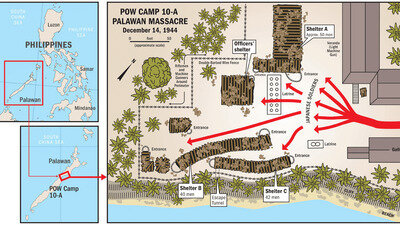
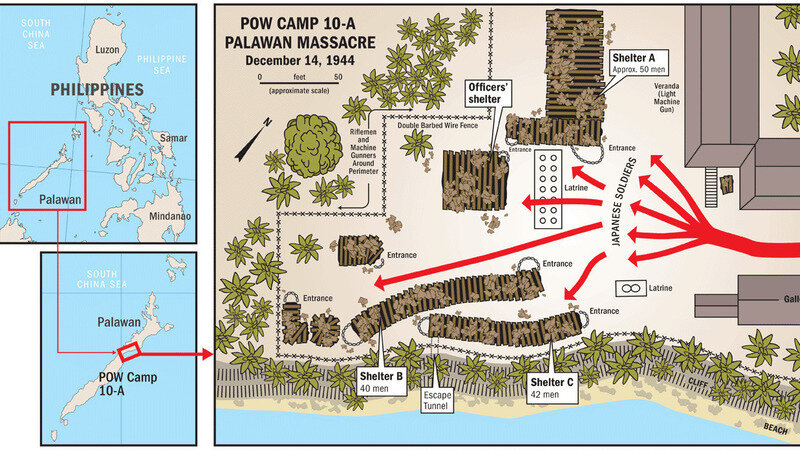
For three years, the 150 American inmates of prisoner of war (POW) Camp 10-A on the western Philippine island of Palawan had survived brutal captivity at the hands of the Japanese Army. On December 14, 1944 the Japanese guards awoke the Americans in the middle of the night, much earlier than normal, forcing them to continue their work repairing runway damage. At 11 a.m., the guards halted the prisoners’ work, herding the prisoners toward one side of the runway and on to waiting trucks. After arriving at the camp, guards forced the POWs into three long, shallow trenches covered with coconut logs, palm fronds, and earth, bunkers the prisoners had been forced to build several weeks earlier to protect themselves from allied air attacks. Although no air attack occurred, for over an hour, guards viciously used rifles, swords, and bayonets to strike any prisoners attempting to look out. With no warning, five guards poured gasoline into the first trench’s entrances while two others threw lighted torches into the openings. Those POWs that managed to claw their way out came under Japanese machine gun and rifle fire. Dead and dying prisoners blocking the entrances trapped the remaining POWs inside. Their screams reached their fellow POWs in other trenches, who began digging their way out. Despite the raging fires and Japanese bullets, more than two dozen Americans had managed to escape down a nearly cliff to the beach. Guards sent to hunt down the escapees, killing all they discovered. Despite many being wounded or injured, eleven POWs managed to escape with the heroic help of Filipino citizens and/or Philippine guerrillas.
The Japanese Army killed 139 Americans POWs at Palawan. Miraculously, 11 POWs survived and provided their accounts of the events. With several thousand American and Allied lives at stake, the rescue of POWs and internees became a high priority. Additional rescue missions freed over 7,000 POWs and detainees in less than a month.
Many of the guards who massacred the POWs died in the subsequent fighting. Of the sixteen Japanese soldiers who stood trial after the war, six were acquitted and ten received sentences from five to thirty years in prison; however, all were released in a general amnesty granted in 1958.
Camp 10-A, now known as Plaza Cuartel, is a sacred site, not just a historical one, serving as a memorial to commensurate the sacrifices of the Americans and Filipinos who perished in World War II. Now, Puerto Princesa’s city officials propose building an amphitheater on this hallowed ground. Without any consultation with veterans groups who oppose commercial development on the site, city officials are pushing forward with their development plan. Multiple veterans’ groups and survivor families have voiced their opposition to such development, instead requesting establishing a museum, eternal flame, or refurbishing the camp to commemorate the horrific events that occurred there. With city officials ignoring the pleas from groups such as Pacific Atrocities Education Institute, American Defenders of Bataan & Corregidor Memorial Society, West Point Society of the Philippines, and Warrior Rescue as well as some family members of survivors, please contact the Honorable Mayor Lucilo R. Bayron and respectfully ask that the commercial development cease.

260
The Issue
No contribution required. Please consider voting:
For three years, the 150 American inmates of prisoner of war (POW) Camp 10-A on the western Philippine island of Palawan had survived brutal captivity at the hands of the Japanese Army. On December 14, 1944 the Japanese guards awoke the Americans in the middle of the night, much earlier than normal, forcing them to continue their work repairing runway damage. At 11 a.m., the guards halted the prisoners’ work, herding the prisoners toward one side of the runway and on to waiting trucks. After arriving at the camp, guards forced the POWs into three long, shallow trenches covered with coconut logs, palm fronds, and earth, bunkers the prisoners had been forced to build several weeks earlier to protect themselves from allied air attacks. Although no air attack occurred, for over an hour, guards viciously used rifles, swords, and bayonets to strike any prisoners attempting to look out. With no warning, five guards poured gasoline into the first trench’s entrances while two others threw lighted torches into the openings. Those POWs that managed to claw their way out came under Japanese machine gun and rifle fire. Dead and dying prisoners blocking the entrances trapped the remaining POWs inside. Their screams reached their fellow POWs in other trenches, who began digging their way out. Despite the raging fires and Japanese bullets, more than two dozen Americans had managed to escape down a nearly cliff to the beach. Guards sent to hunt down the escapees, killing all they discovered. Despite many being wounded or injured, eleven POWs managed to escape with the heroic help of Filipino citizens and/or Philippine guerrillas.
The Japanese Army killed 139 Americans POWs at Palawan. Miraculously, 11 POWs survived and provided their accounts of the events. With several thousand American and Allied lives at stake, the rescue of POWs and internees became a high priority. Additional rescue missions freed over 7,000 POWs and detainees in less than a month.
Many of the guards who massacred the POWs died in the subsequent fighting. Of the sixteen Japanese soldiers who stood trial after the war, six were acquitted and ten received sentences from five to thirty years in prison; however, all were released in a general amnesty granted in 1958.
Camp 10-A, now known as Plaza Cuartel, is a sacred site, not just a historical one, serving as a memorial to commensurate the sacrifices of the Americans and Filipinos who perished in World War II. Now, Puerto Princesa’s city officials propose building an amphitheater on this hallowed ground. Without any consultation with veterans groups who oppose commercial development on the site, city officials are pushing forward with their development plan. Multiple veterans’ groups and survivor families have voiced their opposition to such development, instead requesting establishing a museum, eternal flame, or refurbishing the camp to commemorate the horrific events that occurred there. With city officials ignoring the pleas from groups such as Pacific Atrocities Education Institute, American Defenders of Bataan & Corregidor Memorial Society, West Point Society of the Philippines, and Warrior Rescue as well as some family members of survivors, please contact the Honorable Mayor Lucilo R. Bayron and respectfully ask that the commercial development cease.
Supporter Voices
Petition Updates
Share this petition
Petition created on September 4, 2026