Northern Pulp Are Aware Of The Risks

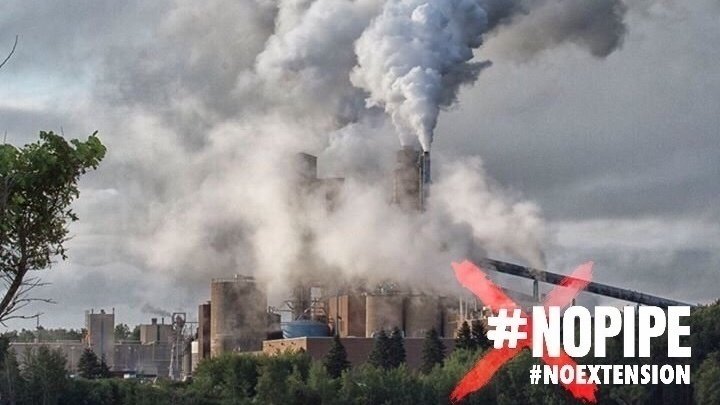
The potential impacts on Marine species in the Northumberland Strait are well documented. Northern Pulp's 1700 page Environmental Assessment also shows them.
However, the plan to mitigate the risk is weak at best and "meets regulations". Meeting regulations is not good enough when the Strait is at it's max threshold for pressures.
Be sure to submit your concerns online https://novascotia.ca/nse/ea/comments.asp
SEE BELOW FOR INFO DIRECTLY FROM THEIR PROPOSAL
Impact Evaluation/Effects Assessment
The potential environmental effects of the project and project activities on marine fish and fish habitat are assessed in the following section.
Potential Effects
Marine fish could be affected by activities and components of the project during the construction phase and operation and maintenance phase. If unmitigated, these changes have the potential to change marine fish populations and fish habitat (e.g., adult fish, juveniles, eggs and larvae, invertebrates and marine plants) through direct mortality or indirectly through alteration or destruction of habitat. The environmental assessment of marine fish is focused on changes in marine fish populations. For the purposes of this assessment, a change in marine fish populations includes any physical injury or mortality on fish attributable to the project, and any destruction or alteration of habitat from disturbance of the marine environment.
Construction Phase
During construction, marine fish may experience direct mortality or functional impairment resulting in eventual mortality. The placement of in-water infrastructure would have a direct effect on sessile or slow-moving demersal fish and invertebrates as they would be unlikely to avoid construction activities within the marine PFA and could experience mortality as a result of smothering or crushing.
The construction of marine-based infrastructure may affect marine fish populations through a change in available substrate and size distribution, a change in water and sediment quality, or changes to the acoustic qualities of the marine environment. The process of installing marine pipelines has a direct effect on the benthic environment.
In-water activities during the construction phase may also result in a change in sediment quality. The disturbance of marine sediments may temporarily increase the concentration of TSS in the water column. Suspended solids can reduce feeding and growth rates and can alter migration of salmon in nearshore habitats (Robinson and Cuthbert 1996). Reduced feeding rates, avoidance behaviour and suffocation due to effects on gill function have been observed in herring from suspended sediments (Robinson and Cuthbert 1996). There may also be indirect effects on fish through alterations within localized food web structures. The severity of the effect of suspended sediments increases as a function of sediment concentration and duration of exposure (Newcombe and Jensen 1996).
During the construction phase, vessel noise will be concentrated within the LAA and the majority of anthropogenic sound in the marine environment generated during construction will originate through trenching, pipe laying, and backfilling. There is also the potential for underwater sound if blasting is used during the construction phase. Some marine fish species may be affected when exposed to high intensity sounds (Popper 2003). The sound emitted to the marine environment during the construction phase could therefore temporarily reduce the quality of fish habitat in the marine PFA.
Operation and Maintenance Phase
Potential effects on marine fish and fish habitat during pipeline operation include the discharge of treated effluent from the ETF. These potential effects could result from: an increase in temperature, nutrients (nitrogen and phosphorus), or TSS; a change in colour, chemical and biochemical oxygen
demand, dissolved oxygen (DO), or pH; or a reduction in salinity from the discharge of treated freshwater effluent into the Northumberland Strait.
Lobster harvesters in the Pictou region have expressed concern about the potential effects of the discharge of treated effluent on lobsters, particularly in the larval stage.
Potential effects to fish during the construction phase may also be applicable during the operation and maintenance phase if project maintenance activities require the presence and operation of project vessels or equipment, and in-water activities that include seabed disturbance (e.g., for pipeline retrieval)
#NOPIPE #NOEXTENSION