Save the Glenbog Wombats from being buried alive.

Save the Glenbog Wombats from being buried alive.
The issue
Glenbog State Forest is about to be logged.
The forest is teeming with native wildlife including wombats, endangered greater gliders, yellow-bellied gliders and many endangered bird species like the gang-gang cockatoo.
Please help us put pressure on Forestry Corporation of NSW to leave this forest alone by signing this petition.
We call to immediately cease all planned logging operations in Glenbog State Forest, particularly in Compartments 2312A to 2315A.
In 2014, it was confirmed that bare-nosed wombats in Glenbog State Forest were buried alive during logging operations. Approximately 150 wombat burrows were GPS-recorded and marked in the field, and a written agreement was established to protect these burrows during forestry activities. Despite this agreement, multiple wombat burrows were later confirmed as blocked or destroyed.
The burial of wombats during forestry operations is unacceptable. Wombats are long-lived native mammals that depend entirely on their burrow systems for shelter, thermoregulation, breeding, and survival. The Glenbog population represents a thriving, high-density network of healthy individuals reliant on an extensive system of active burrows.
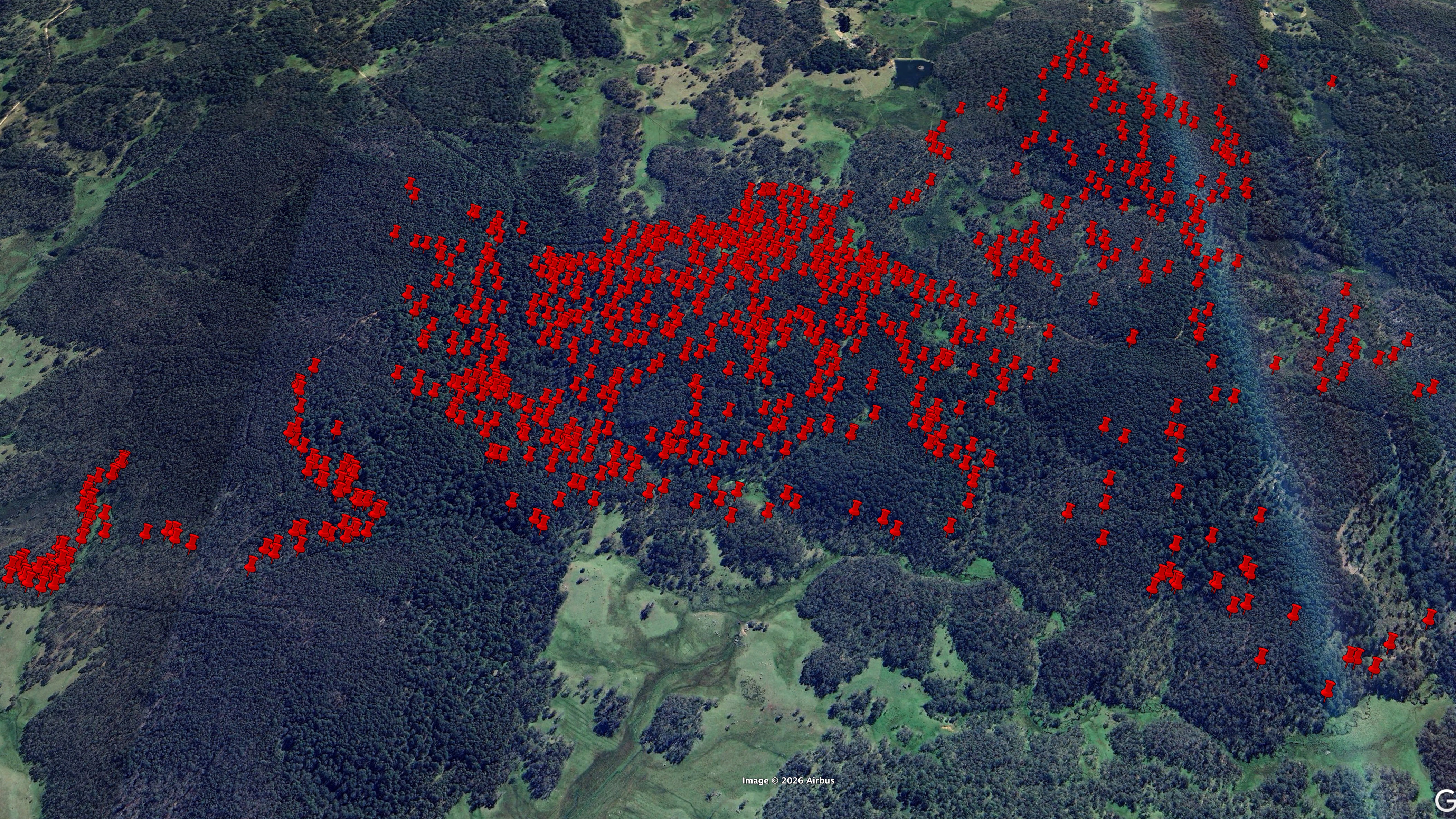
So far 900 wombat burrows are marked and GPS recorded in the upcoming logging zone.
These burrow systems are not only critical for wombats. They also provide shelter and water collection points for numerous other native species, contributing significantly to the ecological function of the forest.
Glenbog State Forest is recognised as one of the few high-elevation “cloud forest” systems in southern NSW. It is a stronghold for the nationally endangered Greater Glider and provides important habitat for other threatened species, including Yellow-bellied Gliders and Gang-gang Cockatoos.
Given the documented history of burrow destruction, the high density of wombat habitat in the proposed compartments, and the broader ecological significance of this forest, it is clear that logging in this area poses unacceptable environmental and animal welfare risks.
We respectfully call on Forestry Corporation of NSW to:
Immediately suspend all logging and roading operations in Compartments 2312A–2315A
Permanently remove these compartments from the logging schedule
Ensure that the Glenbog wombat population and its burrow systems receive full and enforceable protection
Being Buried Alive Is Not Acceptable
What would it feel like to be buried alive?
The thought alone is unbearable — the panic, the fading air, the desperate clawing toward light that never comes. For a wombat trapped when its burrow is collapsed or blocked by heavy machinery, this is not a nightmare. It is reality. And death, when it comes, is slow and agonising.
Inside a sealed burrow, a wombat may die from suffocation, dehydration, starvation, stress — or all of these combined. Many sustain horrific injuries as earth and debris collapse around them, or from the machinery tearing through their home above.
When a burrow entrance is crushed under machine-compacted soil, the wombat must dig upward through unstable material that collapses with every movement… turning its escape attempt into a self-sealing grave.
As oxygen disappears, carbon dioxide builds. The wombat becomes exhausted, develops a pounding headache, then dizziness and confusion. It suffers for days and depending on the size of the burrow—weeks — before finally succumbing.
Mothers with at-foot joeys are often separated during commotion such as a logging operation, even when activity occurs just outside the compartment itself. Constant truck traffic and machinery movement mean wombats are struck and killed as they dart for cover. Orphaned joeys, waiting faithfully in their burrows for mothers who will never return, slowly starve to death.
Wombats are intelligent, emotional beings. Each has a unique personality — shy or bold, gentle or moody, playful or cautious. They are individuals. They matter.
And one of them is Alabama.
Alabama is not just a wombat — he is a survivor, a symbol, and a beloved member of Jarake Wildlife Sanctuary family.
In January 2013, during a fierce bushfire, Alabama’s mother was illegally shot and left alive. A passer-by found her, with tiny Alabama still in her pouch. Despite every effort, she could not be saved and was euthanised. Alabama, weighing just 200 grams and still unfurred, was rushed through thick smoke to us Jarake Sanctuary so he could be raised by us.
Against all odds, he grew. He thrived. Today he is a confident adult wombat — a film star, no less. Alabama has appeared in Wombat Wood, A Joey’s Journey, and the Netflix film Kangaroo Valley, where he charmed audiences as “Warren.”
He adores attention. During filming, this 38-kg gentle giant even climbed into a cameraman’s lap just to be closer to the action — winning hearts with his cheeky curiosity and unmistakable smile.
Alabama lives safely within Jarake Sanctuary, though he occasionally wanders into Glenbog State Forest when romance calls. Like any dominant male, he bears the scars of defending his territory. One day he returned home with a serious eye injury. Our wildlife veterinarian, Dr. Howard Ralph, determined his cornea had been punctured beyond repair. Alabama lost vision in one eye — but not his spirit. He continues to live boldly, intelligently, and joyfully.
Wombats like Alabama now face the destruction of their homes.
Logging in Glenbog State Forest threatens not just habitat, but lives. Wombats within the logging zone are unlikely to survive the operations. And in the forests already logged, we have witnessed a devastating rise in sarcoptic mange as stress, displacement, and environmental disruption take their toll.
But what will happen to Alabama if logging begins and he happens to be in the compartment?
He will begin his night as he always does — calm, curious, moving through his forest with confidence. He may graze peacefully, challenge a rival male, check in on a possible mate, or simply leave his markings, announcing proudly that this place is his home.
Then, as dawn approaches, he will hear a distant rumble. It is unfamiliar, unsettling. He will pause, head raised, listening. As the machinery draws closer, the noise builds into a violent roar and the air fills with a strange metallic scent. Instinct tells him to hide — to reach the safety of his territory at Jarake Sanctuary. But the machinery will already be closing in around him. Panicked, he will dart into the nearest burrow or bolt hole, hoping the danger will pass.
Outside, the machines arrive — monstrous in size. Twenty- and thirty-ton excavators, mechanical harvesters, bulldozers, sniggers, forwarders, and several massive log trucks. They are unloaded, engines thundering, and immediately begin tearing into the earth to create a “log dump,” clearing everything in their path.
If that log dump is created over Alabama’s hiding place, his fate is sealed before anyone even knows he is there.
From the log dump, the harvesters will fan out into the forest. Their claws seize whole trees, holding them upright as giant chainsaws slice cleanly through their trunks. Branches and heads are stripped away. Bark is shredded. The trunk is cut into sections and dropped into growing piles that spread across the forest floor. We have found these piles before — stacked directly over our GPS recorded burrows where the wombat beneath never stood a chance.
Sniggers drag heavy logs back toward the dump — thousands of them — ripping apart the soil and crushing everything underneath. Harvesters then mulch the remaining debris into the ground, creating thick, impenetrable layers over hard-packed earth. Any burrows still intact at this stage are buried completely. No air. No escape. No survival.
Under that crushing weight could be Alabama — along with his offspring, his mates, his companions, and even his rivals — all of them trapped beneath a landscape that no longer resembles the home they once knew.
We have raised so many of the wombats who live in and around Glenbog State Forest. Many arrived to us as orphans — tiny, frightened, and alone. Others came with fractured legs, concussions, deep wounds, or the quiet shock of having lost their mothers. We have poured our hearts and souls into every single one of them, nursing them through the darkest moments of their young lives.
They grew up. They healed. They learned to trust again. And at last, they were able to live in peace and freedom in the forest they call home.
Until now.
Today, every one of them is at risk. And we are deeply, profoundly concerned for the safety of our extended family.
Alabama survived fire, loss, and injury.
He and all the others should not have to survive this too.
What is happening — and what may soon happen again — is cruel, preventable, and unacceptable. It has gone on for too long, in too many forests, with too many silent deaths. This cannot be allowed to continue.
Also write to:
Mr Chaudhary, CEO of Forestry Corporation NSW anshul.chaudhary@fcnsw.com.au
cc: tara.moriarty@parliament.nsw.gov.au (Minister for Agriculture), monaro@parliament.nsw.gov.au (Member for Monaro), Bega@parliament.nsw.gov.au (Member for Bega), Kristy.McBain.MP@aph.gov.au (Federal Member for Bega-Monaro). If you are a NSW resident, please also copy in your local member for parliament and send a copy of your letter to info@wombatprotection.org.au - we'd love to read it!
A draft letter can be downloaded here:
https://www.wombatprotection.org.au/s/Save-the-wombats-of-Glenbog-from-being-buried-alive.docx
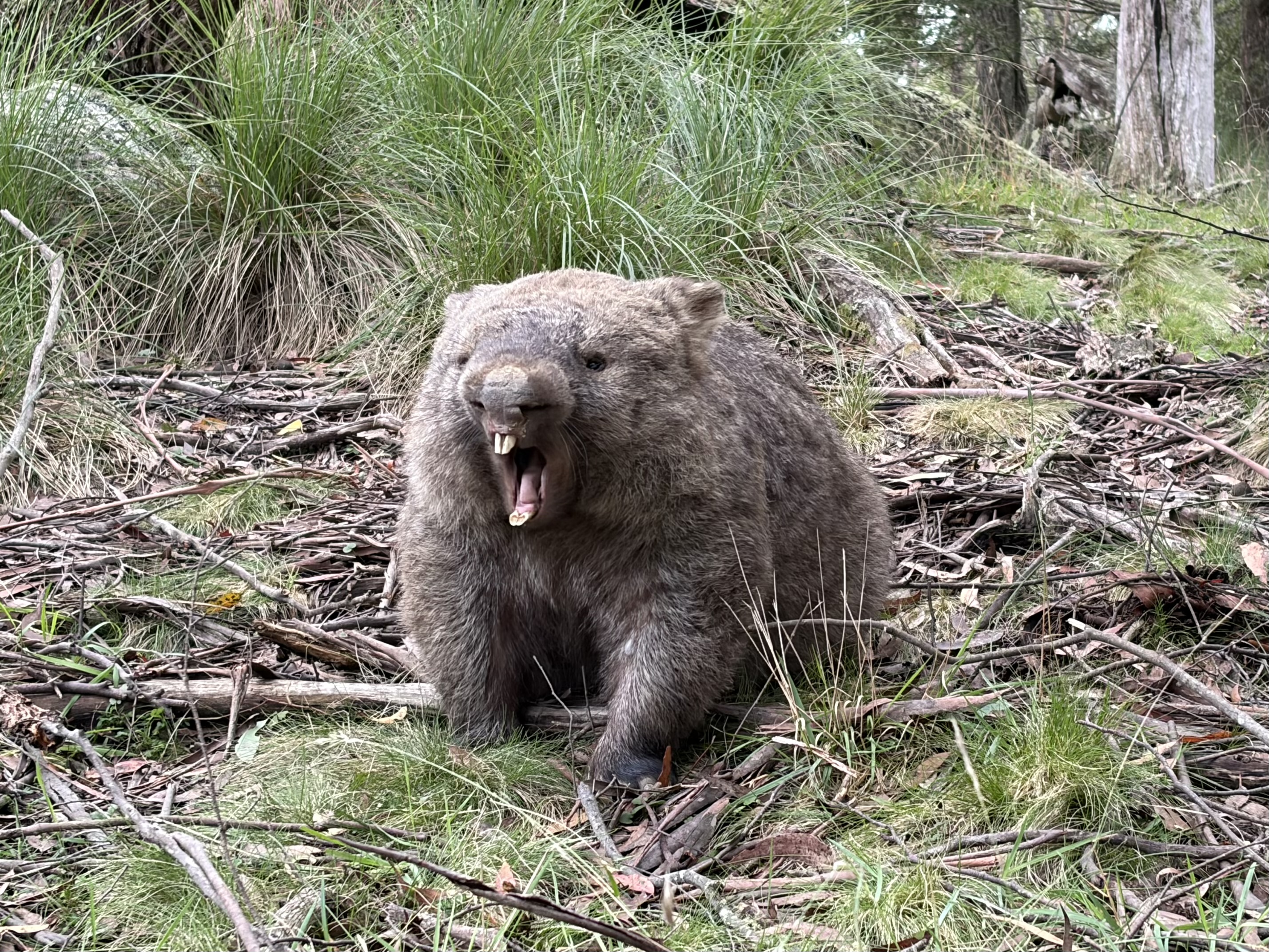
Alabama waking up, yawning, preparing to patrol his territory. He should not have to face logging machines and risk being buried alive.
7,030
The issue
Glenbog State Forest is about to be logged.
The forest is teeming with native wildlife including wombats, endangered greater gliders, yellow-bellied gliders and many endangered bird species like the gang-gang cockatoo.
Please help us put pressure on Forestry Corporation of NSW to leave this forest alone by signing this petition.
We call to immediately cease all planned logging operations in Glenbog State Forest, particularly in Compartments 2312A to 2315A.
In 2014, it was confirmed that bare-nosed wombats in Glenbog State Forest were buried alive during logging operations. Approximately 150 wombat burrows were GPS-recorded and marked in the field, and a written agreement was established to protect these burrows during forestry activities. Despite this agreement, multiple wombat burrows were later confirmed as blocked or destroyed.
The burial of wombats during forestry operations is unacceptable. Wombats are long-lived native mammals that depend entirely on their burrow systems for shelter, thermoregulation, breeding, and survival. The Glenbog population represents a thriving, high-density network of healthy individuals reliant on an extensive system of active burrows.
So far 900 wombat burrows are marked and GPS recorded in the upcoming logging zone.
These burrow systems are not only critical for wombats. They also provide shelter and water collection points for numerous other native species, contributing significantly to the ecological function of the forest.
Glenbog State Forest is recognised as one of the few high-elevation “cloud forest” systems in southern NSW. It is a stronghold for the nationally endangered Greater Glider and provides important habitat for other threatened species, including Yellow-bellied Gliders and Gang-gang Cockatoos.
Given the documented history of burrow destruction, the high density of wombat habitat in the proposed compartments, and the broader ecological significance of this forest, it is clear that logging in this area poses unacceptable environmental and animal welfare risks.
We respectfully call on Forestry Corporation of NSW to:
Immediately suspend all logging and roading operations in Compartments 2312A–2315A
Permanently remove these compartments from the logging schedule
Ensure that the Glenbog wombat population and its burrow systems receive full and enforceable protection
Being Buried Alive Is Not Acceptable
What would it feel like to be buried alive?
The thought alone is unbearable — the panic, the fading air, the desperate clawing toward light that never comes. For a wombat trapped when its burrow is collapsed or blocked by heavy machinery, this is not a nightmare. It is reality. And death, when it comes, is slow and agonising.
Inside a sealed burrow, a wombat may die from suffocation, dehydration, starvation, stress — or all of these combined. Many sustain horrific injuries as earth and debris collapse around them, or from the machinery tearing through their home above.
When a burrow entrance is crushed under machine-compacted soil, the wombat must dig upward through unstable material that collapses with every movement… turning its escape attempt into a self-sealing grave.
As oxygen disappears, carbon dioxide builds. The wombat becomes exhausted, develops a pounding headache, then dizziness and confusion. It suffers for days and depending on the size of the burrow—weeks — before finally succumbing.
Mothers with at-foot joeys are often separated during commotion such as a logging operation, even when activity occurs just outside the compartment itself. Constant truck traffic and machinery movement mean wombats are struck and killed as they dart for cover. Orphaned joeys, waiting faithfully in their burrows for mothers who will never return, slowly starve to death.
Wombats are intelligent, emotional beings. Each has a unique personality — shy or bold, gentle or moody, playful or cautious. They are individuals. They matter.
And one of them is Alabama.
Alabama is not just a wombat — he is a survivor, a symbol, and a beloved member of Jarake Wildlife Sanctuary family.
In January 2013, during a fierce bushfire, Alabama’s mother was illegally shot and left alive. A passer-by found her, with tiny Alabama still in her pouch. Despite every effort, she could not be saved and was euthanised. Alabama, weighing just 200 grams and still unfurred, was rushed through thick smoke to us Jarake Sanctuary so he could be raised by us.
Against all odds, he grew. He thrived. Today he is a confident adult wombat — a film star, no less. Alabama has appeared in Wombat Wood, A Joey’s Journey, and the Netflix film Kangaroo Valley, where he charmed audiences as “Warren.”
He adores attention. During filming, this 38-kg gentle giant even climbed into a cameraman’s lap just to be closer to the action — winning hearts with his cheeky curiosity and unmistakable smile.
Alabama lives safely within Jarake Sanctuary, though he occasionally wanders into Glenbog State Forest when romance calls. Like any dominant male, he bears the scars of defending his territory. One day he returned home with a serious eye injury. Our wildlife veterinarian, Dr. Howard Ralph, determined his cornea had been punctured beyond repair. Alabama lost vision in one eye — but not his spirit. He continues to live boldly, intelligently, and joyfully.
Wombats like Alabama now face the destruction of their homes.
Logging in Glenbog State Forest threatens not just habitat, but lives. Wombats within the logging zone are unlikely to survive the operations. And in the forests already logged, we have witnessed a devastating rise in sarcoptic mange as stress, displacement, and environmental disruption take their toll.
But what will happen to Alabama if logging begins and he happens to be in the compartment?
He will begin his night as he always does — calm, curious, moving through his forest with confidence. He may graze peacefully, challenge a rival male, check in on a possible mate, or simply leave his markings, announcing proudly that this place is his home.
Then, as dawn approaches, he will hear a distant rumble. It is unfamiliar, unsettling. He will pause, head raised, listening. As the machinery draws closer, the noise builds into a violent roar and the air fills with a strange metallic scent. Instinct tells him to hide — to reach the safety of his territory at Jarake Sanctuary. But the machinery will already be closing in around him. Panicked, he will dart into the nearest burrow or bolt hole, hoping the danger will pass.
Outside, the machines arrive — monstrous in size. Twenty- and thirty-ton excavators, mechanical harvesters, bulldozers, sniggers, forwarders, and several massive log trucks. They are unloaded, engines thundering, and immediately begin tearing into the earth to create a “log dump,” clearing everything in their path.
If that log dump is created over Alabama’s hiding place, his fate is sealed before anyone even knows he is there.
From the log dump, the harvesters will fan out into the forest. Their claws seize whole trees, holding them upright as giant chainsaws slice cleanly through their trunks. Branches and heads are stripped away. Bark is shredded. The trunk is cut into sections and dropped into growing piles that spread across the forest floor. We have found these piles before — stacked directly over our GPS recorded burrows where the wombat beneath never stood a chance.
Sniggers drag heavy logs back toward the dump — thousands of them — ripping apart the soil and crushing everything underneath. Harvesters then mulch the remaining debris into the ground, creating thick, impenetrable layers over hard-packed earth. Any burrows still intact at this stage are buried completely. No air. No escape. No survival.
Under that crushing weight could be Alabama — along with his offspring, his mates, his companions, and even his rivals — all of them trapped beneath a landscape that no longer resembles the home they once knew.
We have raised so many of the wombats who live in and around Glenbog State Forest. Many arrived to us as orphans — tiny, frightened, and alone. Others came with fractured legs, concussions, deep wounds, or the quiet shock of having lost their mothers. We have poured our hearts and souls into every single one of them, nursing them through the darkest moments of their young lives.
They grew up. They healed. They learned to trust again. And at last, they were able to live in peace and freedom in the forest they call home.
Until now.
Today, every one of them is at risk. And we are deeply, profoundly concerned for the safety of our extended family.
Alabama survived fire, loss, and injury.
He and all the others should not have to survive this too.
What is happening — and what may soon happen again — is cruel, preventable, and unacceptable. It has gone on for too long, in too many forests, with too many silent deaths. This cannot be allowed to continue.
Also write to:
Mr Chaudhary, CEO of Forestry Corporation NSW anshul.chaudhary@fcnsw.com.au
cc: tara.moriarty@parliament.nsw.gov.au (Minister for Agriculture), monaro@parliament.nsw.gov.au (Member for Monaro), Bega@parliament.nsw.gov.au (Member for Bega), Kristy.McBain.MP@aph.gov.au (Federal Member for Bega-Monaro). If you are a NSW resident, please also copy in your local member for parliament and send a copy of your letter to info@wombatprotection.org.au - we'd love to read it!
A draft letter can be downloaded here:
https://www.wombatprotection.org.au/s/Save-the-wombats-of-Glenbog-from-being-buried-alive.docx
Alabama waking up, yawning, preparing to patrol his territory. He should not have to face logging machines and risk being buried alive.
7,030
The Decision Makers

Supporter voices
Share this petition
Petition created on 4 March 2026