Killing via Habit and Convenience

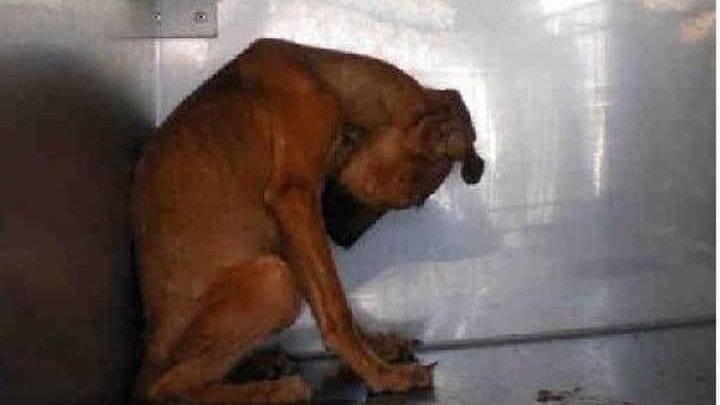
Shared via Debbie Wooten and Nathan Winograd.
"The dog stiffened as we approached the kill-room. Fear flooded his big brown eyes and his hind legs started trembling while he sniffed the air. I forced him through the door [this is my job after all] and choked down my feelings at seeing his distress [overriding my instincts to stop].
"I chained him to a wall with worn-down hooks from the countless others who had come before. The walls with their old, flaked paint told of past [failed] attempts at brightening the space, maybe in attempts to de-stigmatise and comfort us tasked with the killing. I found a frozen bone for him, actively ignoring body-bags crowding the freezer. ‘My’ dog looked sadly at the bone (not touching it), then at me, betrayed, wordlessly pleading for me to help him, while he shivered on the cold concrete floor. Some would soil themselves in fear, but most got very still like they knew what was coming.
"I wish I could take him home, make him feel wanted, that he mattered . . . and not all humans wanted him gone. My colleague ‘finished’ with the dog before us on today’s kill-list, she lay dead, eyes rolled into her head, tongue flopped out. He got the fluorescent syringe ready as I looked away, holding my dog still for the injection. A perfect paw in my hand, vein filling with poison. My supervisor had tried to construct this as an act of ‘kindness’, explaining that death is better than the alternative – being unwanted, caged . . . but I wonder if he’d agree?
"Stifling sadness, anger and helplessness, trying to keep calm for the sake of the dog now living his last moments, his body going limp. My dog would now wait for the weekly garbage pickup, as they were dumped into a landfill, as our societal throwaways."
A new study in the Journal of Work, Employment and Society looked at how staff members of kill pounds navigate the “tensions” of working at a place that is supposed to “care” for animals but instead kills them. This contradiction is what the authors call “care-based animal dirty work” or “the caring-killing paradox.” I call it evil.
The study ultimately found that “workers who undertake this task of… societal ‘processing’ of animals [i.e., killing] experience significant dissonance,” and suggested finding ways to reduce or eliminate killing. While the study affirmed many of the concerns advocates for shelter reform have long expressed — that neglect and abuse often accompanies killing; that managers are not open to alternatives to killing and rely on deception and secrecy; that the killing is arbitrary; and that employees are hired or trained to simply accept killing and follow orders — there were significant problems with the proposals to remedy those problems.
First and foremost, we know that shelters across the country can and have eliminated the killing for all but irremediably suffering animals. And we know that those shelters which continue to kill do not do it out of compassion or necessary “societal ‘processing;’” rather, they do it out of habit and convenience: https://youtu.be/z-CwFaUsuTg — because they refuse to embrace the cost-effective programs and services which make No Kill possible: https://youtu.be/JCTt5JppNA8 To anyone who has paid any attention to the monumental shift that has occured in the field of animal sheltering over the last two decades, this is a glaring omission.
The study likewise failed to compare and contrast the psychological mindset between those who work at kill “shelters” and those who work at No Kill shelters, and in not doing so, overlooking the fact that resolving both the emotional toll caused by killing and the deadly toll to animals requires shelters to shift from trying to get shelter employees to cope with killing to actually ending it, a classic win-win.
To read more about this study and my analysis of it, please join me on my new Substack page at: https://nathanwinograd.substack.com/p/striking-at-the-root While there, you can sign up to receive emails when a new article is posted.
♦️ LINK TO FB PAGE:
https://www.facebook.com/nathanwinograd