

SAVE the Cleveleys United Reformed Church from DEMOLITION!
The Issue
Hello,
Regarding the Cleveleys United Reformed Church: Built in 1921 as 'Cleveleys Congregational Church' and it's first phase was designed by Edward Percy Briggs FRIBA, it later developed into the larger second phase Church Hall, Built in 1932, designed by Daniel Wynne-Thomas FRIBA.
A recent planning application in Cleveleys, Lancs UK, has been submitted for the DEMOLITION of the former Cleveleys United Reformed Church, and to rebuild in its place, a 'cardboard' box style !"convenience store", of a lesser architectural calibre, on behalf of the Co-Op.

Here is a site plan layout:

The plan proposal is attached above^.
Planning Application Reference: 26/00116/FUL
Site: Former United Reformed Church, West Drive West / Rossall Road, Thornton-Cleveleys, FY5 1EB
Proposal: Demolition of existing church buildings and erection of a local convenience food store (Class E(a)) with associated car parking and landscaping
The planning application can be found here:
https://publicaccess.wyre.gov.uk/online-applications/applicationDetails.do?activeTab=summary&keyVal=TA93D4SDN4C00
and...
https://publicaccess.wyre.gov.uk/online-applications/applicationDetails.do?activeTab=documents&keyVal=TA93D4SDN4C00
Please peruse the document files, with notable attention given to the 'proposed elevations' / 'proposed elevations & floorplan' documents uploaded on the 10 Feb 2026, and the 24 Feb 2026.
There you will find an image of what will be built over the site of the church after demolition of it.
If you wish to submit a formal objection to the planning application, you can do so here:
https://publicaccess.wyre.gov.uk/online-applications/applicationDetails.do?activeTab=makeComment&keyVal=TA93D4SDN4C00
PLEASE NOTE THE LAST DAY TO LODGE AN OBJECTION IS Friday 2nd Oct 2026, SO TIME IS OF THE UTMOST URGENT ESSENCE.
During the campaign the deadline has changed from the 1st April, to 21-24th April, then it changed to Friday 12th June, then to Tue 14th July, Then to July 28th, then to August 14th, then August 30th, then Sept 11th, and now due to the council receiving such a large influx of mass objections from the public, the deadline has now been moved again to Friday 2nd Oct 2026.
Hello, and IF you have already done so, thank you for signing the petition. Your signature counts as a valuable representation of objection to the aforementioned planning application 26/00116/FUL to demolish Cleveleys URC. I have submitted the petition list of 521 petition signatures ( with proof ) to Wyre council planning authority on the 19/4/2026. I hope that Wyre Council recognises your signatures as 521 objections to the application, but if for whatever reason they don't ( which as a cynical and jaded person, I suspect they may not ), then we have to double down on our expression of objection.
Since then the petition has still been live due to the live planning application's target decision date being repeatedly deferred. Because of this the petition grew to over 1200 signatures, so I have submitted a fixed dataset of 1205 signatures and submitted them to the council on the 5th September, along with proof of live petition showing 1235 signatures at the time of submittal.
For this reason IT IS IMPERATIVE, for you to submit last objections to the council planning team, by no later than Fri 2nd Oct 2026, regarding this objection, via Wyre council's planning website 'Make a comment' section. The link to do this is HERE:
This is our last chance, our last stand, so sieze this opportunity now to try and make a difference.
Let's show Wyre Council planning team, that "We the signed petition supporters, and members of the public, value Cleveleys United Reformed Church as an important heritage asset, and do not want this church to be demolished. We the public, object to the planning application 26/00116/FUL and would like it refused by the Wyre Council planning authority / committee."
PLEASE DO THIS NOW. The last day to submit these objections is Fri 2nd Oct 2026.
The Heritage Statement submitted with the application claims the building has “no significant historic, architectural, artistic, or archaeological interest” and is of “very limited heritage significance.” This assessment, prepared on behalf of the developer, appears heavily biased and should be treated with caution. I would argue that the building has enough architectural uniquity and merit, as well of great benefit to the community, WORTHY to be designated as a Non-Designated Heritage Asset ( NDHA ). We already have many Amenities Societies on our side with this argument. So far, The Twentieth Century Society, SAVE Britain's Heritage, Historic Buildings & Places, Council for British Archaeology, and Lancashire County Council's Historic Ennvironment Team, have also cited the building is an NDHA, and have objected to the proposal application, with a strong desire to fight to keep the church, advocating reuse, so it continues to serve the community's benefit.
Lancashire County Council's Historic Environment Team have deemed the church worhy and historic enough to be added the church to the Lancs Historic Environment Record. ( HER ). This is a REGIONAL LISTING of the building, and it was the first ever 20th century building to be added to their list. Now that makes history!.
As of 1st July 2026, Cleveleys United Reformed Church has now been added to SAVE Britain's Heritage's 'Buildings At Risk' ( BAR ) register for 2026.
Here is their Buildings At Risk register listing for the church:
https://www.savebritainsheritage.org/buildings-at-risk/building/the-united-reform-church-cleveleys
As of 2nd October 2026, Fleetwood Civic Society has now added its voice to calls to save the former Cleveleys United Reformed Church from demolition. The Society has submitted a formal objection to Wyre Council, stating that it would be wrong to allow the demolition of this well-known non-designated heritage asset. It highlighted the church’s considerable contribution to the street scene and urged the Council to reject the proposal and instead encourage future plans which redevelop and reuse the existing church building. This adds another independent civic voice to the growing body of organisations calling for retention and reuse rather than demolition.
BLACKPOOL CIVIC TRUST HAS OBJECTED
As of 14th October, Blackpool Civic Trust has now formally submitted an objection to Wyre Council opposing the demolition of Cleveleys United Reformed Church. The Trust is calling for the existing building to be retained and repurposed for alternative community uses, rather than demolished, and has also raised concerns about the potential impact of the proposed new retail development on existing shops and businesses around Victoria Road. This is another important independent civic voice supporting the case for retention and reuse, adding to the growing body of heritage and community organisations opposing the complete loss of the church. A huge thank you to Stephen Jones and Blackpool Civic Trust for taking the time to consider the evidence and formally make their views known to Wyre Council.
More fantastic support has come in for the campaign to save Cleveleys United Reformed Church. As of 16th October, Lytham St Annes Civic Society has now submitted a formal objection to the demolition proposals, joining other civic and heritage organisations calling for the building to be retained and repurposed. The Society describes the church as “clearly a building of merit”, recognises its prominent contribution to the Cleveleys townscape and highlights its well-balanced interwar architecture, Gothic and Art Deco influences, and the work of its architect Daniel Wynne-Thomas. Importantly, they also strongly support adaptive reuse, arguing that the church could be creatively repurposed and that demolition would diminish the townscape, while a sympathetic new use could enhance and sustain this part of Cleveleys.
This means we now have formal civic-society objections from Fleetwood Civic Society, Blackpool Civic Trust and Lytham St Annes Civic Society — a growing chorus from across the Fylde coast saying that demolition is not the answer. This is particularly significant because these are independent organisations concerned with the quality, history and character of our towns and built environment. Lytham St Annes Civic Society's conclusion could hardly be clearer: “It is for these reasons that we object to the demolition of this church.” A huge thank you to the Society for taking the time to examine the evidence and add its voice to the campaign for retention and reuse.
DON'T WASTE BUILDINGS TAKES UP THE CLEVELEYS CASE
Another particularly significant intervention has come from Leanne Tritton Hon FRIBA, co-founder of Don't Waste Buildings, who has now objected to the proposal. Don't Waste Buildings is a UK-wide voluntary campaign bringing together thousands of people from the property, architectural, engineering, finance and heritage sectors, campaigning for the reuse, retrofit and adaptation of existing buildings rather than unnecessary demolition and replacement. This is particularly relevant to Cleveleys URC because reuse has been at the heart of our campaign from the beginning. The closure of a congregation should not automatically mean that a substantial and adaptable building has reached the end of its useful life.
Leanne has also brought the Cleveleys case to a much wider audience through an article entitled “A bag for life. A building for landfill – What two churches and a Co-op tell us about the buildings we choose to throw away.” The article directly compares the threatened Cleveleys church with the former church at Anchorsholme which was demolished and replaced by a standard Co-op store, and asks whether the proposed new use at Cleveleys could instead be accommodated within the existing building. The important point is not to assume that conversion must be possible, but that reuse deserves to be properly investigated before a perfectly usable existing building is condemned to demolition. As Leanne points out, former churches throughout the country have acquired completely new lives as shops, workplaces, homes, restaurants and community spaces.
https://leannetritton.substack.com/p/a-bag-for-life-a-building-for-landfill?r=iesdd&utm_campaign=post&utm_medium=web
https://www.facebook.com/permalink.php?story_fbid=pfbid02u1acCaRdSbz494UnRqoxUv7fAnQn6CXZK4Hh629PVXdPmN35mKzRaY88kekWcKopl&id=61593856150377
I would also question the need for yet another convenience store, in an area that is already well served with such infrastructure. I also believe that the loss of such an important community asset, and Cleveley's cultural and heritage value, far outweighs any benefit that will come from another convenience store that resembles a cardboard box. The proposed development will also increase traffic pressure at the traffic lights and into the residential streets nearby. It may also incur parking problems if shoppers struggle to find a parking space, and results in shoppers parking outside resident's houses.
I feel sorry for the residents of West Drive West, West Drive, Beach Ave, Ryden Ave & Rossall Road. They are going to get cars parking outside their houses if that car park is full. Which it will do given how few car parking spaces there are. I suspect that will cause a massive parking congestion problem. Then there's the anti-social behaviour problem risk from undesirables hanging around outside shops as well as the subsequent noise concerns. Then there's the extra traffic entering and exiting around that crossroads. Delivery access problems also.
IMPORTANT UPDATE – NEW NATIONAL PLANNING RULES STRENGTHEN THE CASE FOR REUSE
There has been a major change in national planning policy since this application was originally submitted. The Government's new National Planning Policy Framework (NPPF), published in August 2026, places a much clearer emphasis on making use of buildings and structures that already exist rather than simply demolishing them and starting again.
In simple terms, the new rules tell developers and councils to look seriously at opportunities to reuse existing structures and materials. They also say that new development should respond to the history and character of a place, including through the restoration, reuse and integration of heritage assets. This is important because these new national policies apply to planning decisions being made now – including applications which were already in the system when the new Framework appeared.
This significantly strengthens the relevance of the reuse argument at Cleveleys. The former United Reformed Church is not an unidentified or derelict building of no recognised value. It is a recognised non-designated heritage asset, and Wyre Council's Conservation Officer has assessed it as being of medium significance, having a strong visual presence and landmark quality. Complete demolition would permanently remove the building, its embodied materials and the contribution it makes to this prominent Cleveleys crossroads.
The new NPPF also says that heritage assets are an “irreplaceable resource” and that development affecting them should avoid harm where possible, or minimise it where it cannot be avoided. For non-designated heritage assets such as Cleveleys URC, the Council must weigh the benefits of a proposal against the scale of the harm or loss and the significance of the building.
This matters particularly because reuse of this church is not merely a theoretical possibility. The building has previously received planning permission for adaptive conversion, and examples elsewhere in Britain demonstrate that former churches can successfully be given completely different uses – including shops, community facilities, workplaces and homes. The end of the building's original religious use does not mean that the useful life of the building itself has ended.
The question therefore becomes increasingly difficult to ignore: if this substantial, structurally sound heritage building can be adapted and reused, why should demolition be the first answer? Before Cleveleys permanently loses another familiar landmark, every reasonable opportunity to retain, adapt and give the church a new life should be properly explored.
I have already contacted some Wyre borough councillors and they have submitted a formal objection to the planning application.
I am in communication with them to help fight this application, and if any councillors from any other parties wish to help fight this battle, then the more the merrier. We need all the help we can get with a mighty opposition to this development, to help save the church.
I have created a petition to help generate a record of local opposition to the planning application, and to show a willing to preserve this beautiful building, and an important part of Cleveley's heritage and aesthetic. Please assist by signing it and sharing this petition to anyone you know locally.
PLEASE SIGN THIS PETITION if you express a desire to SAVE the Cleveleys United Reformed Church as a valued community heritage asset,
and to oppose the planning application 26/00116/FUL to demolish it.
Hopefully Wyre Council considers your petition signature as recognition of an objection to the planning committee, regarding the planning application 26/00116/FUL to demolish the church.
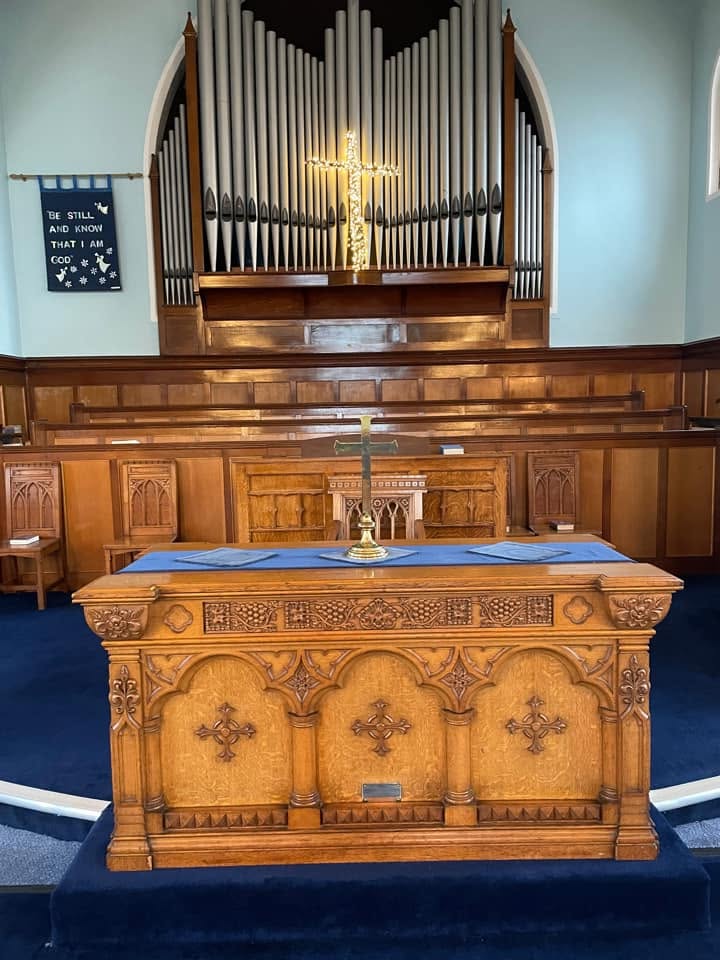
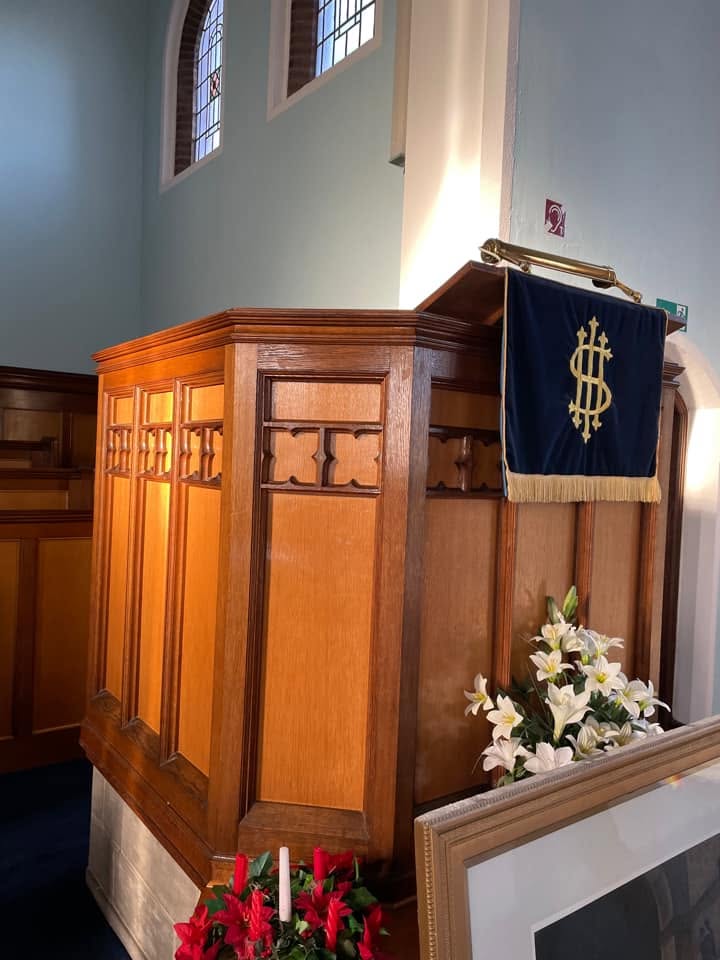
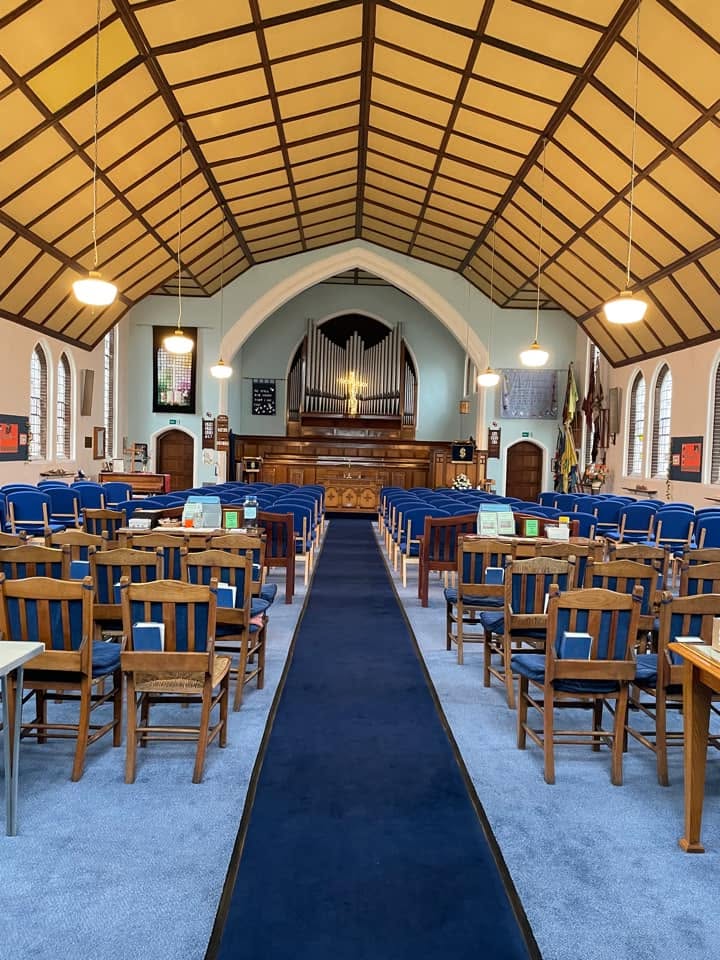
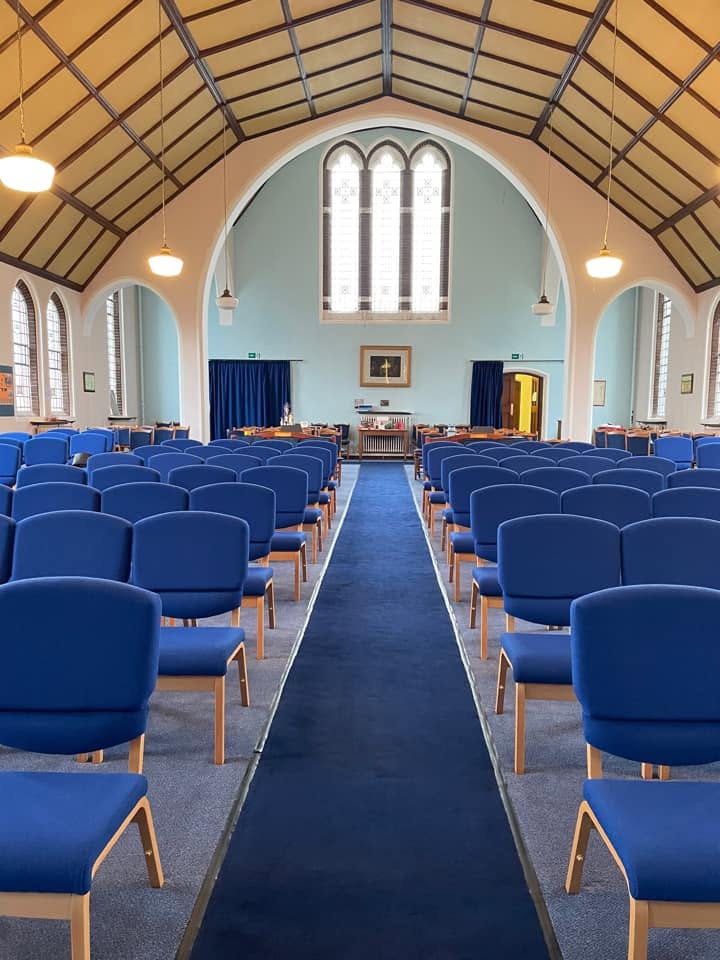
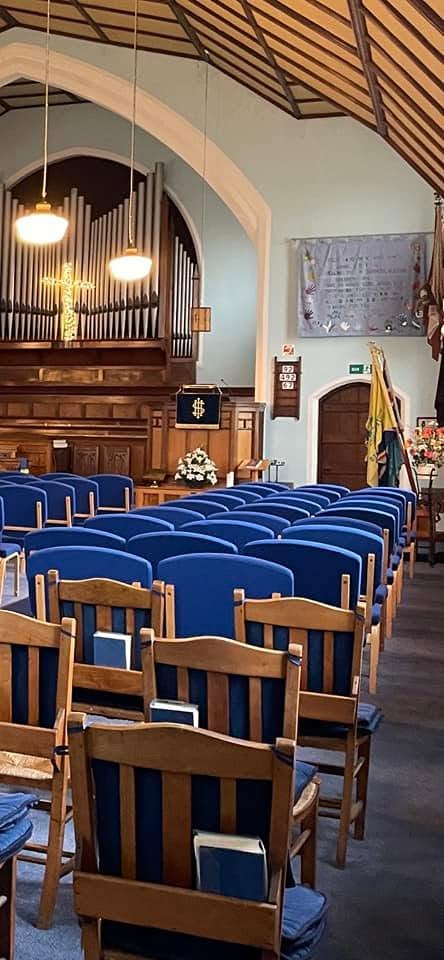
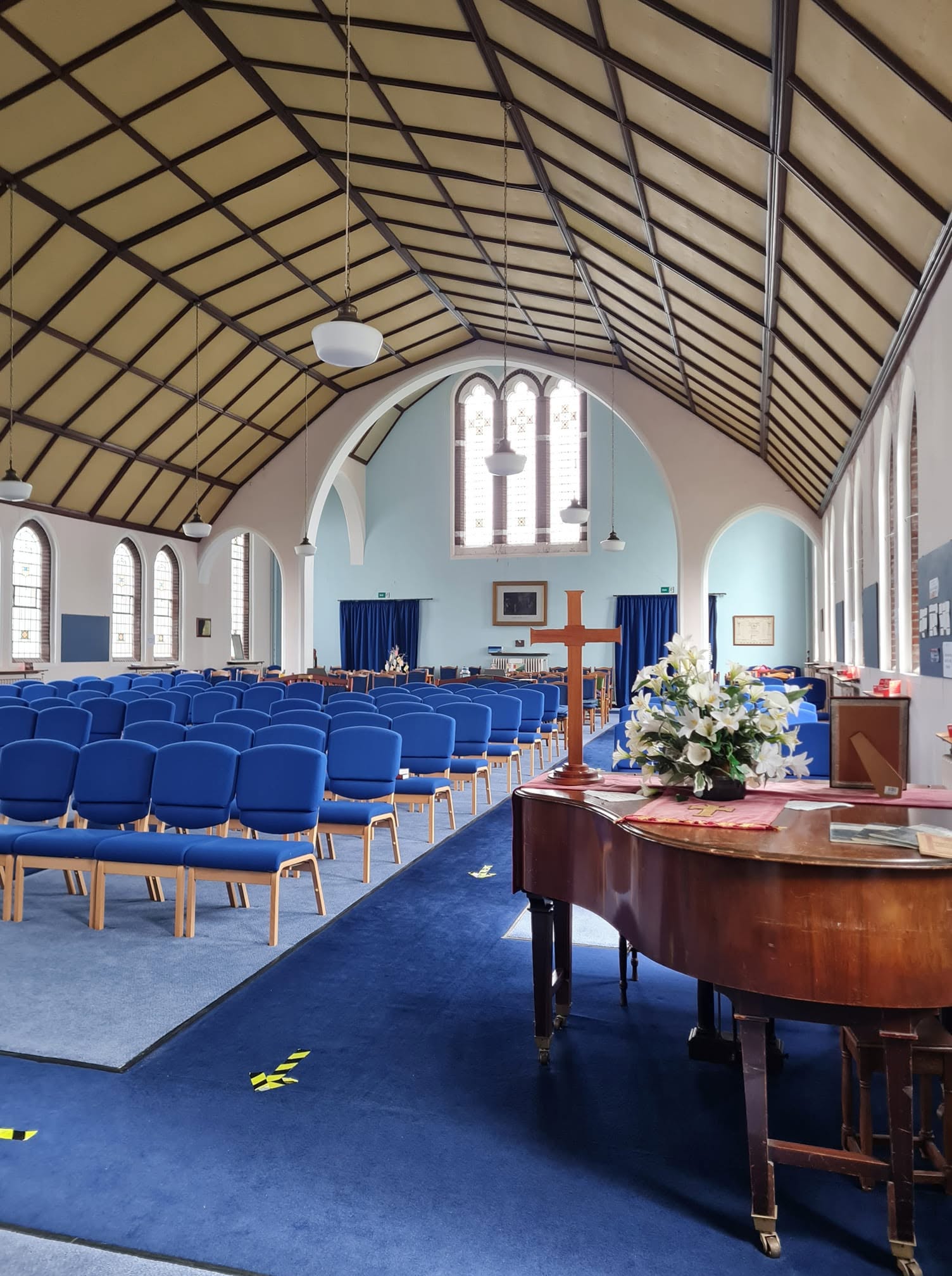
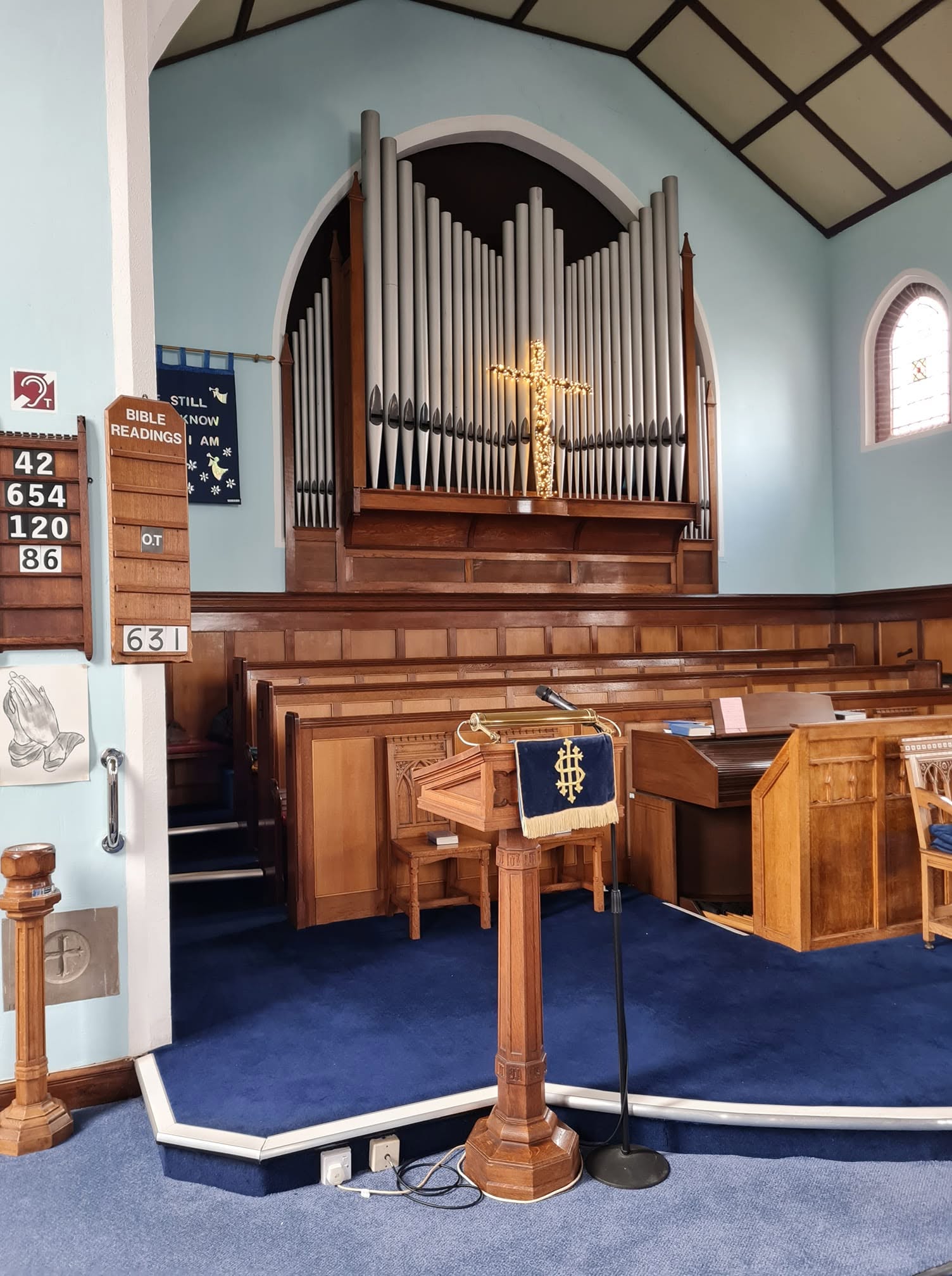
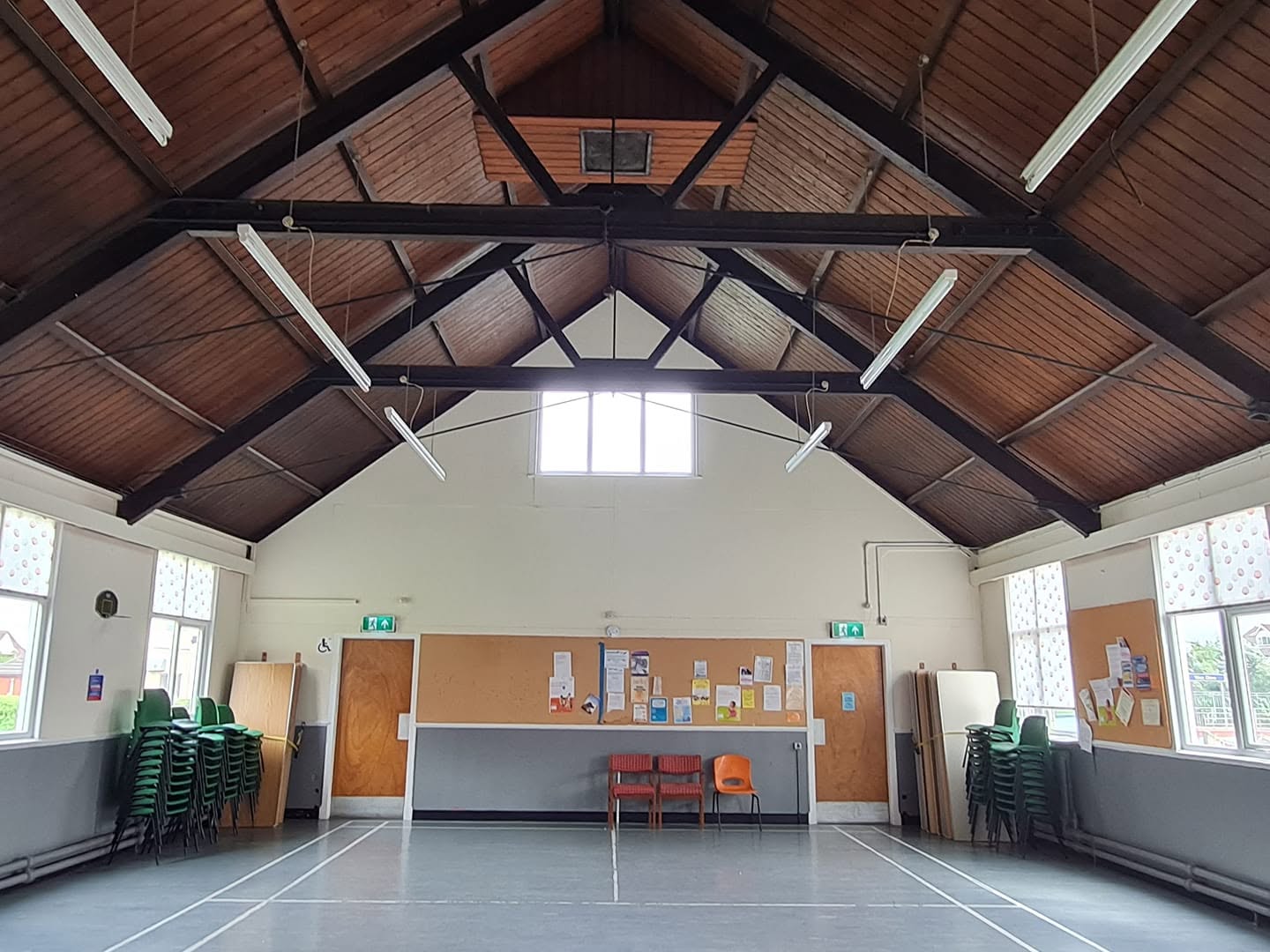
Here is a reminder of what we have at risk of losing. So I say, let's fight to keep it. To preserve our heritage for our community and their future generations to admire. This isn’t just a building—it’s part of our community, our history, and our identity. Once it’s gone, it’s gone for good.


And this is how it looked just before it closed, which shows the church in very good condition with no mould or damp showing on any walls or ceiling. There is also a very old picture of the original Church hall, designed in 1920 and built in 1921 by Edward Percy Briggs FRIBA, at the tail end of the Arts & Crafts movement.
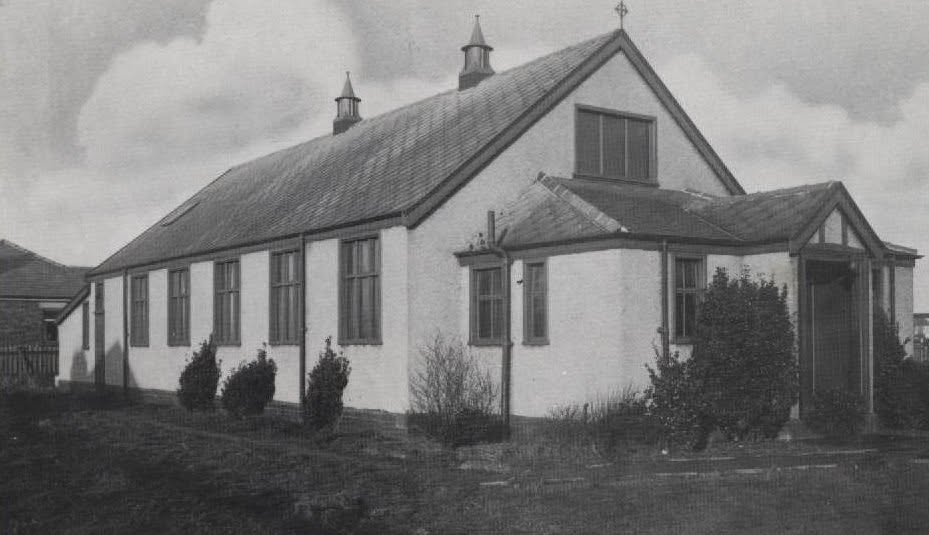
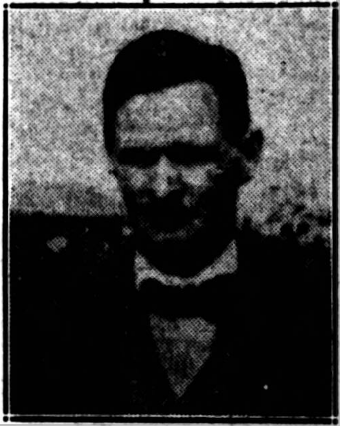
And finally here is a photo of Captain Daniel Wynne Thomas F.R.I.B.A. taken in 1921, who is the architect of the 1932 Church hall phase 2. The second pic is an enhanced version of the original newspaper image.

1,356
The Issue
Hello,
Regarding the Cleveleys United Reformed Church: Built in 1921 as 'Cleveleys Congregational Church' and it's first phase was designed by Edward Percy Briggs FRIBA, it later developed into the larger second phase Church Hall, Built in 1932, designed by Daniel Wynne-Thomas FRIBA.
A recent planning application in Cleveleys, Lancs UK, has been submitted for the DEMOLITION of the former Cleveleys United Reformed Church, and to rebuild in its place, a 'cardboard' box style !"convenience store", of a lesser architectural calibre, on behalf of the Co-Op.
Here is a site plan layout:
The plan proposal is attached above^.
Planning Application Reference: 26/00116/FUL
Site: Former United Reformed Church, West Drive West / Rossall Road, Thornton-Cleveleys, FY5 1EB
Proposal: Demolition of existing church buildings and erection of a local convenience food store (Class E(a)) with associated car parking and landscaping
The planning application can be found here:
https://publicaccess.wyre.gov.uk/online-applications/applicationDetails.do?activeTab=summary&keyVal=TA93D4SDN4C00
and...
https://publicaccess.wyre.gov.uk/online-applications/applicationDetails.do?activeTab=documents&keyVal=TA93D4SDN4C00
Please peruse the document files, with notable attention given to the 'proposed elevations' / 'proposed elevations & floorplan' documents uploaded on the 10 Feb 2026, and the 24 Feb 2026.
There you will find an image of what will be built over the site of the church after demolition of it.
If you wish to submit a formal objection to the planning application, you can do so here:
https://publicaccess.wyre.gov.uk/online-applications/applicationDetails.do?activeTab=makeComment&keyVal=TA93D4SDN4C00
PLEASE NOTE THE LAST DAY TO LODGE AN OBJECTION IS Friday 2nd Oct 2026, SO TIME IS OF THE UTMOST URGENT ESSENCE.
During the campaign the deadline has changed from the 1st April, to 21-24th April, then it changed to Friday 12th June, then to Tue 14th July, Then to July 28th, then to August 14th, then August 30th, then Sept 11th, and now due to the council receiving such a large influx of mass objections from the public, the deadline has now been moved again to Friday 2nd Oct 2026.
Hello, and IF you have already done so, thank you for signing the petition. Your signature counts as a valuable representation of objection to the aforementioned planning application 26/00116/FUL to demolish Cleveleys URC. I have submitted the petition list of 521 petition signatures ( with proof ) to Wyre council planning authority on the 19/4/2026. I hope that Wyre Council recognises your signatures as 521 objections to the application, but if for whatever reason they don't ( which as a cynical and jaded person, I suspect they may not ), then we have to double down on our expression of objection.
Since then the petition has still been live due to the live planning application's target decision date being repeatedly deferred. Because of this the petition grew to over 1200 signatures, so I have submitted a fixed dataset of 1205 signatures and submitted them to the council on the 5th September, along with proof of live petition showing 1235 signatures at the time of submittal.
For this reason IT IS IMPERATIVE, for you to submit last objections to the council planning team, by no later than Fri 2nd Oct 2026, regarding this objection, via Wyre council's planning website 'Make a comment' section. The link to do this is HERE:
This is our last chance, our last stand, so sieze this opportunity now to try and make a difference.
Let's show Wyre Council planning team, that "We the signed petition supporters, and members of the public, value Cleveleys United Reformed Church as an important heritage asset, and do not want this church to be demolished. We the public, object to the planning application 26/00116/FUL and would like it refused by the Wyre Council planning authority / committee."
PLEASE DO THIS NOW. The last day to submit these objections is Fri 2nd Oct 2026.
The Heritage Statement submitted with the application claims the building has “no significant historic, architectural, artistic, or archaeological interest” and is of “very limited heritage significance.” This assessment, prepared on behalf of the developer, appears heavily biased and should be treated with caution. I would argue that the building has enough architectural uniquity and merit, as well of great benefit to the community, WORTHY to be designated as a Non-Designated Heritage Asset ( NDHA ). We already have many Amenities Societies on our side with this argument. So far, The Twentieth Century Society, SAVE Britain's Heritage, Historic Buildings & Places, Council for British Archaeology, and Lancashire County Council's Historic Ennvironment Team, have also cited the building is an NDHA, and have objected to the proposal application, with a strong desire to fight to keep the church, advocating reuse, so it continues to serve the community's benefit.
Lancashire County Council's Historic Environment Team have deemed the church worhy and historic enough to be added the church to the Lancs Historic Environment Record. ( HER ). This is a REGIONAL LISTING of the building, and it was the first ever 20th century building to be added to their list. Now that makes history!.
As of 1st July 2026, Cleveleys United Reformed Church has now been added to SAVE Britain's Heritage's 'Buildings At Risk' ( BAR ) register for 2026.
Here is their Buildings At Risk register listing for the church:
https://www.savebritainsheritage.org/buildings-at-risk/building/the-united-reform-church-cleveleys
As of 2nd October 2026, Fleetwood Civic Society has now added its voice to calls to save the former Cleveleys United Reformed Church from demolition. The Society has submitted a formal objection to Wyre Council, stating that it would be wrong to allow the demolition of this well-known non-designated heritage asset. It highlighted the church’s considerable contribution to the street scene and urged the Council to reject the proposal and instead encourage future plans which redevelop and reuse the existing church building. This adds another independent civic voice to the growing body of organisations calling for retention and reuse rather than demolition.
BLACKPOOL CIVIC TRUST HAS OBJECTED
As of 14th October, Blackpool Civic Trust has now formally submitted an objection to Wyre Council opposing the demolition of Cleveleys United Reformed Church. The Trust is calling for the existing building to be retained and repurposed for alternative community uses, rather than demolished, and has also raised concerns about the potential impact of the proposed new retail development on existing shops and businesses around Victoria Road. This is another important independent civic voice supporting the case for retention and reuse, adding to the growing body of heritage and community organisations opposing the complete loss of the church. A huge thank you to Stephen Jones and Blackpool Civic Trust for taking the time to consider the evidence and formally make their views known to Wyre Council.
More fantastic support has come in for the campaign to save Cleveleys United Reformed Church. As of 16th October, Lytham St Annes Civic Society has now submitted a formal objection to the demolition proposals, joining other civic and heritage organisations calling for the building to be retained and repurposed. The Society describes the church as “clearly a building of merit”, recognises its prominent contribution to the Cleveleys townscape and highlights its well-balanced interwar architecture, Gothic and Art Deco influences, and the work of its architect Daniel Wynne-Thomas. Importantly, they also strongly support adaptive reuse, arguing that the church could be creatively repurposed and that demolition would diminish the townscape, while a sympathetic new use could enhance and sustain this part of Cleveleys.
This means we now have formal civic-society objections from Fleetwood Civic Society, Blackpool Civic Trust and Lytham St Annes Civic Society — a growing chorus from across the Fylde coast saying that demolition is not the answer. This is particularly significant because these are independent organisations concerned with the quality, history and character of our towns and built environment. Lytham St Annes Civic Society's conclusion could hardly be clearer: “It is for these reasons that we object to the demolition of this church.” A huge thank you to the Society for taking the time to examine the evidence and add its voice to the campaign for retention and reuse.
DON'T WASTE BUILDINGS TAKES UP THE CLEVELEYS CASE
Another particularly significant intervention has come from Leanne Tritton Hon FRIBA, co-founder of Don't Waste Buildings, who has now objected to the proposal. Don't Waste Buildings is a UK-wide voluntary campaign bringing together thousands of people from the property, architectural, engineering, finance and heritage sectors, campaigning for the reuse, retrofit and adaptation of existing buildings rather than unnecessary demolition and replacement. This is particularly relevant to Cleveleys URC because reuse has been at the heart of our campaign from the beginning. The closure of a congregation should not automatically mean that a substantial and adaptable building has reached the end of its useful life.
Leanne has also brought the Cleveleys case to a much wider audience through an article entitled “A bag for life. A building for landfill – What two churches and a Co-op tell us about the buildings we choose to throw away.” The article directly compares the threatened Cleveleys church with the former church at Anchorsholme which was demolished and replaced by a standard Co-op store, and asks whether the proposed new use at Cleveleys could instead be accommodated within the existing building. The important point is not to assume that conversion must be possible, but that reuse deserves to be properly investigated before a perfectly usable existing building is condemned to demolition. As Leanne points out, former churches throughout the country have acquired completely new lives as shops, workplaces, homes, restaurants and community spaces.
https://leannetritton.substack.com/p/a-bag-for-life-a-building-for-landfill?r=iesdd&utm_campaign=post&utm_medium=web
https://www.facebook.com/permalink.php?story_fbid=pfbid02u1acCaRdSbz494UnRqoxUv7fAnQn6CXZK4Hh629PVXdPmN35mKzRaY88kekWcKopl&id=61593856150377
I would also question the need for yet another convenience store, in an area that is already well served with such infrastructure. I also believe that the loss of such an important community asset, and Cleveley's cultural and heritage value, far outweighs any benefit that will come from another convenience store that resembles a cardboard box. The proposed development will also increase traffic pressure at the traffic lights and into the residential streets nearby. It may also incur parking problems if shoppers struggle to find a parking space, and results in shoppers parking outside resident's houses.
I feel sorry for the residents of West Drive West, West Drive, Beach Ave, Ryden Ave & Rossall Road. They are going to get cars parking outside their houses if that car park is full. Which it will do given how few car parking spaces there are. I suspect that will cause a massive parking congestion problem. Then there's the anti-social behaviour problem risk from undesirables hanging around outside shops as well as the subsequent noise concerns. Then there's the extra traffic entering and exiting around that crossroads. Delivery access problems also.
IMPORTANT UPDATE – NEW NATIONAL PLANNING RULES STRENGTHEN THE CASE FOR REUSE
There has been a major change in national planning policy since this application was originally submitted. The Government's new National Planning Policy Framework (NPPF), published in August 2026, places a much clearer emphasis on making use of buildings and structures that already exist rather than simply demolishing them and starting again.
In simple terms, the new rules tell developers and councils to look seriously at opportunities to reuse existing structures and materials. They also say that new development should respond to the history and character of a place, including through the restoration, reuse and integration of heritage assets. This is important because these new national policies apply to planning decisions being made now – including applications which were already in the system when the new Framework appeared.
This significantly strengthens the relevance of the reuse argument at Cleveleys. The former United Reformed Church is not an unidentified or derelict building of no recognised value. It is a recognised non-designated heritage asset, and Wyre Council's Conservation Officer has assessed it as being of medium significance, having a strong visual presence and landmark quality. Complete demolition would permanently remove the building, its embodied materials and the contribution it makes to this prominent Cleveleys crossroads.
The new NPPF also says that heritage assets are an “irreplaceable resource” and that development affecting them should avoid harm where possible, or minimise it where it cannot be avoided. For non-designated heritage assets such as Cleveleys URC, the Council must weigh the benefits of a proposal against the scale of the harm or loss and the significance of the building.
This matters particularly because reuse of this church is not merely a theoretical possibility. The building has previously received planning permission for adaptive conversion, and examples elsewhere in Britain demonstrate that former churches can successfully be given completely different uses – including shops, community facilities, workplaces and homes. The end of the building's original religious use does not mean that the useful life of the building itself has ended.
The question therefore becomes increasingly difficult to ignore: if this substantial, structurally sound heritage building can be adapted and reused, why should demolition be the first answer? Before Cleveleys permanently loses another familiar landmark, every reasonable opportunity to retain, adapt and give the church a new life should be properly explored.
I have already contacted some Wyre borough councillors and they have submitted a formal objection to the planning application.
I am in communication with them to help fight this application, and if any councillors from any other parties wish to help fight this battle, then the more the merrier. We need all the help we can get with a mighty opposition to this development, to help save the church.
I have created a petition to help generate a record of local opposition to the planning application, and to show a willing to preserve this beautiful building, and an important part of Cleveley's heritage and aesthetic. Please assist by signing it and sharing this petition to anyone you know locally.
PLEASE SIGN THIS PETITION if you express a desire to SAVE the Cleveleys United Reformed Church as a valued community heritage asset,
and to oppose the planning application 26/00116/FUL to demolish it.
Hopefully Wyre Council considers your petition signature as recognition of an objection to the planning committee, regarding the planning application 26/00116/FUL to demolish the church.
Here is a reminder of what we have at risk of losing. So I say, let's fight to keep it. To preserve our heritage for our community and their future generations to admire. This isn’t just a building—it’s part of our community, our history, and our identity. Once it’s gone, it’s gone for good.
And this is how it looked just before it closed, which shows the church in very good condition with no mould or damp showing on any walls or ceiling. There is also a very old picture of the original Church hall, designed in 1920 and built in 1921 by Edward Percy Briggs FRIBA, at the tail end of the Arts & Crafts movement.
And finally here is a photo of Captain Daniel Wynne Thomas F.R.I.B.A. taken in 1921, who is the architect of the 1932 Church hall phase 2. The second pic is an enhanced version of the original newspaper image.
The Decision Makers
Supporter Voices
Petition Updates
Share this petition
Petition created on 28 March 2026