SAVE SALEM. DEMAND FAIRNESS. REFORM DANGEROUS DOG LAWS.
The Issue
SAVE SALEM. DEMAND FAIRNESS. REFORM DANGEROUS DOG LAWS.
A VOICE FOR THE VOICELESS. A FAIR CHANCE FOR EVERY DOG.
One incident should not define an entire life. One person’s financial circumstances should not determine whether that life is worth saving.
SALEM’S STORY
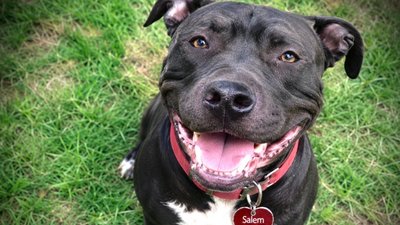
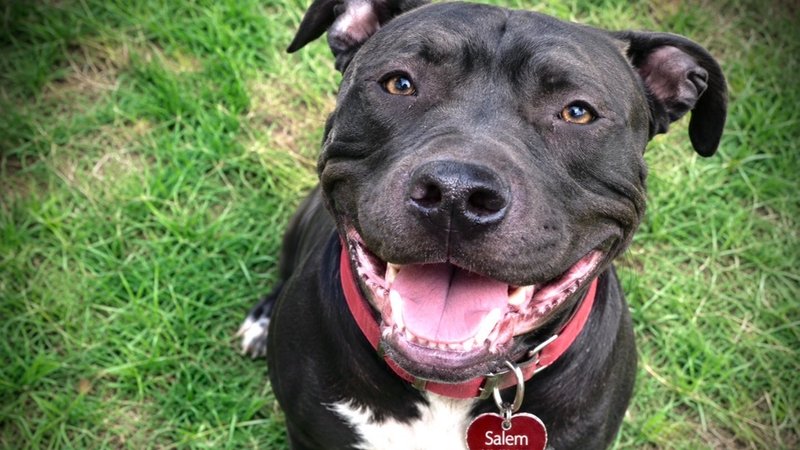
Salem is not a case number, a breed label, or an allegation in a report.
He is a dog. He has a personality, a history, a family, and a life that matters.
He is loved. He is cared for. He is more than the worst moment someone might use to describe him.
The City of Oskaloosa’s Animal Review Committee has deemed Salem dangerous and ordered that he be euthanized or removed from the city. I am challenging that decision because I believe the circumstances surrounding his case deserve a fair and thorough examination.
I am not asking anyone to disregard public safety. Protecting people and other animals is important. Responsible ownership is important.
But so is fairness.
When a decision can permanently separate a family or end an animal’s life, that decision must be based on reliable evidence, appropriate evaluation, consideration of the circumstances, and a meaningful opportunity for the owner to be heard.
I believe important questions remain about the circumstances of Salem’s incident, the evidence considered, the handling of notice, and whether all relevant information was adequately evaluated.
I have taken precautions as Salem’s owner, including using harnesses and taking steps to manage him responsibly. I have communicated with neighbors and taken safety concerns seriously.
I am asking for the opportunity to have the entire picture considered.
Because an animal deserves to be evaluated as a whole, not reduced to a single allegation or moment in time.
ONE INCIDENT SHOULD NOT DEFINE AN ENTIRE LIFE
Consider this:
If one happy afternoon cannot independently establish that a dog poses no risk, how can one isolated incident automatically establish that the dog is inherently dangerous?
An incident deserves investigation. Evidence deserves examination. Public safety deserves serious consideration.
But an incident is a moment in time. A dog’s temperament, behavioral history, environment, and capacity for rehabilitation extend far beyond that moment.
A responsible evaluation should consider:
What actually happened, and what evidence supports each account?
What occurred immediately before the incident?
Was fear, pain, stress, provocation, or another relevant circumstance involved?
What does the dog’s documented behavioral history show?
Was the behavior isolated, situational, or part of a repeated pattern?
What warning signals or communication behaviors may have been present?
Could reasonable safeguards, management, or rehabilitation reduce any identified risk?
Has the animal received an appropriate, independent behavioral assessment?
A single incident may provide important evidence. But it should not automatically replace a comprehensive evaluation of an individual animal.
Likewise, a dog’s breed or physical appearance should never substitute for evidence of that individual dog’s behavior and temperament.
We cannot fairly evaluate an animal by looking only at its worst moment while disregarding everything that came before and after it.
The goal should not be to excuse dangerous behavior. The goal should be to accurately identify risk, protect the community, and avoid irreversible decisions based on incomplete information.
UNDERSTANDING A DOG IS NOT THE SAME AS JUDGING AN INCIDENT
Animal-control investigations and professional canine behavioral assessments are two different responsibilities.
Understanding canine behavior requires knowledge of body language, communication, fear responses, stress, pain, environmental triggers, behavioral history, and the circumstances surrounding an incident.
A dog cannot explain what happened in words. Its behavior is its communication.
A reaction that appears aggressive may have different underlying causes. Fear, pain, restraint, territorial behavior, stress, and provocation can all influence how an animal responds.
That does not mean every reaction is harmless. It means context matters.
People involved in decisions that could cost an animal its life should have appropriate training and access to qualified behavioral expertise.
We should establish clear minimum training standards, transparent qualifications, and independent behavioral evaluations when euthanasia is being considered.
If a decision can cost an animal its life, understanding that animal should be a requirement, not an assumption.
JUSTICE SHOULD NOT DEPEND ON HOW MUCH MONEY YOU HAVE
There is another issue that cannot be ignored: access to justice.
Not every dog owner can afford private legal representation.
Not every family can afford an independent veterinary expert or qualified canine behaviorist to evaluate their animal and challenge a determination made by a municipality.
But the inability to pay for those services should never mean an owner loses the opportunity to meaningfully defend their animal.
A person should not have to choose between paying for an attorney, paying for an expert assessment, and keeping their dog alive.
When a government decision can result in euthanasia, owners must have a meaningful opportunity to understand the allegations, review the evidence, present relevant information, and obtain an impartial review, regardless of their financial circumstances.
We need to recognize that financial hardship can create an enormous imbalance between an individual owner and a government entity.
A dog should not lose its life because its owner cannot afford the resources necessary to save it.
Due process should not be a privilege reserved for those who can afford it. Fairness should not come with a price tag.
We are calling for meaningful access to independent evaluations and review, including financial assistance for owners who cannot otherwise obtain those resources.
WHAT A FAIR AND ACCOUNTABLE SYSTEM SHOULD LOOK LIKE
We believe dangerous-dog determinations should include:
Proper and timely notice of allegations, hearings, and determinations.
Clear documentation of the evidence used to reach a decision.
Consideration of provocation and the circumstances surrounding an incident.
Individualized evaluation rather than assumptions based on breed or appearance.
Decision-makers with appropriate training and demonstrated knowledge of animal behavior.
Independent behavioral assessments when serious or irreversible consequences are being considered.
Consideration of behavioral history, rehabilitation, and reasonable safety measures.
A meaningful opportunity for owners to respond, present evidence, and appeal.
Access to expert evaluations and legal resources for owners experiencing financial hardship.
Protection against irreversible action while a timely and proper challenge is pending, subject to applicable law and court orders.
Public safety and humane treatment are not mutually exclusive.
A system can protect communities while also protecting animals from decisions that are incomplete, inconsistent, or unsupported by sufficient evidence.
FROM SALEM’S STORY TO SALEM’S LAW
Salem’s case has brought attention to questions that extend far beyond one dog, one family, or one community.
It has strengthened my belief that Iowa needs more consistent, humane, and accountable standards for how animals are evaluated, treated, and protected, and how owners are given the opportunity to defend them.
That is why I am developing:
SALEM’S LAW
A VOICE FOR THE VOICELESS
Salem’s Law is a proposed legislative initiative intended to improve animal welfare, strengthen owner protections, and establish greater accountability in animal-related proceedings.
Its proposed areas of focus include:
1. Animal Welfare and Humane Care
Establishing consistent standards that prioritize humane treatment, responsible care, and the welfare of animals.
2. Owner Rights and Due Process
Ensuring owners receive proper notice, access to evidence, and a meaningful opportunity to challenge decisions affecting their animals.
3. Shelter Standards and Accountability
Promoting transparent practices, responsible oversight, and accountability in animal-care institutions.
4. Behavioral Assessment and Rehabilitation
Encouraging qualified, individualized behavioral evaluations and consideration of rehabilitation and reasonable alternatives when appropriate.
5. Public Safety and Community Protection
Protecting people and animals through responsible ownership, evidence-based assessments, and practical safety measures.
6. Oversight, Enforcement, and Implementation
Establishing meaningful standards for training, accountability, enforcement, and consistent application.
Salem’s Law is still being developed. Its purpose is not to excuse dangerous behavior or disregard public safety. It is to establish a system where decisions are informed, procedures are fair, animals are treated humanely, and accountability applies to everyone involved.
Salem may be the reason this work began, but he should not be the only reason it matters.
WHAT WE ARE ASKING
We are asking the City of Oskaloosa to:
Reconsider Salem’s dangerous-dog determination through a fair and transparent process.
Preserve and make available relevant records and evidence concerning the incident and the committee’s decision.
Ensure Salem is not euthanized or permanently disposed of while his challenge is pending, subject to applicable legal authority and court orders.
Review the procedures used in dangerous-dog cases to ensure owners and animals receive meaningful due process.
Support more consistent, evidence-based, and accountable animal-control practices.
We are also asking Iowa lawmakers and communities to consider legislative reforms that provide stronger protections for animals and their owners.
WHY YOUR SIGNATURE MATTERS
You do not have to know Salem personally to understand what is at stake.
You only have to believe that fairness matters.
That evidence matters.
That context matters.
That an animal’s life deserves more than a decision made without a complete and informed consideration of the circumstances.
You should not have to be wealthy to defend your dog.
You should not have to purchase an expert opinion simply to have your voice heard.
You should not have to accept that one incident, one allegation, or one label tells the entire story of an animal’s life.
And you should not have to wonder whether a different outcome might have been possible if someone had taken the time to understand the animal rather than simply judge the incident.
How many animals have lost their lives without ever receiving the benefit of a comprehensive, qualified, and independent evaluation?
We may never know.
But we can demand a better process going forward.
Today, this is Salem.
Tomorrow, it could be someone else’s dog.
Salem’s story can be the beginning of something that protects animals and families long after his own case is resolved.
Please sign this petition. Share his story. Support meaningful reform.
Give Salem a voice.
Help give other families a fair chance.
SAVE SALEM. DEMAND FAIRNESS.
BECAUSE EVERY DOG DESERVES A FAIR EVALUATION, AND EVERY OWNER DESERVES A FAIR CHANCE TO BE HEARD.
SALEM’S LAW: A VOICE FOR THE VOICELESS.

42
The Issue
SAVE SALEM. DEMAND FAIRNESS. REFORM DANGEROUS DOG LAWS.
A VOICE FOR THE VOICELESS. A FAIR CHANCE FOR EVERY DOG.
One incident should not define an entire life. One person’s financial circumstances should not determine whether that life is worth saving.
SALEM’S STORY
Salem is not a case number, a breed label, or an allegation in a report.
He is a dog. He has a personality, a history, a family, and a life that matters.
He is loved. He is cared for. He is more than the worst moment someone might use to describe him.
The City of Oskaloosa’s Animal Review Committee has deemed Salem dangerous and ordered that he be euthanized or removed from the city. I am challenging that decision because I believe the circumstances surrounding his case deserve a fair and thorough examination.
I am not asking anyone to disregard public safety. Protecting people and other animals is important. Responsible ownership is important.
But so is fairness.
When a decision can permanently separate a family or end an animal’s life, that decision must be based on reliable evidence, appropriate evaluation, consideration of the circumstances, and a meaningful opportunity for the owner to be heard.
I believe important questions remain about the circumstances of Salem’s incident, the evidence considered, the handling of notice, and whether all relevant information was adequately evaluated.
I have taken precautions as Salem’s owner, including using harnesses and taking steps to manage him responsibly. I have communicated with neighbors and taken safety concerns seriously.
I am asking for the opportunity to have the entire picture considered.
Because an animal deserves to be evaluated as a whole, not reduced to a single allegation or moment in time.
ONE INCIDENT SHOULD NOT DEFINE AN ENTIRE LIFE
Consider this:
If one happy afternoon cannot independently establish that a dog poses no risk, how can one isolated incident automatically establish that the dog is inherently dangerous?
An incident deserves investigation. Evidence deserves examination. Public safety deserves serious consideration.
But an incident is a moment in time. A dog’s temperament, behavioral history, environment, and capacity for rehabilitation extend far beyond that moment.
A responsible evaluation should consider:
What actually happened, and what evidence supports each account?
What occurred immediately before the incident?
Was fear, pain, stress, provocation, or another relevant circumstance involved?
What does the dog’s documented behavioral history show?
Was the behavior isolated, situational, or part of a repeated pattern?
What warning signals or communication behaviors may have been present?
Could reasonable safeguards, management, or rehabilitation reduce any identified risk?
Has the animal received an appropriate, independent behavioral assessment?
A single incident may provide important evidence. But it should not automatically replace a comprehensive evaluation of an individual animal.
Likewise, a dog’s breed or physical appearance should never substitute for evidence of that individual dog’s behavior and temperament.
We cannot fairly evaluate an animal by looking only at its worst moment while disregarding everything that came before and after it.
The goal should not be to excuse dangerous behavior. The goal should be to accurately identify risk, protect the community, and avoid irreversible decisions based on incomplete information.
UNDERSTANDING A DOG IS NOT THE SAME AS JUDGING AN INCIDENT
Animal-control investigations and professional canine behavioral assessments are two different responsibilities.
Understanding canine behavior requires knowledge of body language, communication, fear responses, stress, pain, environmental triggers, behavioral history, and the circumstances surrounding an incident.
A dog cannot explain what happened in words. Its behavior is its communication.
A reaction that appears aggressive may have different underlying causes. Fear, pain, restraint, territorial behavior, stress, and provocation can all influence how an animal responds.
That does not mean every reaction is harmless. It means context matters.
People involved in decisions that could cost an animal its life should have appropriate training and access to qualified behavioral expertise.
We should establish clear minimum training standards, transparent qualifications, and independent behavioral evaluations when euthanasia is being considered.
If a decision can cost an animal its life, understanding that animal should be a requirement, not an assumption.
JUSTICE SHOULD NOT DEPEND ON HOW MUCH MONEY YOU HAVE
There is another issue that cannot be ignored: access to justice.
Not every dog owner can afford private legal representation.
Not every family can afford an independent veterinary expert or qualified canine behaviorist to evaluate their animal and challenge a determination made by a municipality.
But the inability to pay for those services should never mean an owner loses the opportunity to meaningfully defend their animal.
A person should not have to choose between paying for an attorney, paying for an expert assessment, and keeping their dog alive.
When a government decision can result in euthanasia, owners must have a meaningful opportunity to understand the allegations, review the evidence, present relevant information, and obtain an impartial review, regardless of their financial circumstances.
We need to recognize that financial hardship can create an enormous imbalance between an individual owner and a government entity.
A dog should not lose its life because its owner cannot afford the resources necessary to save it.
Due process should not be a privilege reserved for those who can afford it. Fairness should not come with a price tag.
We are calling for meaningful access to independent evaluations and review, including financial assistance for owners who cannot otherwise obtain those resources.
WHAT A FAIR AND ACCOUNTABLE SYSTEM SHOULD LOOK LIKE
We believe dangerous-dog determinations should include:
Proper and timely notice of allegations, hearings, and determinations.
Clear documentation of the evidence used to reach a decision.
Consideration of provocation and the circumstances surrounding an incident.
Individualized evaluation rather than assumptions based on breed or appearance.
Decision-makers with appropriate training and demonstrated knowledge of animal behavior.
Independent behavioral assessments when serious or irreversible consequences are being considered.
Consideration of behavioral history, rehabilitation, and reasonable safety measures.
A meaningful opportunity for owners to respond, present evidence, and appeal.
Access to expert evaluations and legal resources for owners experiencing financial hardship.
Protection against irreversible action while a timely and proper challenge is pending, subject to applicable law and court orders.
Public safety and humane treatment are not mutually exclusive.
A system can protect communities while also protecting animals from decisions that are incomplete, inconsistent, or unsupported by sufficient evidence.
FROM SALEM’S STORY TO SALEM’S LAW
Salem’s case has brought attention to questions that extend far beyond one dog, one family, or one community.
It has strengthened my belief that Iowa needs more consistent, humane, and accountable standards for how animals are evaluated, treated, and protected, and how owners are given the opportunity to defend them.
That is why I am developing:
SALEM’S LAW
A VOICE FOR THE VOICELESS
Salem’s Law is a proposed legislative initiative intended to improve animal welfare, strengthen owner protections, and establish greater accountability in animal-related proceedings.
Its proposed areas of focus include:
1. Animal Welfare and Humane Care
Establishing consistent standards that prioritize humane treatment, responsible care, and the welfare of animals.
2. Owner Rights and Due Process
Ensuring owners receive proper notice, access to evidence, and a meaningful opportunity to challenge decisions affecting their animals.
3. Shelter Standards and Accountability
Promoting transparent practices, responsible oversight, and accountability in animal-care institutions.
4. Behavioral Assessment and Rehabilitation
Encouraging qualified, individualized behavioral evaluations and consideration of rehabilitation and reasonable alternatives when appropriate.
5. Public Safety and Community Protection
Protecting people and animals through responsible ownership, evidence-based assessments, and practical safety measures.
6. Oversight, Enforcement, and Implementation
Establishing meaningful standards for training, accountability, enforcement, and consistent application.
Salem’s Law is still being developed. Its purpose is not to excuse dangerous behavior or disregard public safety. It is to establish a system where decisions are informed, procedures are fair, animals are treated humanely, and accountability applies to everyone involved.
Salem may be the reason this work began, but he should not be the only reason it matters.
WHAT WE ARE ASKING
We are asking the City of Oskaloosa to:
Reconsider Salem’s dangerous-dog determination through a fair and transparent process.
Preserve and make available relevant records and evidence concerning the incident and the committee’s decision.
Ensure Salem is not euthanized or permanently disposed of while his challenge is pending, subject to applicable legal authority and court orders.
Review the procedures used in dangerous-dog cases to ensure owners and animals receive meaningful due process.
Support more consistent, evidence-based, and accountable animal-control practices.
We are also asking Iowa lawmakers and communities to consider legislative reforms that provide stronger protections for animals and their owners.
WHY YOUR SIGNATURE MATTERS
You do not have to know Salem personally to understand what is at stake.
You only have to believe that fairness matters.
That evidence matters.
That context matters.
That an animal’s life deserves more than a decision made without a complete and informed consideration of the circumstances.
You should not have to be wealthy to defend your dog.
You should not have to purchase an expert opinion simply to have your voice heard.
You should not have to accept that one incident, one allegation, or one label tells the entire story of an animal’s life.
And you should not have to wonder whether a different outcome might have been possible if someone had taken the time to understand the animal rather than simply judge the incident.
How many animals have lost their lives without ever receiving the benefit of a comprehensive, qualified, and independent evaluation?
We may never know.
But we can demand a better process going forward.
Today, this is Salem.
Tomorrow, it could be someone else’s dog.
Salem’s story can be the beginning of something that protects animals and families long after his own case is resolved.
Please sign this petition. Share his story. Support meaningful reform.
Give Salem a voice.
Help give other families a fair chance.
SAVE SALEM. DEMAND FAIRNESS.
BECAUSE EVERY DOG DESERVES A FAIR EVALUATION, AND EVERY OWNER DESERVES A FAIR CHANCE TO BE HEARD.
SALEM’S LAW: A VOICE FOR THE VOICELESS.
The Decision Makers

Petition Updates
Share this petition
Petition created on November 20, 2026