

Save Our Children With a Standard of Care for Congenital Diaphragmatic Hernia
The Issue
Every year 52,000 babies are born with Congenital Diaphragmatic Hernia (CDH). 100,000's of survivors struggle with medical problems. Too often, these patients do not have access to experienced medical care.
Rather than focusing on a few hospitals who can provide adequate care, we implore the medical world to give all of these patients access to care regardless of where they are born, where they can afford to travel to and what age they are.
Because every child deserves a chance to grow up and grow old.
Please consider singing this petition in support of the best possible medical care for all of these patients.
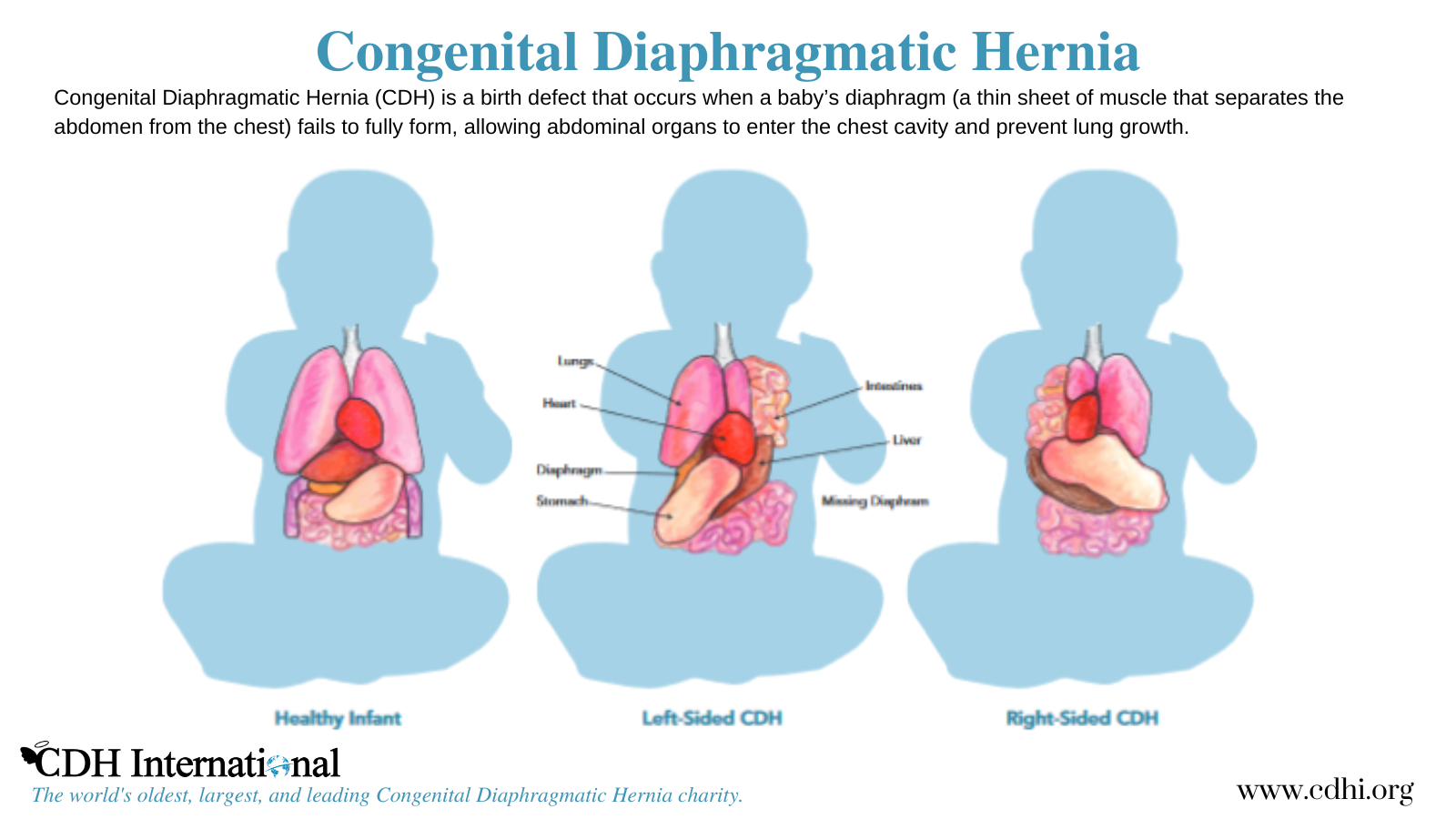
Congenital Diaphragmatic Hernia (CDH) is a congenital anomaly that occurs when a baby’s diaphragm fails to form fully, allowing abdominal organs to enter the chest cavity and prevent lung growth.
1 in every 2500 babies is born with CDH. The cause is unknown.
Babies born with CDH undergo complicated surgeries and long hospital stays. In Higher-Income-Countries, the survival rate is approximately 50 to 80%. In Lower-to-Middle-Income-Countries, the survival rate is less than 1%.
Though a few countries have a Standard of Care for Congenital Diaphragmatic Hernia, most do not, including the United States.
When patients reach adulthood, they are often turned out of appropriate medical care by experienced care providers and left to create their own patchwork care plan.
Congenital Diaphragmatic Hernia treatment has become a $1 billion annual industry* with a huge disparity in the amount of research funding (roughly $5 million) compared to the cost of care.
-----------------------
We hereby petition that all stakeholders** collaborate for a minimum global Standard of Care for Congenital Diaphragmatic Hernia with goals to:
- Create Standard Measurements of Mortality and Morbidity to aid and accelerate research efforts.
- Outline care of Congenital Diaphragmatic Hernia as a guideline for the emergency care of children treated in hospitals and/or by physicians without CDH experience, with an emphasis on helping those not diagnosed until birth and those born in Lower to Middle-Income Countries.
- Raise the level of care in all hospitals that can treat patients with Congenital Diaphragmatic Hernia to make it accessible so that patient families can stay closer to their homes, jobs, other children and support systems.
- Set standards for patient Individual Education Plans (IEPs) so that patients will have better access to therapies and medications.
- Set standards for insurance coverage for all medical care involving Congenital Diaphragmatic Hernia patients during their entire lifetimes so that these patients do not lose access to experienced care when they age out of pediatrics or access to needed medications when they pass age markers set for healthy children.
We hereby declare that said Standard of Care for Congenital Diaphragmatic Hernia should not:
- Overrule any Standards already established in specific countries or continents.
- Inhibit any research efforts or collaborations.
- Hinder medical care in any way.
For the acceleration of research, we also highly encourage global collaboration of all stakeholders in that:
- All hospitals that treat Congenital Diaphragmatic Hernia participate in the CDH Research Study database.
- All patients participate in the CDH Patient Registry.
- All patients and hospitals participate in the DHREAMS/CARES for Kids genetic registry.
Signed,
The survivors, family members, friends, medical care providers and all those who wish to participate in stopping the monster, Congenital Diaphragmatic Hernia, as soon as possible.
*********************************
*"The mean cost per patient ranged from $86,742 to $331,893, depending on the severity of the CDH, with an estimated total annual cost of $1.1 BILLION in the United States." - Basta, M. N., Harrison, W., Schulert, G. S., & Wagner, A. J. (2020). Economic burden of hospitalizations for congenital diaphragmatic hernia in the United States. Journal of Pediatric Surgery, 55(7), 1268-1274
** Stakeholders are those who have a vested interest in the care of these children; patients, families, caregivers, pediatric surgeons, nurses, hospitals, other physicians, organizations, etc
*** This petition created for the better medical care of all patients born with Congenital Diaphragmatic Hernia and in the memory of Josh Benson and all those lost to CDH.

6,999
The Issue
Every year 52,000 babies are born with Congenital Diaphragmatic Hernia (CDH). 100,000's of survivors struggle with medical problems. Too often, these patients do not have access to experienced medical care.
Rather than focusing on a few hospitals who can provide adequate care, we implore the medical world to give all of these patients access to care regardless of where they are born, where they can afford to travel to and what age they are.
Because every child deserves a chance to grow up and grow old.
Please consider singing this petition in support of the best possible medical care for all of these patients.
Congenital Diaphragmatic Hernia (CDH) is a congenital anomaly that occurs when a baby’s diaphragm fails to form fully, allowing abdominal organs to enter the chest cavity and prevent lung growth.
1 in every 2500 babies is born with CDH. The cause is unknown.
Babies born with CDH undergo complicated surgeries and long hospital stays. In Higher-Income-Countries, the survival rate is approximately 50 to 80%. In Lower-to-Middle-Income-Countries, the survival rate is less than 1%.
Though a few countries have a Standard of Care for Congenital Diaphragmatic Hernia, most do not, including the United States.
When patients reach adulthood, they are often turned out of appropriate medical care by experienced care providers and left to create their own patchwork care plan.
Congenital Diaphragmatic Hernia treatment has become a $1 billion annual industry* with a huge disparity in the amount of research funding (roughly $5 million) compared to the cost of care.
-----------------------
We hereby petition that all stakeholders** collaborate for a minimum global Standard of Care for Congenital Diaphragmatic Hernia with goals to:
- Create Standard Measurements of Mortality and Morbidity to aid and accelerate research efforts.
- Outline care of Congenital Diaphragmatic Hernia as a guideline for the emergency care of children treated in hospitals and/or by physicians without CDH experience, with an emphasis on helping those not diagnosed until birth and those born in Lower to Middle-Income Countries.
- Raise the level of care in all hospitals that can treat patients with Congenital Diaphragmatic Hernia to make it accessible so that patient families can stay closer to their homes, jobs, other children and support systems.
- Set standards for patient Individual Education Plans (IEPs) so that patients will have better access to therapies and medications.
- Set standards for insurance coverage for all medical care involving Congenital Diaphragmatic Hernia patients during their entire lifetimes so that these patients do not lose access to experienced care when they age out of pediatrics or access to needed medications when they pass age markers set for healthy children.
We hereby declare that said Standard of Care for Congenital Diaphragmatic Hernia should not:
- Overrule any Standards already established in specific countries or continents.
- Inhibit any research efforts or collaborations.
- Hinder medical care in any way.
For the acceleration of research, we also highly encourage global collaboration of all stakeholders in that:
- All hospitals that treat Congenital Diaphragmatic Hernia participate in the CDH Research Study database.
- All patients participate in the CDH Patient Registry.
- All patients and hospitals participate in the DHREAMS/CARES for Kids genetic registry.
Signed,
The survivors, family members, friends, medical care providers and all those who wish to participate in stopping the monster, Congenital Diaphragmatic Hernia, as soon as possible.
*********************************
*"The mean cost per patient ranged from $86,742 to $331,893, depending on the severity of the CDH, with an estimated total annual cost of $1.1 BILLION in the United States." - Basta, M. N., Harrison, W., Schulert, G. S., & Wagner, A. J. (2020). Economic burden of hospitalizations for congenital diaphragmatic hernia in the United States. Journal of Pediatric Surgery, 55(7), 1268-1274
** Stakeholders are those who have a vested interest in the care of these children; patients, families, caregivers, pediatric surgeons, nurses, hospitals, other physicians, organizations, etc
*** This petition created for the better medical care of all patients born with Congenital Diaphragmatic Hernia and in the memory of Josh Benson and all those lost to CDH.
Supporter Voices
Petition Updates
Share this petition
Petition created on April 5, 2023