Save Maju Forest — build the homes without erasing the wild
The Issue
To: HDB, MND, URA and NPARK
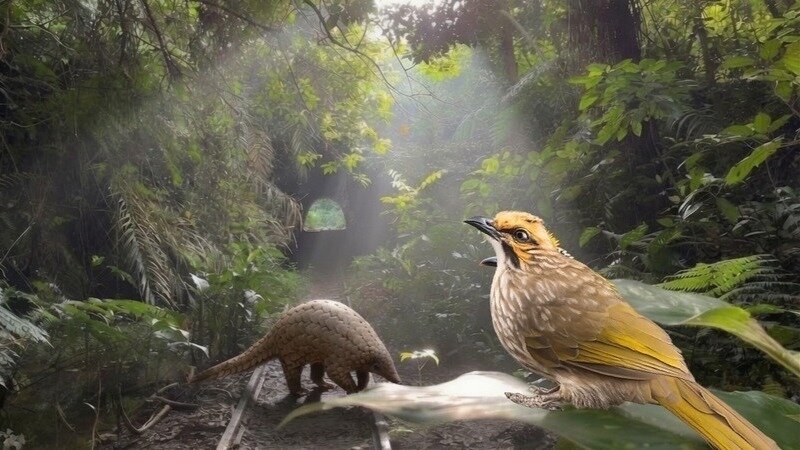
There is a forest in Clementi where a railway line hasn't carried a train in thirty years. Walk the old tracks at dawn and you may hear a straw-headed bulbul — a songbird so hunted that more than half of its entire remaining wild population on Earth is thought to live in Singapore. Somewhere in the leaf litter, a Sunda pangolin — the most trafficked mammal in the world — curls into a ball at the sound of your footsteps.
Both animals are Critically Endangered. Both live in Maju Forest as confirmed by the Government's own environmental study.
On 10 July 2026, HDB announced that about 15 of this forest's 23 hectares will be cleared for public housing, keeping only 8 as a wildlife refuge. We are not asking Singapore to choose nature over homes. We are asking it to build on the land it has already spent and stop spending the land it can never get back.
We've watched this movie before
Tengah — the west's last great forest — cleared. Kranji woodland — cleared by mistake, mid-survey. Bukit Timah Turf City — 177 plants and 25 animals of conservation significance in the Government's own study. The same two Critically Endangered species surface in report after report: one shrinking population, pushed from patch to patch, until there is nowhere left to go.
But we've also seen the ending change: Dover Forest
In 2021, more than 50,000 people signed for Dover Forest and crucially, nearly 1,800 of them wrote to HDB through its official feedback channel. MPs carried the issue into Parliament. The result: the biodiversity-rich western half of the forest was retained, its fate deferred to a review around 2030, with a sizeable nature park safeguarded as an ecological connector.
Compare Tengah, where the official feedback window drew a total of 16 responses — and the forest fell.
The lesson is not that we always lose. It is that signatures open the door — official feedback walks through it. And "zoned residential since 1980" is not destiny: Dover's zoning was partly walked back and Khatib Bongsu, once earmarked for prawn farming, is becoming a nature park instead.
The Government already agrees — in its own words
Parliament has been told that more than 400 hectares of golf-course land will be taken back by 2030, with several courses already earmarked for housing. A senior minister has stated plainly that to keep providing good homes, "we will have to recycle previously developed land." URA is raising the share of land for housing from 14% to 17%.
Recycling spent land first is not a fringe demand. It is stated national policy. All we ask is that the Maju plan actually follow it.
The answer is hiding in plain sight
Stand at the forest's edge and look across the street. Between the trees and the future Maju MRT station sits an ageing public-housing precinct from 1984 — fewer than 800 low-rise flats on roughly 8.5 - 9.5 hectares of land the state has already spent, in a neighborhood zoned for exactly this kind of renewal.
We won't name it. Open Goggle map: it names itself.
Renew that estate at modern densities as part of this very project, and it absorbs around half of the homes planned for the forest. The clearance shrinks from 15 hectares to about 6 to 8 — and the forest kept nearly doubles or more. Same homes delivered. Twice the forest standing. All parties benefit.
What we are asking of HDB, MND, URA and NPARK
Pause the clearance — publish the full environmental study and the projected housing yield of the forest parcel before any tender is called.
Build brownfield-first — expiring golf courses, ageing industrial and institutional land — and publish the specific shortfall, if any, that these cannot meet.
If building here is truly unavoidable, pair it with renewal of the ageing estate between the forest and the future MRT station — and cut the forest clearance by roughly half.
Protect Maju and Clementi Forests as one connected greenway, with the old Jurong railway line as its spine.
Count forest loss cumulatively, not project by project — and consult the public before decisions are locked, not after.
How we win
1. Sign — and push this past 100,000, twice Dover's number.
2. Spend two minutes on the channel that changed Dover's fate. Send your own words to HDB before 6 August 2026: 👉 https://form.gov.sg/6a261f944a21fe7c804deebc
3. Write to your MP — ask them to raise Maju Forest in Parliament, as MPs did for Dover.
4. Share this with one person who has walked the old railway line.
The forest cannot speak at a consultation. The pangolin cannot sign this. The bulbul can only sing. So we must.
Silence is read as consent. Let the record show instead that a hundred thousand of us stood up for a forest while it was still standing. 🌳

8,674
The Issue
To: HDB, MND, URA and NPARK
There is a forest in Clementi where a railway line hasn't carried a train in thirty years. Walk the old tracks at dawn and you may hear a straw-headed bulbul — a songbird so hunted that more than half of its entire remaining wild population on Earth is thought to live in Singapore. Somewhere in the leaf litter, a Sunda pangolin — the most trafficked mammal in the world — curls into a ball at the sound of your footsteps.
Both animals are Critically Endangered. Both live in Maju Forest as confirmed by the Government's own environmental study.
On 10 July 2026, HDB announced that about 15 of this forest's 23 hectares will be cleared for public housing, keeping only 8 as a wildlife refuge. We are not asking Singapore to choose nature over homes. We are asking it to build on the land it has already spent and stop spending the land it can never get back.
We've watched this movie before
Tengah — the west's last great forest — cleared. Kranji woodland — cleared by mistake, mid-survey. Bukit Timah Turf City — 177 plants and 25 animals of conservation significance in the Government's own study. The same two Critically Endangered species surface in report after report: one shrinking population, pushed from patch to patch, until there is nowhere left to go.
But we've also seen the ending change: Dover Forest
In 2021, more than 50,000 people signed for Dover Forest and crucially, nearly 1,800 of them wrote to HDB through its official feedback channel. MPs carried the issue into Parliament. The result: the biodiversity-rich western half of the forest was retained, its fate deferred to a review around 2030, with a sizeable nature park safeguarded as an ecological connector.
Compare Tengah, where the official feedback window drew a total of 16 responses — and the forest fell.
The lesson is not that we always lose. It is that signatures open the door — official feedback walks through it. And "zoned residential since 1980" is not destiny: Dover's zoning was partly walked back and Khatib Bongsu, once earmarked for prawn farming, is becoming a nature park instead.
The Government already agrees — in its own words
Parliament has been told that more than 400 hectares of golf-course land will be taken back by 2030, with several courses already earmarked for housing. A senior minister has stated plainly that to keep providing good homes, "we will have to recycle previously developed land." URA is raising the share of land for housing from 14% to 17%.
Recycling spent land first is not a fringe demand. It is stated national policy. All we ask is that the Maju plan actually follow it.
The answer is hiding in plain sight
Stand at the forest's edge and look across the street. Between the trees and the future Maju MRT station sits an ageing public-housing precinct from 1984 — fewer than 800 low-rise flats on roughly 8.5 - 9.5 hectares of land the state has already spent, in a neighborhood zoned for exactly this kind of renewal.
We won't name it. Open Goggle map: it names itself.
Renew that estate at modern densities as part of this very project, and it absorbs around half of the homes planned for the forest. The clearance shrinks from 15 hectares to about 6 to 8 — and the forest kept nearly doubles or more. Same homes delivered. Twice the forest standing. All parties benefit.
What we are asking of HDB, MND, URA and NPARK
Pause the clearance — publish the full environmental study and the projected housing yield of the forest parcel before any tender is called.
Build brownfield-first — expiring golf courses, ageing industrial and institutional land — and publish the specific shortfall, if any, that these cannot meet.
If building here is truly unavoidable, pair it with renewal of the ageing estate between the forest and the future MRT station — and cut the forest clearance by roughly half.
Protect Maju and Clementi Forests as one connected greenway, with the old Jurong railway line as its spine.
Count forest loss cumulatively, not project by project — and consult the public before decisions are locked, not after.
How we win
1. Sign — and push this past 100,000, twice Dover's number.
2. Spend two minutes on the channel that changed Dover's fate. Send your own words to HDB before 6 August 2026: 👉 https://form.gov.sg/6a261f944a21fe7c804deebc
3. Write to your MP — ask them to raise Maju Forest in Parliament, as MPs did for Dover.
4. Share this with one person who has walked the old railway line.
The forest cannot speak at a consultation. The pangolin cannot sign this. The bulbul can only sing. So we must.
Silence is read as consent. Let the record show instead that a hundred thousand of us stood up for a forest while it was still standing. 🌳
The Decision Makers

Supporter Voices
Petition Updates
Share this petition
Petition created on 10 July 2026