
10 days left!
The HDB feedback window closes on 6 August. That’s ten days from today.
I want to use this update to look back at what these past two and a half weeks have actually been, because it’s easy to lose the shape of it when you’re inside it.
Where we started
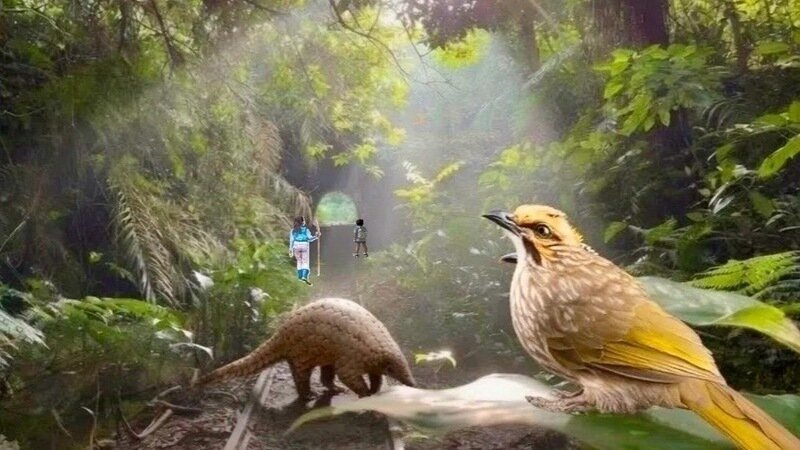
On 10 July, HDB announced that about 15 of Maju Forest’s 23 hectares would be cleared for housing, keeping around 8 as a refuge. Two Critically Endangered species live in there — the Sunda pangolin and the straw-headed bulbul — confirmed not by us, but by the Government’s own environmental study for the Cross Island Line. Singapore is thought to hold more than half of the world’s remaining wild straw-headed bulbuls. Roughly 573 birds.
On the same day, under the same process and the same 6 August deadline, plans were announced for Gillman Barracks. Two different forests, same fate.
What happened next was not us. It was you.
Since then nearly 30,000 people across Singapore have signed this petition. Neighbours who’d never spoken to each other comparing bird photos. Families who drove across the island just to see what the fuss was about, and stayed till dusk.
On 17 July, residents filled a room in Sunset Way for three hours — environmental concerns, educational, health, heritage, memory. People came prepared. A teacher asked how she’s meant to answer a child who says, but you told us to speak up. That question hasn’t left me.
Voices beyond the neighbourhood have joined too. A Nature Society Singapore conservation committee member described keeping just a third of the forest as the “minimum compromise.” Academics writing about consultation more broadly have noted a pattern worth sitting with — that engagement often arrives after a direction already feels settled, and that residents shouldn’t have to produce full alternative masterplans themselves. That’s the agency’s job. The session was covered in the national press. This is no longer a Sunset Way conversation.
The gentle paradox
In November 2021, Singapore endorsed the Glasgow Leaders’ Declaration on Forests and Land Use, joining 140 other countries in pledging to halt and reverse forest loss by 2030. Our Minister for National Development said then that sustainability and stewardship are core principles in our approach to land use planning.
We believe that. It’s precisely why we’re writing rather than despairing.
And we are, honestly, world-class at planting trees — NParks expects to reach a million three years ahead of schedule, which is a wonderful thing and deserves saying more often. The only difficulty is that a million saplings and one 23-hectare forest aren’t quite the same currency. A tree can be planted. A forest is harder
And through all of it, the ask has stayed the same, because it was never anti-housing: build the homes on land we’ve already spent, before we spend land we can never get back. The ageing estate between the forest and the future MRT station is still sitting there, still zoned for exactly this kind of renewal, still capable of absorbing at least half these new homes. We won’t name it. Open a map — it names itself.
Why the next ten days matter more than the last seventeen
HDB has said the unit yield for this site is not yet fixed, and that public feedback will be taken into account. I’m choosing to take that at its word. It means this is not decided.
Here’s what Dover 2021 taught us: over 50,000 people signed. But it was the roughly 1,800 people who wrote to HDB through the official channel that changed the process. Tengah’s official window drew a small handful of responses. The forest fell.
Signatures open the door. Written feedback walks through it.
Your next five minutes
- HDB feedback form — closes 6 August: Link
- Write to your MP: Link
- Send this to one person who has walked the old tracks.
For the forest,
The Save Maju Forest petition
IG: @SaveMajuForest