

Save Larkhall's Wildlife and Green Space
The Issue
Save Larkhall's Wildlife and Green Space
Stop further habitat destruction. Share the ecological evidence. Work with local residents to save as much of this land as possible.
I am asking the people of Larkhall to help protect an important piece of our local natural environment before it is too late.
Behind Laverock Rise and Summerlee Road, established trees, hawthorn, brambles, grassland and scrubland are being cleared to make way for a housing development by Persimmon Homes.
For years, this land has supported wildlife and formed part of the natural surroundings of our community.
Now we are watching it disappear.
What we are asking for
We call on Persimmon Homes and South Lanarkshire Council to:
- Pause further habitat clearance until outstanding ecological concerns have been independently reviewed.
- Reconsider building on the remaining natural habitat, including whether part or all of the land can be retained as green space.
- Reduce the impact of any development by reviewing the number of houses and site layout to preserve the maximum practicable amount of established scrubland, mature trees and wildlife corridors.
- Publish the ecological and biodiversity reports, including survey dates, findings and mitigation measures, with appropriate protection for sensitive wildlife information.
Work directly with local residents to explore alternatives and agree a meaningful plan for protecting and managing the remaining habitat. - Address wider community concerns, including safety beside the playpark, drainage, traffic and local infrastructure
Please help us save what remains
But the immediate priority is to protect what remains of this habitat while there is still an opportunity to do so.
This is about asking for development that respects the natural environment and the people who already call this community home.
I am not against new housing. I understand that people need homes. But I do question whether we need to destroy this much established and important natural habitat to build them.
I am calling on Persimmon Homes and South Lanarkshire Council to pause further clearance, reconsider whether this land should be developed at all and, if building is to proceed, work with residents to substantially reduce the area affected and protect as much existing habitat as possible.
This isn't just an overgrown field!
Some people might look at this land and see an untidy patch of bushes and long grass.
But established scrubland like this can be incredibly important for wildlife.
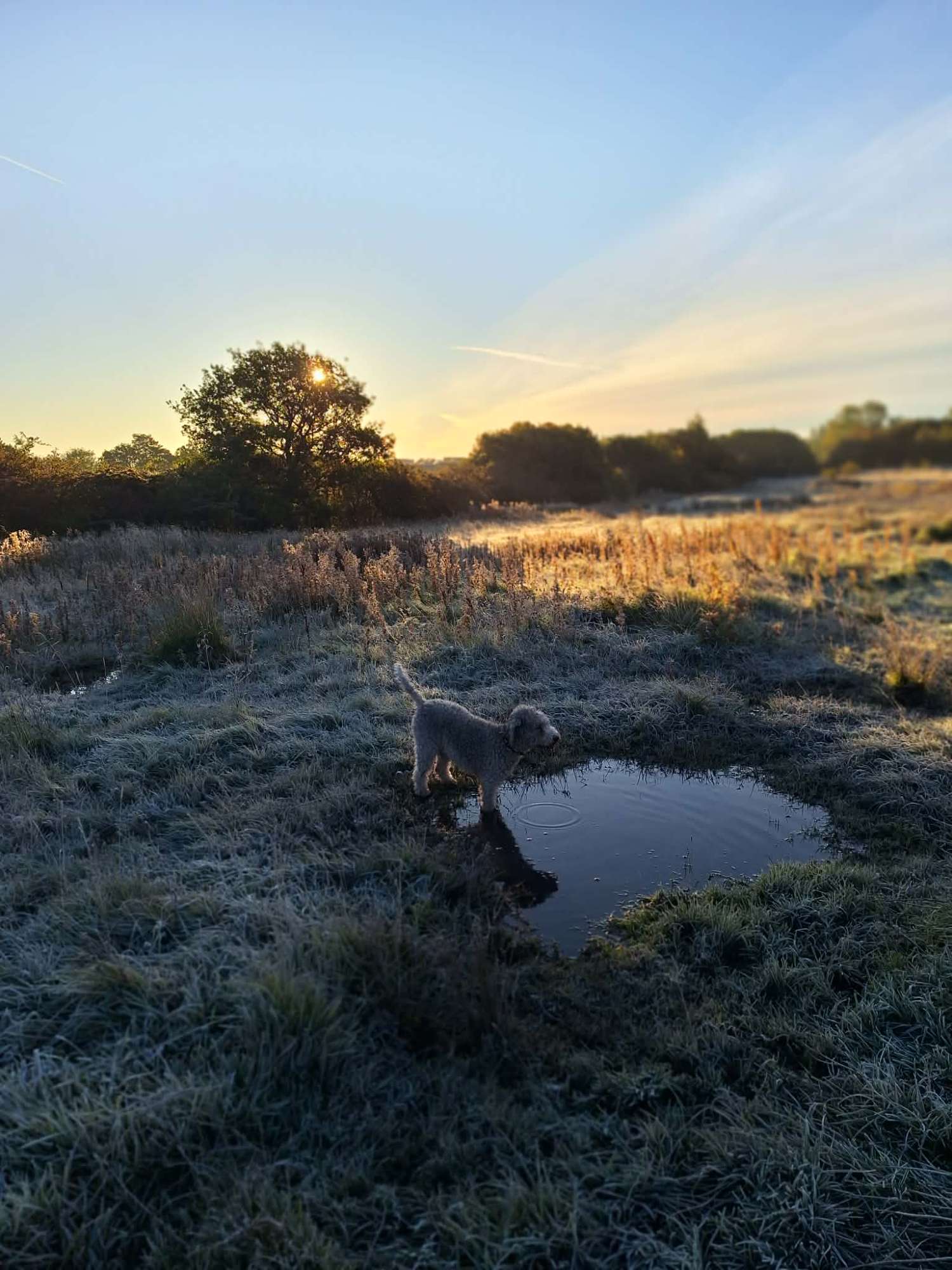
Unlike a regularly mown field, this area contains a mixture of mature trees, hawthorn, brambles, grassland and dense vegetation. Together, they provide different types of food, shelter and places for wildlife to live.
Hawthorn provides food and shelter for birds. Brambles provide flowers and fruit for insects and birds. Long grass and undergrowth can provide cover for hedgehogs and amphibians. Mature trees support a wide range of insects, birds and other wildlife.
What looks overgrown to us can be a whole world to the creatures living there.
The community have reported seeing hedgehogs, badgers, bats, newts and a variety of birds in and around the area, including long-tailed tits, goldfinches and buzzards and many more!
I provided a photograph of a newt found nearby and was advised by NatureScot that it appeared to be a palmate newt.
There are still important questions about how the wider habitat has been assessed for wildlife, including bats, badgers, nesting birds and amphibians.
For the community it is about understanding what wildlife uses this land and ensuring that existing habitat is properly considered before more of it is lost.
You cannot replace decades of established habitat simply by planting a few young trees and landscaping a new housing estate.
This matters to people as well as wildlife.
I believe green spaces like this are part of what makes Larkhall a good place to live.
Hearing birdsong, watching the seasons change and seeing wildlife near our homes might seem like small things, but they make a real difference to how we experience the places where we live.
Having nature around us can help reduce stress, support wellbeing and give children opportunities to learn about the natural world.
Nature should not be a luxury. Not every family can afford days out in the countryside or has a car to travel to nature reserves. Having trees, birds and wildlife close to home gives people opportunities to enjoy nature regardless of their income or circumstances. It gives children chances to learn, explore and develop an appreciation of the natural world. As Larkhall grows, we should be protecting these opportunities for everyone, not gradually losing them.
We should not have to travel somewhere else to experience nature when we already have it on our doorstep.
Why haven't residents been given the ecological and biodiversity reports?
This is one of my biggest concerns.
I formally raised environmental concerns in a planning objection on 23 May 2025.
On 4 December 2025, I requested information from South Lanarkshire Council about ecological surveys, protected species assessments and measures intended to protect wildlife.
I have continued asking questions as clearance has progressed.
Despite these requests, I have not received the ecological and biodiversity reports and substantive answers I asked for.
I am not saying that no surveys were carried out. I am asking to see the evidence.
What wildlife was recorded? When were the surveys undertaken? What habitats were identified as important? What measures were recommended to protect them?
Different species are active at different times of year and, in some cases, different times of day. The timing and methods used for wildlife surveys therefore matter. The community have raised questions about how some surveys were carried out, and these concerns deserve clear answers.
The community deserve to understand how this land was assessed and why so much established vegetation is being removed.
The ecological evidence should be available for scrutiny before the habitat is destroyed, not after it has gone.
Nature cannot speak for itself. That is why environmental protections must be applied rigorously, transparently and in a way that local communities can understand and scrutinise.
We need a better approach to development
I understand that planning permission may already exist and that housing is needed.
But that should not prevent Persimmon Homes and South Lanarkshire Council from listening to residents and reconsidering how much of this land really needs to be developed.
- Could the number of houses be reduced?
- Could the layout be changed?
- Could mature trees, hawthorn and established scrubland be retained as a connected wildlife area?
- Could residents help shape a plan that protects the natural character of the site while accommodating housing where appropriate?
Surely these options deserve proper consideration before more irreversible clearance takes place.
There are also wider concerns about tree-felling operations beside the children's playpark, drainage, road safety and the pressure additional development may place on local schools and services. These issues deserve clear answers too.
We can build houses relatively quickly. We cannot quickly replace trees, scrubland and wildlife habitats that have taken decades to establish.
I do not want to look back in a few years and wonder why we stayed silent when there was still something left to save.
I want future generations in Larkhall to grow up hearing birdsong, seeing wildlife and knowing that nature still has a place in their community.
The wildlife living here cannot object to planning applications or ask for its habitat to be protected. But we can!
Let's ask Persimmon Homes and South Lanarkshire Council to stop, listen and find a better way before more of Larkhall's nature is lost for good.

892
The Issue
Save Larkhall's Wildlife and Green Space
Stop further habitat destruction. Share the ecological evidence. Work with local residents to save as much of this land as possible.
I am asking the people of Larkhall to help protect an important piece of our local natural environment before it is too late.
Behind Laverock Rise and Summerlee Road, established trees, hawthorn, brambles, grassland and scrubland are being cleared to make way for a housing development by Persimmon Homes.
For years, this land has supported wildlife and formed part of the natural surroundings of our community.
Now we are watching it disappear.
What we are asking for
We call on Persimmon Homes and South Lanarkshire Council to:
- Pause further habitat clearance until outstanding ecological concerns have been independently reviewed.
- Reconsider building on the remaining natural habitat, including whether part or all of the land can be retained as green space.
- Reduce the impact of any development by reviewing the number of houses and site layout to preserve the maximum practicable amount of established scrubland, mature trees and wildlife corridors.
- Publish the ecological and biodiversity reports, including survey dates, findings and mitigation measures, with appropriate protection for sensitive wildlife information.
Work directly with local residents to explore alternatives and agree a meaningful plan for protecting and managing the remaining habitat. - Address wider community concerns, including safety beside the playpark, drainage, traffic and local infrastructure
Please help us save what remains
But the immediate priority is to protect what remains of this habitat while there is still an opportunity to do so.
This is about asking for development that respects the natural environment and the people who already call this community home.
I am not against new housing. I understand that people need homes. But I do question whether we need to destroy this much established and important natural habitat to build them.
I am calling on Persimmon Homes and South Lanarkshire Council to pause further clearance, reconsider whether this land should be developed at all and, if building is to proceed, work with residents to substantially reduce the area affected and protect as much existing habitat as possible.
This isn't just an overgrown field!
Some people might look at this land and see an untidy patch of bushes and long grass.
But established scrubland like this can be incredibly important for wildlife.
Unlike a regularly mown field, this area contains a mixture of mature trees, hawthorn, brambles, grassland and dense vegetation. Together, they provide different types of food, shelter and places for wildlife to live.
Hawthorn provides food and shelter for birds. Brambles provide flowers and fruit for insects and birds. Long grass and undergrowth can provide cover for hedgehogs and amphibians. Mature trees support a wide range of insects, birds and other wildlife.
What looks overgrown to us can be a whole world to the creatures living there.
The community have reported seeing hedgehogs, badgers, bats, newts and a variety of birds in and around the area, including long-tailed tits, goldfinches and buzzards and many more!
I provided a photograph of a newt found nearby and was advised by NatureScot that it appeared to be a palmate newt.
There are still important questions about how the wider habitat has been assessed for wildlife, including bats, badgers, nesting birds and amphibians.
For the community it is about understanding what wildlife uses this land and ensuring that existing habitat is properly considered before more of it is lost.
You cannot replace decades of established habitat simply by planting a few young trees and landscaping a new housing estate.
This matters to people as well as wildlife.
I believe green spaces like this are part of what makes Larkhall a good place to live.
Hearing birdsong, watching the seasons change and seeing wildlife near our homes might seem like small things, but they make a real difference to how we experience the places where we live.
Having nature around us can help reduce stress, support wellbeing and give children opportunities to learn about the natural world.
Nature should not be a luxury. Not every family can afford days out in the countryside or has a car to travel to nature reserves. Having trees, birds and wildlife close to home gives people opportunities to enjoy nature regardless of their income or circumstances. It gives children chances to learn, explore and develop an appreciation of the natural world. As Larkhall grows, we should be protecting these opportunities for everyone, not gradually losing them.
We should not have to travel somewhere else to experience nature when we already have it on our doorstep.
Why haven't residents been given the ecological and biodiversity reports?
This is one of my biggest concerns.
I formally raised environmental concerns in a planning objection on 23 May 2025.
On 4 December 2025, I requested information from South Lanarkshire Council about ecological surveys, protected species assessments and measures intended to protect wildlife.
I have continued asking questions as clearance has progressed.
Despite these requests, I have not received the ecological and biodiversity reports and substantive answers I asked for.
I am not saying that no surveys were carried out. I am asking to see the evidence.
What wildlife was recorded? When were the surveys undertaken? What habitats were identified as important? What measures were recommended to protect them?
Different species are active at different times of year and, in some cases, different times of day. The timing and methods used for wildlife surveys therefore matter. The community have raised questions about how some surveys were carried out, and these concerns deserve clear answers.
The community deserve to understand how this land was assessed and why so much established vegetation is being removed.
The ecological evidence should be available for scrutiny before the habitat is destroyed, not after it has gone.
Nature cannot speak for itself. That is why environmental protections must be applied rigorously, transparently and in a way that local communities can understand and scrutinise.
We need a better approach to development
I understand that planning permission may already exist and that housing is needed.
But that should not prevent Persimmon Homes and South Lanarkshire Council from listening to residents and reconsidering how much of this land really needs to be developed.
- Could the number of houses be reduced?
- Could the layout be changed?
- Could mature trees, hawthorn and established scrubland be retained as a connected wildlife area?
- Could residents help shape a plan that protects the natural character of the site while accommodating housing where appropriate?
Surely these options deserve proper consideration before more irreversible clearance takes place.
There are also wider concerns about tree-felling operations beside the children's playpark, drainage, road safety and the pressure additional development may place on local schools and services. These issues deserve clear answers too.
We can build houses relatively quickly. We cannot quickly replace trees, scrubland and wildlife habitats that have taken decades to establish.
I do not want to look back in a few years and wonder why we stayed silent when there was still something left to save.
I want future generations in Larkhall to grow up hearing birdsong, seeing wildlife and knowing that nature still has a place in their community.
The wildlife living here cannot object to planning applications or ask for its habitat to be protected. But we can!
Let's ask Persimmon Homes and South Lanarkshire Council to stop, listen and find a better way before more of Larkhall's nature is lost for good.

Supporter Voices
Petition Updates
Share this petition
Petition created on 19 October 2026