Save CA’s Dogs: End Preventable Shelter Euthanasia and Enforce Statewide Accountability
The Issue
SAVE CALIFORNIA’S DOGS: End Preventable Shelter Euthanasia and Enforce Statewide Accountability
THE PROBLEM: California’s Broken Shelter System and Animal Welfare Crisis
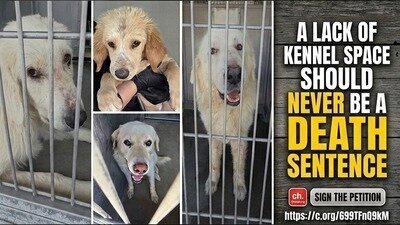
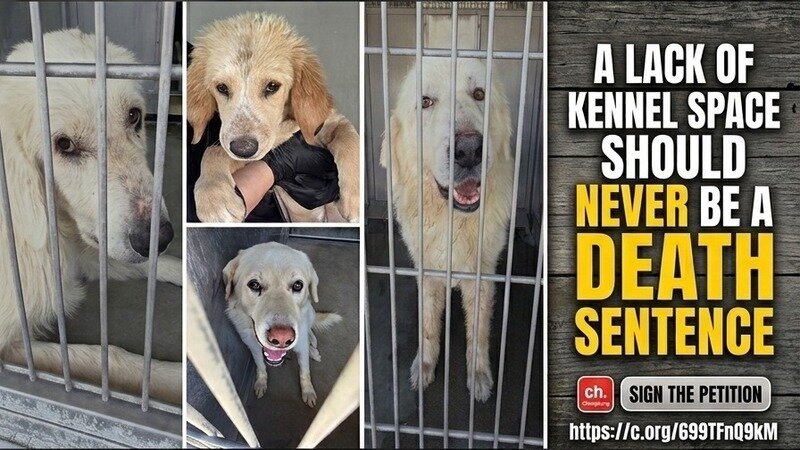
California is currently facing a catastrophic animal welfare crisis, holding the highest municipal shelter euthanasia rate in the nation at a three-year peak of 17%, double the national average. Every year, an estimated 32,500 to 37,500 healthy or treatable dogs are euthanized in California's public and contracted shelters—a devastating toll averaging roughly 2,700 to 3,125 dogs per month, or up to 720 preventable deaths every single week.
Thousands of animals enter these facilities across California daily, including lost family pets, owner-surrendered animals, and strays. When facilities face systemic overcrowding, these animals are subjected to preventable illness, extreme environmental stress, and ultimately, death.
At the core of this crisis is a systemic failure to protect stray animals and hold perpetrators of severe animal neglect and abandonment legally accountable. Every day, thousands of stray dogs roam California’s streets, vulnerable to starvation, vehicular trauma, and intentional violence, while unlicensed commercial backyard breeding and illicit animal dumping operate with near-absolute impunity. While intentional abandonment is classified as a criminal offense under California law, negligent owners and illegal commercial operations routinely dump unwanted litters and abused dogs outside shelter gates or on public property without facing meaningful investigation or criminal consequences. Shelters are too often forced to treat these traumatized, abandoned animals as disposable inventory rather than victims of a crime, utilizing space and budget deficits as an administrative rationale for euthanasia rather than pursuing the systemic investigation and criminal prosecution of abandonment.
Overcrowding, budget deficits, staffing shortages, and failing infrastructure must never serve as justifications for the avoidable death of a healthy, treatable, or safely placeable dog. While California has foundational legislation, such as the landmark Hayden Act of 1998 (Senate Bill 1785), the structural implementation remains profoundly fractured, allowing uncoordinated local data collection to disrupt lifesaving efforts. Disconnected municipal databases, inconsistent local policies, a severe deficit in mandatory state data reporting, and a critical lack of centralized systemic oversight mean that dogs lose their lives simply because a rescue organization cannot locate their records, a foster placement is not identified in time, or an owner cannot locate their missing companion before an arbitrary holding period expires.
This mandate does not seek to assign blame to frontline shelter employees, veterinarians, animal control officers, or volunteers who operate under extraordinary, high-stress conditions. Rather, our goal is to reform California statutory law so that emergency responders, shelter operators, and rescue networks possess the resources, data coordination, and legal protections necessary to succeed. California must cease treating preventable shelter deaths as an inevitable operational consequence. Every dog deserves a meaningful opportunity to live.
THE EMERGENCY SHELTER ACCOUNTABILITY AND LIFESAVING PROTECTIONS ACT: OUR 10-POINT EMERGENCY REFORM MANDATE
By signing this petition, we call upon the California State Legislature, the Governor, and municipal leaders to enact, fully fund, and rigorously enforce a coordinated statewide animal-welfare reform package—The Emergency Shelter Accountability and Lifesaving Protections Act—mandating the following statutory changes:
The framework establishes comprehensive prevention metrics at the source by funding free and low-cost spay and neuter infrastructure alongside a strict prohibition on unlicensed commercial breeding operations. The act strengthens field enforcement by mandating increased numbers of animal control officers, establishing competitive municipal wage scales, requiring standardized forensic animal-abuse training, and increasing statutory penalties to secure maximum criminal convictions for abusers. This comprehensive framework establishes universal microchipping and lifelong traceability, mandatory open-door stray intakes with enforceable rescue rights for public and contracted facilities, objective medical evaluations that eliminate unscientific behavioral or physical testing, and a unified statewide high-risk abuser registry coupled with the immediate dissolution of animal property rights for convicted abusers. Additionally, it codifies robust protections for owner-surrendered dogs, mutual accountability standards for rescue organizations, a centralized state shelter database with mandatory reporting, modernized shelter funding financed via breeder penalties, and regional disaster-response networks.
1. Universal Lifelong Identification & Chain of Custody Mandate
To permanently eliminate anonymous animal abandonment and hold negligent individuals legally accountable at the source, a strict chain-of-custody tracking system shall be maintained by the State of California:
Mandatory Microchipping from Birth: All canine litters born within the State of California must be implanted with an ISO-compliant microchip and registered within a unified state animal database by a licensed veterinarian prior to reaching eight (8) weeks of age, or before leaving the primary possession of the breeder or custodian. The digital record must permanently link the animal to the verified legal identity, state identification number, and primary address of the breeder or legal owner.
Verification at Point of Transfer: It shall be a statutory offense to sell, trade, rehome, or transfer custody of any canine without verifying microchip functionality and executing a legally binding transfer of registration details within the state database at the exact moment of physical transfer. This mandate applies equally to commercial breeders, private citizens, unlicensed breeders, rescue organizations, and municipal shelters.
Strict Criminal & Financial Liability for Abandonment: If an unregistered dog, or a dog registered to a specific individual, is found at large, abandoned on public property, or left at a facility outside of formal intake hours, the action shall be legally classified as a form of severe animal neglect and abuse. The owner or breeder of record shall face immediate criminal prosecution, mandatory statutory animal abuse fines of up to $10,000 per animal, and immediate enrollment into the statewide High-Risk Registry. Furthermore, the individual shall be held under strict civil liability for all veterinary, boarding, and administrative expenses incurred by the recovering shelter or rescue organization. An affirmative safe-harbor defense against these criminal charges, fines, and registry enrollment shall be granted if the registered owner has officially submitted a "Lost Pet Report" within the unified state database or to a local municipal animal control agency within twenty-four (24) hours of the animal's escape or discovery of its absence.
2. Mandatory Open-Door Stray Intake and Enforceable Right of Rescue
Statutory Open-Door Mandate: Every publicly funded municipal shelter, alongside any private non-profit entity contractually obligated by a city or county to provide animal control or sheltering services, shall possess an absolute statutory open-door obligation to accept all stray dogs found within its geographic jurisdiction. Internal space constraints, fiscal deficits, or staffing shortages shall not legally justify turning away, diverting, or refusing intake of an animal.
Emergency Mitigation Activation: Attaining 85% of a shelter’s maximum engineering design capacity shall automatically trigger a funded regional emergency mitigation plan. This activation mandates the immediate deployment of state animal-welfare relief funding, regional overflow housing resources, and pre-established, state-coordinated foster networks.
Uniform 7-Day Stray Hold & Active Search Extension: Amend Sections 31108 and 31752 of the California Food and Agricultural Code to establish an absolute, uniform minimum stray holding period of seven (7) full calendar days, superseding all inconsistent local municipal or rolling business-day rules.
Freeze and Extension Clauses: If an implanted microchip matches an active "Lost Pet Report" within the unified state database, or if an owner files a report within twenty-four (24) hours of intake, the 7-day stray hold shall automatically freeze and extend by an additional seven (7) calendar days to guarantee families sufficient time to execute a safe reclaim.
Mandatory Universal Cross-Reference Protocol: Shelters are strictly prohibited from authorizing any final disposition, transfer, or euthanasia for any canine without executing a certified, multi-channel outreach protocol. The facility must cross-reference incoming animals against the unified state "Lost Pet" registry within one (1) hour of intake and attempt direct contact via certified mail, registered email, text message, and telephonic communication daily for the entirety of the hold.
24-Hour Rescue Coordination Window: Public and contracted facilities must conduct an immediate veterinary assessment and provide pain stabilization upon intake. Approved 501(c)(3) rescue partners must receive automated electronic alerts, granting them a mandatory 24-hour window to assume treatment, financial, and placement responsibility before non-emergency medical euthanasia can be legally authorized.
72-Hour Public At-Risk Notices: Shelters are statutorily mandated to post a standardized, publicly accessible digital notice on the state platform at least seventy-two (72) hours prior to any scheduled non-emergency euthanasia decision, ensuring rescue partners have a realistic opportunity to intervene.
3. Accountability Before Final Disposition
Terminal euthanasia decisions must rely on strict forensic accountability rather than subjective claims or artificial diagnostic tests:
Inadmissibility of Hearsay Evidence: Owner surrender statements, owner turn-in (OTI) notes, or unverified intake commentary shall be legally inadmissible as factual behavioral evidence without independent verification and direct, documented observation by certified shelter behavioral staff.
Abolition of Artificially Induced Testing: The utilization of artificial physical diagnostic instruments to deliberately induce resource guarding, defensive aggression, or unnatural stress response is statutorily prohibited as unscientific and inaccurate.
Natural-Observation Protocols: Behavioral evaluations must rely exclusively on force-free methods, routine daily environmental observations, and safe item-exchange trading protocols conducted over a multi-day period.
Bifurcation of Pain and Stress: Euthanasia authorizations are legally invalid if the subject animal is experiencing severe kennel stress, confinement-induced anxiety, chronic wounds, or acute illness that could cause defensive, pain-based reactions. Comprehensive medical evaluations and veterinary stress-mitigation protocols are mandatory prior to any behavioral categorization.
Savable Behavior & Bite-Case Clause: High-stress shelter behaviors or histories involving minor, non-severe bite notes do not warrant immediate euthanasia if an approved 501(c)(3) rescue partner steps forward to assume legal custody and liability.
Mandatory Municipal Liability Cap: To eliminate exclusionary operational barriers that prevent rescue groups from pulling at-risk animals, the state shall cap the mandatory general liability insurance coverage requirements imposed on 501(c)(3) rescue partners by any municipal or county agency—including the Los Angeles County Department of Animal Care and Control (DACC)—at a maximum of one million dollars ($1,000,000) per incident.
Prohibition of Exclusionary Indemnity Rules: Public and contracted facilities are strictly prohibited from inflating insurance thresholds, mandating cost-prohibitive secondary policies, or utilizing localized indemnity mandates as a mechanism to block authorized rescue groups from conducting lifesaving transfers. Upon the execution of a standardized state liability waiver and verification of a standard $1M policy, the shelter must immediately transfer the animal to the pulling organization.
The Treatable Mandate: Facilities cannot designate an animal as "untreatable" due to internal staffing, infrastructure constraints, or budgetary limitations when medically manageable conditions exist and an external rescue offers liability and financial assumption.
Independent Review & Emergency Exemptions: Emergency exemptions bypassing rescue notification require active, imminent clinical collapse. Shelters must preserve time-stamped digital diagnostics and written clinical narratives published to the public registry within forty-eight (48) hours of the procedure.
4. Statutory Protection for Owner-Surrendered Dogs
Owner surrender must not serve as an expedited pathway to administrative euthanasia:
Closure of the Immediate Euthanasia Loophole: Amend Section 31754 of the Food and Agricultural Code to grant owner-surrendered dogs a mandatory minimum holding and marketing protection period identical to stray holds across all municipal and contracted private non-profit facilities.
Prohibition of Expedited Euthanasia: Shelters are legally barred from fast-tracking owner surrenders for euthanasia due to space limitations or intake volume without completing all required rescue holds and public notifications.
Administrative Dispositions for Convenience: Owners who execute an owner turn-in (OTI) of a canine without a documented, veterinary-certified medical emergency shall be permanently cataloged within the state database and legally barred from adopting, fostering, or taking legal ownership of any shelter animal statewide for a mandatory five (5) year period.
5. Mutual Accountability & Mandatory Capacity Assessments for 501(c)(3) Rescues
Rescue organizations must meet the same strict standards as municipal facilities to ensure public transparency and prevent illicit animal hoarding:
Zero Legal Exemptions: No operational immunities, grandfather clauses, or legal exemptions regarding animal neglect, abuse, or structural overcrowding will be granted to private rescue organizations, sanctuaries, or their directors.
Mandatory State Care and Capacity Audits: Rescue organizations must pass unannounced state inspections, satisfy statutory animal-to-space ratios, and maintain verified veterinary care contracts to retain shelter pull privileges.
Immediate Revocation and Tax Status Protocols: Confirmed hoarding or systemic neglect shall result in the immediate termination of all shelter pulling rights, expedited revocation of state non-profit tax status by the California Franchise Tax Board, and immediate placement of all organizational directors on the statewide High-Risk Registry.
6. Strengthened Commercial Breeder and Backyard Breeder Accountability
The state must enforce highly restrictive licensing, registration, recordkeeping, and animal-welfare requirements within all jurisdictions to eliminate abusive puppy mills while protecting law-abiding hobbyists:
Strict Oversight & Traceability Mandate: All commercial breeding operations must meet rigorous state licensing, environmental sanitation, and veterinary care standards. Every breeder must integrate all canine litters directly into the universal microchip registry from birth, mapping animal streams back to their origin and permanently linking the digital record to the breeder's verified legal identity.
Public Tracking Ledger & Backyard Breeder Crackdown: Establish a centralized public tracking ledger within the High-Risk Registry to catalog all individuals and entities cited for unpermitted breeding operations, high-volume puppy mills, or illicit backyard breeding.
Asset Forfeiture and Structural Shutdowns: Any unpermitted breeding or deliberate evasion of microchipping mandates shall trigger immediate code enforcement actions, including escalated civil fines, property asset forfeitures, and immediate structural shutdowns of the facility.
Mandatory Cross-Reference & Misdemeanor Penalties: Shelters, pet stores, and private sellers are legally mandated to cross-reference all placement applicants against the High-Risk Registry prior to any animal transfer. Knowingly or negligently transferring a dog to a flagged or unpermitted entity shall constitute an un-waivable misdemeanor offense.
7. One Centralized California Shelter Animal System (CSAS)
The State of California shall establish a single, synchronized digital infrastructure to eliminate fragmented local platforms. Real-time data submission shall be a strict statutory requirement for all applicable facilities:
Mandatory Statewide Platform & Universal Participation: The California Department of Food and Agriculture (CDFA) shall construct, host, and maintain a unified public portal and synchronized mobile interface known as the California Shelter Animal System (CSAS). Universal active data participation within twelve (12) hours of any intake or disposition event is statutorily required from all municipal animal shelters and any contracted private non-profit entities providing animal control or sheltering services within the state.
Real-Time Digital Forensic Profiles: Covered facilities must upload a comprehensive digital profile to CSAS within twelve (12) hours of an animal's physical intake. This profile must include high-resolution media, accurate stray-hold status, legal disposition deadlines, unedited veterinary logs (including time-stamped digital diagnostics required under Mandate 3), and real-time behavioral observation logs.
Automated Registry & Safe-Harbor Cross-Referencing: The CSAS platform must utilize automated cross-referencing algorithms to instantly scan incoming microchip data against active "Lost Pet Reports" within one (1) hour of intake, triggering immediate geo-targeted emergency notifications to owners. Concurrently, the platform must automatically cross-reference all adoption, foster, and rescue-pull applicants against the state High-Risk Registry to instantly block flagged backyard breeders, puppy mills, and convicted abusers.
Secure Donation Integrity Registry: The CDFA shall integrate a secure, auditable financial pledge registry directly within CSAS. This system will allow private citizens and philanthropic organizations to log legally binding, transparent funds earmarked exclusively for the medical treatment, behavioral rehabilitation, specialized transport, or foster care of specific at-risk shelter animals, ensuring full financial traceability.
8. Modernize Shelters and Invest in Prevention
State infrastructure allocations shall be combined with enforcement revenue to upgrade facilities and mitigate shelter capacity crises:
Mandatory Facility Modernization & Contractor Compliance: Deploy dedicated state infrastructure funding to upgrade all municipal and contracted private non-profit facilities with high-efficiency climate control, advanced ventilation, disease-isolation enclosures, and sanitary housing. Non-profit contractors must meet these standards to retain municipal service contracts.
Volunteer and Local Foster Infrastructure: Fund professional volunteer networks within shelters to support photography, digital marketing, behavioral enrichment, and foster recruitment.
Proactive Prevention & Pet Retention: Expand low-cost spay/neuter services, mobile clinics, and vaccinations in underserved areas, alongside emergency veterinary grants and pet-inclusive housing support to prevent economic surrenders.
Strict Non-Diversion Financing: Earmark all seized civil fines, breeder penalties, and forfeitures into a protected state fund, legally barring general fund absorption and restricting use exclusively to spay/neuter operations, retention stipends, and emergency veterinary grants.
9. Regional Dispatch and Evidence-Based Global Frameworks
California must eliminate insular barriers to animal placement by establishing active, boundaryless statewide solutions:
Statewide Emergency Transport & Dispatch Network: Create a centralized dispatch system to move animals and veterinary resources across county lines. Participation is mandatory for all municipal and publicly funded private non-profit shelters.
Mandatory 85% Capacity Trigger: When any shelter reaches 85% of its engineering design capacity, an emergency alert shall automatically trigger mandatory transfers, overflow foster activation, and emergency relief funding to prevent euthanasia.
Specialized Legislative Task Force: Form a legislative task force to study and adapt external models, specifically analyzing Delaware's statewide no-kill network and Germany's Tierheim system to eliminate space-clearing euthanasia.
10. Strengthen Field Enforcement, Officer Protections, and Judicial Conviction Mandates
To ensure that laws on paper are aggressively enforced on the streets, California must fortify its front-line enforcement teams and demand accountability from the judicial system:
Adequate Staffing & Competitive Pay Scales: Mandate state-funded increases in municipal and county budgets to hire more animal control officers, lowering the officer-to-population ratio to safe operational levels. Establish competitive, professional pay scales and comprehensive benefits to attract and retain highly qualified enforcement personnel.
Standardized Forensic & Tactical Training: Require all animal control officers to undergo standardized, state-certified training academies covering advanced veterinary forensics, evidence collection, animal behavior mitigation, and tactical field safety, ensuring all abuse investigations can withstand strict courtroom scrutiny.
Toughened Justice System & Increased Conviction Rates: Establish dedicated animal cruelty prosecution units within county District Attorney offices statewide. Amend the California Penal Code to eliminate lenient plea bargains for repeat animal abusers, dogfighters, and commercial backyard breeders, mandating that the judicial system pursue maximum statutory sentencing and permanent tracking on the High-Risk Registry upon conviction.
ENFORCEMENT, CIVIL REMEDIES, AND TRANSPARENCY
To guarantee absolute compliance across every jurisdiction, the state shall codify a comprehensive legal enforcement and public accountability framework:
Citizen Enforcement Mechanism: Grant any California resident or registered 501(c)(3) animal-welfare organization formal legal standing to seek injunctive relief in the Superior Court of California against any municipal or contracted private non-profit facility, agency, or official violating these mandatory holding, stabilization, or notification laws.
Statutory Civil Damages: Establish statutory civil penalties of $10,000 per animal affected, alongside reasonable attorneys' fees, for any agency or contracted entity found to have willfully circumvented mandatory holding periods, falsified disposition data, or blocked rescue notifications. Provisions strictly exclude good-faith clinical choices made by licensed veterinarians to relieve unmitigated physical suffering.
High-Risk Registries & Forfeiture of Property Rights: Mandate the immediate dissolution of animal property rights for any individual facing formal charges of animal cruelty, neglect, or dogfighting. Enforce permanent, lifetime animal ownership bans for convicted animal abusers, and strictly track and penalize high-volume, unlicensed backyard breeding operations.
Mandatory Data Transparency & Audits: Reporting is mandatory. All municipal and contracted shelters must submit monthly unedited datasets to CSAS by the 10th of each month covering comprehensive intake, length of stay, and disposition metrics. Non-compliance or intentional falsification of euthanasia logs results in immediate municipal funding suspension and triggers a state compliance audit.
OUR COMMITMENT: EVERY DOG MATTERS
This petition is a direct call to legally replace fragmented, shelter-by-shelter crisis management with a coordinated, legally enforceable statewide commitment to animal welfare. We can reduce preventable suffering. We can keep families together. We can make rescue coordination instantaneous. And we can ensure that shelter overcrowding triggers additional state assistance rather than a mandate for death.
WHAT WE ARE ASKING GOVERNMENT TO DO:
Implement the precise statutory laws, emergency state funding, and boundaryless digital coordination needed to end preventable shelter overcrowding and killing in the State of California.
Every life deserves a chance. Sign this petition today to demand historic legal reform and Save California's Dogs!

1,411
The Issue
SAVE CALIFORNIA’S DOGS: End Preventable Shelter Euthanasia and Enforce Statewide Accountability
THE PROBLEM: California’s Broken Shelter System and Animal Welfare Crisis
California is currently facing a catastrophic animal welfare crisis, holding the highest municipal shelter euthanasia rate in the nation at a three-year peak of 17%, double the national average. Every year, an estimated 32,500 to 37,500 healthy or treatable dogs are euthanized in California's public and contracted shelters—a devastating toll averaging roughly 2,700 to 3,125 dogs per month, or up to 720 preventable deaths every single week.
Thousands of animals enter these facilities across California daily, including lost family pets, owner-surrendered animals, and strays. When facilities face systemic overcrowding, these animals are subjected to preventable illness, extreme environmental stress, and ultimately, death.
At the core of this crisis is a systemic failure to protect stray animals and hold perpetrators of severe animal neglect and abandonment legally accountable. Every day, thousands of stray dogs roam California’s streets, vulnerable to starvation, vehicular trauma, and intentional violence, while unlicensed commercial backyard breeding and illicit animal dumping operate with near-absolute impunity. While intentional abandonment is classified as a criminal offense under California law, negligent owners and illegal commercial operations routinely dump unwanted litters and abused dogs outside shelter gates or on public property without facing meaningful investigation or criminal consequences. Shelters are too often forced to treat these traumatized, abandoned animals as disposable inventory rather than victims of a crime, utilizing space and budget deficits as an administrative rationale for euthanasia rather than pursuing the systemic investigation and criminal prosecution of abandonment.
Overcrowding, budget deficits, staffing shortages, and failing infrastructure must never serve as justifications for the avoidable death of a healthy, treatable, or safely placeable dog. While California has foundational legislation, such as the landmark Hayden Act of 1998 (Senate Bill 1785), the structural implementation remains profoundly fractured, allowing uncoordinated local data collection to disrupt lifesaving efforts. Disconnected municipal databases, inconsistent local policies, a severe deficit in mandatory state data reporting, and a critical lack of centralized systemic oversight mean that dogs lose their lives simply because a rescue organization cannot locate their records, a foster placement is not identified in time, or an owner cannot locate their missing companion before an arbitrary holding period expires.
This mandate does not seek to assign blame to frontline shelter employees, veterinarians, animal control officers, or volunteers who operate under extraordinary, high-stress conditions. Rather, our goal is to reform California statutory law so that emergency responders, shelter operators, and rescue networks possess the resources, data coordination, and legal protections necessary to succeed. California must cease treating preventable shelter deaths as an inevitable operational consequence. Every dog deserves a meaningful opportunity to live.
THE EMERGENCY SHELTER ACCOUNTABILITY AND LIFESAVING PROTECTIONS ACT: OUR 10-POINT EMERGENCY REFORM MANDATE
By signing this petition, we call upon the California State Legislature, the Governor, and municipal leaders to enact, fully fund, and rigorously enforce a coordinated statewide animal-welfare reform package—The Emergency Shelter Accountability and Lifesaving Protections Act—mandating the following statutory changes:
The framework establishes comprehensive prevention metrics at the source by funding free and low-cost spay and neuter infrastructure alongside a strict prohibition on unlicensed commercial breeding operations. The act strengthens field enforcement by mandating increased numbers of animal control officers, establishing competitive municipal wage scales, requiring standardized forensic animal-abuse training, and increasing statutory penalties to secure maximum criminal convictions for abusers. This comprehensive framework establishes universal microchipping and lifelong traceability, mandatory open-door stray intakes with enforceable rescue rights for public and contracted facilities, objective medical evaluations that eliminate unscientific behavioral or physical testing, and a unified statewide high-risk abuser registry coupled with the immediate dissolution of animal property rights for convicted abusers. Additionally, it codifies robust protections for owner-surrendered dogs, mutual accountability standards for rescue organizations, a centralized state shelter database with mandatory reporting, modernized shelter funding financed via breeder penalties, and regional disaster-response networks.
1. Universal Lifelong Identification & Chain of Custody Mandate
To permanently eliminate anonymous animal abandonment and hold negligent individuals legally accountable at the source, a strict chain-of-custody tracking system shall be maintained by the State of California:
Mandatory Microchipping from Birth: All canine litters born within the State of California must be implanted with an ISO-compliant microchip and registered within a unified state animal database by a licensed veterinarian prior to reaching eight (8) weeks of age, or before leaving the primary possession of the breeder or custodian. The digital record must permanently link the animal to the verified legal identity, state identification number, and primary address of the breeder or legal owner.
Verification at Point of Transfer: It shall be a statutory offense to sell, trade, rehome, or transfer custody of any canine without verifying microchip functionality and executing a legally binding transfer of registration details within the state database at the exact moment of physical transfer. This mandate applies equally to commercial breeders, private citizens, unlicensed breeders, rescue organizations, and municipal shelters.
Strict Criminal & Financial Liability for Abandonment: If an unregistered dog, or a dog registered to a specific individual, is found at large, abandoned on public property, or left at a facility outside of formal intake hours, the action shall be legally classified as a form of severe animal neglect and abuse. The owner or breeder of record shall face immediate criminal prosecution, mandatory statutory animal abuse fines of up to $10,000 per animal, and immediate enrollment into the statewide High-Risk Registry. Furthermore, the individual shall be held under strict civil liability for all veterinary, boarding, and administrative expenses incurred by the recovering shelter or rescue organization. An affirmative safe-harbor defense against these criminal charges, fines, and registry enrollment shall be granted if the registered owner has officially submitted a "Lost Pet Report" within the unified state database or to a local municipal animal control agency within twenty-four (24) hours of the animal's escape or discovery of its absence.
2. Mandatory Open-Door Stray Intake and Enforceable Right of Rescue
Statutory Open-Door Mandate: Every publicly funded municipal shelter, alongside any private non-profit entity contractually obligated by a city or county to provide animal control or sheltering services, shall possess an absolute statutory open-door obligation to accept all stray dogs found within its geographic jurisdiction. Internal space constraints, fiscal deficits, or staffing shortages shall not legally justify turning away, diverting, or refusing intake of an animal.
Emergency Mitigation Activation: Attaining 85% of a shelter’s maximum engineering design capacity shall automatically trigger a funded regional emergency mitigation plan. This activation mandates the immediate deployment of state animal-welfare relief funding, regional overflow housing resources, and pre-established, state-coordinated foster networks.
Uniform 7-Day Stray Hold & Active Search Extension: Amend Sections 31108 and 31752 of the California Food and Agricultural Code to establish an absolute, uniform minimum stray holding period of seven (7) full calendar days, superseding all inconsistent local municipal or rolling business-day rules.
Freeze and Extension Clauses: If an implanted microchip matches an active "Lost Pet Report" within the unified state database, or if an owner files a report within twenty-four (24) hours of intake, the 7-day stray hold shall automatically freeze and extend by an additional seven (7) calendar days to guarantee families sufficient time to execute a safe reclaim.
Mandatory Universal Cross-Reference Protocol: Shelters are strictly prohibited from authorizing any final disposition, transfer, or euthanasia for any canine without executing a certified, multi-channel outreach protocol. The facility must cross-reference incoming animals against the unified state "Lost Pet" registry within one (1) hour of intake and attempt direct contact via certified mail, registered email, text message, and telephonic communication daily for the entirety of the hold.
24-Hour Rescue Coordination Window: Public and contracted facilities must conduct an immediate veterinary assessment and provide pain stabilization upon intake. Approved 501(c)(3) rescue partners must receive automated electronic alerts, granting them a mandatory 24-hour window to assume treatment, financial, and placement responsibility before non-emergency medical euthanasia can be legally authorized.
72-Hour Public At-Risk Notices: Shelters are statutorily mandated to post a standardized, publicly accessible digital notice on the state platform at least seventy-two (72) hours prior to any scheduled non-emergency euthanasia decision, ensuring rescue partners have a realistic opportunity to intervene.
3. Accountability Before Final Disposition
Terminal euthanasia decisions must rely on strict forensic accountability rather than subjective claims or artificial diagnostic tests:
Inadmissibility of Hearsay Evidence: Owner surrender statements, owner turn-in (OTI) notes, or unverified intake commentary shall be legally inadmissible as factual behavioral evidence without independent verification and direct, documented observation by certified shelter behavioral staff.
Abolition of Artificially Induced Testing: The utilization of artificial physical diagnostic instruments to deliberately induce resource guarding, defensive aggression, or unnatural stress response is statutorily prohibited as unscientific and inaccurate.
Natural-Observation Protocols: Behavioral evaluations must rely exclusively on force-free methods, routine daily environmental observations, and safe item-exchange trading protocols conducted over a multi-day period.
Bifurcation of Pain and Stress: Euthanasia authorizations are legally invalid if the subject animal is experiencing severe kennel stress, confinement-induced anxiety, chronic wounds, or acute illness that could cause defensive, pain-based reactions. Comprehensive medical evaluations and veterinary stress-mitigation protocols are mandatory prior to any behavioral categorization.
Savable Behavior & Bite-Case Clause: High-stress shelter behaviors or histories involving minor, non-severe bite notes do not warrant immediate euthanasia if an approved 501(c)(3) rescue partner steps forward to assume legal custody and liability.
Mandatory Municipal Liability Cap: To eliminate exclusionary operational barriers that prevent rescue groups from pulling at-risk animals, the state shall cap the mandatory general liability insurance coverage requirements imposed on 501(c)(3) rescue partners by any municipal or county agency—including the Los Angeles County Department of Animal Care and Control (DACC)—at a maximum of one million dollars ($1,000,000) per incident.
Prohibition of Exclusionary Indemnity Rules: Public and contracted facilities are strictly prohibited from inflating insurance thresholds, mandating cost-prohibitive secondary policies, or utilizing localized indemnity mandates as a mechanism to block authorized rescue groups from conducting lifesaving transfers. Upon the execution of a standardized state liability waiver and verification of a standard $1M policy, the shelter must immediately transfer the animal to the pulling organization.
The Treatable Mandate: Facilities cannot designate an animal as "untreatable" due to internal staffing, infrastructure constraints, or budgetary limitations when medically manageable conditions exist and an external rescue offers liability and financial assumption.
Independent Review & Emergency Exemptions: Emergency exemptions bypassing rescue notification require active, imminent clinical collapse. Shelters must preserve time-stamped digital diagnostics and written clinical narratives published to the public registry within forty-eight (48) hours of the procedure.
4. Statutory Protection for Owner-Surrendered Dogs
Owner surrender must not serve as an expedited pathway to administrative euthanasia:
Closure of the Immediate Euthanasia Loophole: Amend Section 31754 of the Food and Agricultural Code to grant owner-surrendered dogs a mandatory minimum holding and marketing protection period identical to stray holds across all municipal and contracted private non-profit facilities.
Prohibition of Expedited Euthanasia: Shelters are legally barred from fast-tracking owner surrenders for euthanasia due to space limitations or intake volume without completing all required rescue holds and public notifications.
Administrative Dispositions for Convenience: Owners who execute an owner turn-in (OTI) of a canine without a documented, veterinary-certified medical emergency shall be permanently cataloged within the state database and legally barred from adopting, fostering, or taking legal ownership of any shelter animal statewide for a mandatory five (5) year period.
5. Mutual Accountability & Mandatory Capacity Assessments for 501(c)(3) Rescues
Rescue organizations must meet the same strict standards as municipal facilities to ensure public transparency and prevent illicit animal hoarding:
Zero Legal Exemptions: No operational immunities, grandfather clauses, or legal exemptions regarding animal neglect, abuse, or structural overcrowding will be granted to private rescue organizations, sanctuaries, or their directors.
Mandatory State Care and Capacity Audits: Rescue organizations must pass unannounced state inspections, satisfy statutory animal-to-space ratios, and maintain verified veterinary care contracts to retain shelter pull privileges.
Immediate Revocation and Tax Status Protocols: Confirmed hoarding or systemic neglect shall result in the immediate termination of all shelter pulling rights, expedited revocation of state non-profit tax status by the California Franchise Tax Board, and immediate placement of all organizational directors on the statewide High-Risk Registry.
6. Strengthened Commercial Breeder and Backyard Breeder Accountability
The state must enforce highly restrictive licensing, registration, recordkeeping, and animal-welfare requirements within all jurisdictions to eliminate abusive puppy mills while protecting law-abiding hobbyists:
Strict Oversight & Traceability Mandate: All commercial breeding operations must meet rigorous state licensing, environmental sanitation, and veterinary care standards. Every breeder must integrate all canine litters directly into the universal microchip registry from birth, mapping animal streams back to their origin and permanently linking the digital record to the breeder's verified legal identity.
Public Tracking Ledger & Backyard Breeder Crackdown: Establish a centralized public tracking ledger within the High-Risk Registry to catalog all individuals and entities cited for unpermitted breeding operations, high-volume puppy mills, or illicit backyard breeding.
Asset Forfeiture and Structural Shutdowns: Any unpermitted breeding or deliberate evasion of microchipping mandates shall trigger immediate code enforcement actions, including escalated civil fines, property asset forfeitures, and immediate structural shutdowns of the facility.
Mandatory Cross-Reference & Misdemeanor Penalties: Shelters, pet stores, and private sellers are legally mandated to cross-reference all placement applicants against the High-Risk Registry prior to any animal transfer. Knowingly or negligently transferring a dog to a flagged or unpermitted entity shall constitute an un-waivable misdemeanor offense.
7. One Centralized California Shelter Animal System (CSAS)
The State of California shall establish a single, synchronized digital infrastructure to eliminate fragmented local platforms. Real-time data submission shall be a strict statutory requirement for all applicable facilities:
Mandatory Statewide Platform & Universal Participation: The California Department of Food and Agriculture (CDFA) shall construct, host, and maintain a unified public portal and synchronized mobile interface known as the California Shelter Animal System (CSAS). Universal active data participation within twelve (12) hours of any intake or disposition event is statutorily required from all municipal animal shelters and any contracted private non-profit entities providing animal control or sheltering services within the state.
Real-Time Digital Forensic Profiles: Covered facilities must upload a comprehensive digital profile to CSAS within twelve (12) hours of an animal's physical intake. This profile must include high-resolution media, accurate stray-hold status, legal disposition deadlines, unedited veterinary logs (including time-stamped digital diagnostics required under Mandate 3), and real-time behavioral observation logs.
Automated Registry & Safe-Harbor Cross-Referencing: The CSAS platform must utilize automated cross-referencing algorithms to instantly scan incoming microchip data against active "Lost Pet Reports" within one (1) hour of intake, triggering immediate geo-targeted emergency notifications to owners. Concurrently, the platform must automatically cross-reference all adoption, foster, and rescue-pull applicants against the state High-Risk Registry to instantly block flagged backyard breeders, puppy mills, and convicted abusers.
Secure Donation Integrity Registry: The CDFA shall integrate a secure, auditable financial pledge registry directly within CSAS. This system will allow private citizens and philanthropic organizations to log legally binding, transparent funds earmarked exclusively for the medical treatment, behavioral rehabilitation, specialized transport, or foster care of specific at-risk shelter animals, ensuring full financial traceability.
8. Modernize Shelters and Invest in Prevention
State infrastructure allocations shall be combined with enforcement revenue to upgrade facilities and mitigate shelter capacity crises:
Mandatory Facility Modernization & Contractor Compliance: Deploy dedicated state infrastructure funding to upgrade all municipal and contracted private non-profit facilities with high-efficiency climate control, advanced ventilation, disease-isolation enclosures, and sanitary housing. Non-profit contractors must meet these standards to retain municipal service contracts.
Volunteer and Local Foster Infrastructure: Fund professional volunteer networks within shelters to support photography, digital marketing, behavioral enrichment, and foster recruitment.
Proactive Prevention & Pet Retention: Expand low-cost spay/neuter services, mobile clinics, and vaccinations in underserved areas, alongside emergency veterinary grants and pet-inclusive housing support to prevent economic surrenders.
Strict Non-Diversion Financing: Earmark all seized civil fines, breeder penalties, and forfeitures into a protected state fund, legally barring general fund absorption and restricting use exclusively to spay/neuter operations, retention stipends, and emergency veterinary grants.
9. Regional Dispatch and Evidence-Based Global Frameworks
California must eliminate insular barriers to animal placement by establishing active, boundaryless statewide solutions:
Statewide Emergency Transport & Dispatch Network: Create a centralized dispatch system to move animals and veterinary resources across county lines. Participation is mandatory for all municipal and publicly funded private non-profit shelters.
Mandatory 85% Capacity Trigger: When any shelter reaches 85% of its engineering design capacity, an emergency alert shall automatically trigger mandatory transfers, overflow foster activation, and emergency relief funding to prevent euthanasia.
Specialized Legislative Task Force: Form a legislative task force to study and adapt external models, specifically analyzing Delaware's statewide no-kill network and Germany's Tierheim system to eliminate space-clearing euthanasia.
10. Strengthen Field Enforcement, Officer Protections, and Judicial Conviction Mandates
To ensure that laws on paper are aggressively enforced on the streets, California must fortify its front-line enforcement teams and demand accountability from the judicial system:
Adequate Staffing & Competitive Pay Scales: Mandate state-funded increases in municipal and county budgets to hire more animal control officers, lowering the officer-to-population ratio to safe operational levels. Establish competitive, professional pay scales and comprehensive benefits to attract and retain highly qualified enforcement personnel.
Standardized Forensic & Tactical Training: Require all animal control officers to undergo standardized, state-certified training academies covering advanced veterinary forensics, evidence collection, animal behavior mitigation, and tactical field safety, ensuring all abuse investigations can withstand strict courtroom scrutiny.
Toughened Justice System & Increased Conviction Rates: Establish dedicated animal cruelty prosecution units within county District Attorney offices statewide. Amend the California Penal Code to eliminate lenient plea bargains for repeat animal abusers, dogfighters, and commercial backyard breeders, mandating that the judicial system pursue maximum statutory sentencing and permanent tracking on the High-Risk Registry upon conviction.
ENFORCEMENT, CIVIL REMEDIES, AND TRANSPARENCY
To guarantee absolute compliance across every jurisdiction, the state shall codify a comprehensive legal enforcement and public accountability framework:
Citizen Enforcement Mechanism: Grant any California resident or registered 501(c)(3) animal-welfare organization formal legal standing to seek injunctive relief in the Superior Court of California against any municipal or contracted private non-profit facility, agency, or official violating these mandatory holding, stabilization, or notification laws.
Statutory Civil Damages: Establish statutory civil penalties of $10,000 per animal affected, alongside reasonable attorneys' fees, for any agency or contracted entity found to have willfully circumvented mandatory holding periods, falsified disposition data, or blocked rescue notifications. Provisions strictly exclude good-faith clinical choices made by licensed veterinarians to relieve unmitigated physical suffering.
High-Risk Registries & Forfeiture of Property Rights: Mandate the immediate dissolution of animal property rights for any individual facing formal charges of animal cruelty, neglect, or dogfighting. Enforce permanent, lifetime animal ownership bans for convicted animal abusers, and strictly track and penalize high-volume, unlicensed backyard breeding operations.
Mandatory Data Transparency & Audits: Reporting is mandatory. All municipal and contracted shelters must submit monthly unedited datasets to CSAS by the 10th of each month covering comprehensive intake, length of stay, and disposition metrics. Non-compliance or intentional falsification of euthanasia logs results in immediate municipal funding suspension and triggers a state compliance audit.
OUR COMMITMENT: EVERY DOG MATTERS
This petition is a direct call to legally replace fragmented, shelter-by-shelter crisis management with a coordinated, legally enforceable statewide commitment to animal welfare. We can reduce preventable suffering. We can keep families together. We can make rescue coordination instantaneous. And we can ensure that shelter overcrowding triggers additional state assistance rather than a mandate for death.
WHAT WE ARE ASKING GOVERNMENT TO DO:
Implement the precise statutory laws, emergency state funding, and boundaryless digital coordination needed to end preventable shelter overcrowding and killing in the State of California.
Every life deserves a chance. Sign this petition today to demand historic legal reform and Save California's Dogs!
The Decision Makers


Supporter Voices
Petition Updates
Share this petition
Petition created on July 21, 2026