Restore Nepal's Sovereignty Over Kalapani, Lipulekh, and Limpiyadhura
Restore Nepal's Sovereignty Over Kalapani, Lipulekh, and Limpiyadhura
The Issue
To: Prime Minister of India; Prime Minister of Nepal; Secretary-General of the United Nations.
Cc: UN Security Council; Registrar, International Court of Justice; OHCHR; Survey of India; Survey Department (Nepal); Uttarakhand State Government; Darchula District Council; Relevant NGOs and International Bodies Concerned with Territorial Integrity and Human Rights.
Subject: Petition for the Restoration of Nepal’s Sovereign Territories of Kalapani, Lipulekh, and Limpiyadhura and Upholding International Law.
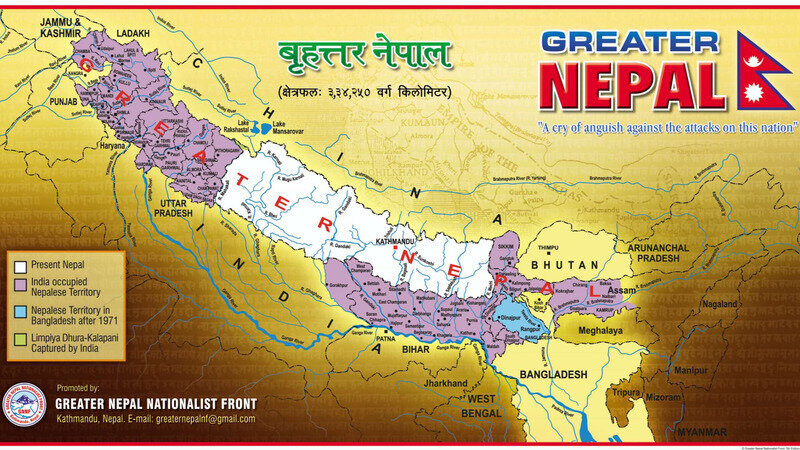
We, the undersigned, call for the immediate restoration of the disputed territories of Kalapani, Lipulekh, and Limpiyadhura to Nepal and the upholding of Nepal’s territorial sovereignty in accordance with international law, historical treaties, and the principles of justice and fairness. These territories, historically and geographically part of Nepal, have been under unauthorized Indian administration for decades, exacerbating tensions between two neighboring nations and undermining regional stability
Introduction:
The sovereignty and territorial integrity of nations are fundamental principles in maintaining peaceful and just international relations. The lands of Kalapani, Lipulekh, and Limpiyadhura, which are historically and geographically part of Nepal, have been under dispute with India for decades. These regions, located in the far western Himalayas, are of strategic importance to both countries, and have long been recognized as part of Nepalese territory, both by historical records and international treaties.
However, the recent developments, including India's construction of roads and military installations in these areas, have led to increased tensions and the unjust occupation of land that rightfully belongs to Nepal. We believe that the peaceful resolution of this issue is crucial for maintaining harmonious relations between Nepal and India, and we urge the international community to support Nepal's rightful claim to these territories.
Background and Historical Context:
- Sugauli Treaty (1815): The Treaty of Sugauli, signed between Nepal and the British East India Company, explicitly designates the Kali River as the western boundary of Nepal. However, ambiguities in identifying the precise source of the Kali River have led to prolonged disputes. Nepal contends that the river originates near Limpiyadhura, thus placing Kalapani, Lipulekh, and Limpiyadhura east of the river and within its territory. India, relying on British colonial surveys, claims the river’s source near Kalapani, thereby asserting control over the region.
- Historical Administration: Nepal conducted censuses and administered these territories until the 1950s. India’s effective control began post-1962 Sino-Indian War, with the deployment of the Indo-Tibetan Border Police (ITBP) and infrastructure development, including roads and military installations.
- Geopolitical Significance: The region is strategically vital due to its proximity to the China-Nepal-India tri-junction and serves as a traditional trade route to Tibet. India’s construction of roads (e.g., the Lipulekh Pass road) and agreements with China (e.g., the 2015 and 2025 trade agreements) without Nepal’s consent have escalated tensions.
- Kalapani: Kalapani, located at the tri-junction of Nepal, India, and China, has long been under Indian administration, despite Nepal’s assertion of its ownership based on historical, geographical, and legal grounds.
- Lipulekh: The Lipulekh pass, a strategic trade route with China, has recently been the subject of tension after India constructed a road through it, claiming the area as part of Uttarakhand. Nepal, however, maintains that it is part of the Darchula District in Nepal.
- Limpiyadhura: This area, which lies along the disputed border, is also claimed by Nepal. The loss of control over these areas diminishes Nepal's territorial integrity and impacts its sovereignty.
Why This Matters:
The rightful ownership of these territories is vital not only to Nepal's national pride but also to its long-term strategic, economic, and cultural interests. The continued occupation and administration of these areas by India violate Nepal's territorial integrity and the principles of fairness, justice, and international law.
These territories are not just strips of land, but symbols of Nepal's sovereignty and the will of its people. The international community, including the United Nations, must recognize the importance of this issue in maintaining the dignity of small nations and their right to self-determination.
Legal and International Law Perspectives
- Violation of International Law: India’s control over Kalapani violates the principle of territorial integrity enshrined in the UN Charter. The Treaty of Sugauli, as an international agreement, must be interpreted in good faith under the Vienna Convention on the Law of Treaties (VCLT). Historical maps and evidence (e.g., pre-1870 British surveys) support Nepal’s claim.
- Cartographic Evidence: Maps published by the British East India Company (1820–1846) and the Survey of India (1850–1856) align with Nepal’s claims. Conversely, India’s reliance on an 1875 map lacking Nepali certification weakens its position.
- Principle of Estoppel and Acquiescence: India argues that Nepal’s silence from 1961 to 1997 implies acquiescence. However, Nepal’s consistent protests since 1997 and formal diplomatic notes nullify this claim. International courts (e.g., ICJ in Temple of Preah Vihear) emphasize that maps alone cannot override sovereign rights.
- Human Rights and Governance: The displacement of Nepali communities and restrictions on traditional trade and pilgrimage routes (e.g., Kailash-Manasarovar) violate human rights and cultural practices.
Recent Developments and Escalations
- 2020 Road Construction: India’s inauguration of a road via Lipulekh Pass sparked protests and led to Nepal’s constitutional amendment formally incorporating the disputed territories into its map.
- 2025 India-China Agreement: The recent agreement to reopen Lipulekh Pass for trade without Nepal’s consent has been unanimously condemned by Nepali political leaders and civil society, highlighting the disregard for Nepal’s sovereignty.
- Diplomatic Efforts: Nepal has repeatedly urged dialogue based on historical evidence, including through the Joint Technical Boundary Committee (JTBC), but progress remains stalled due to India’s inflexibility.
Demands and Actions Required
We urge the following actions to resolve the dispute peacefully and justly:
- Immediate Withdrawal: India must withdraw its military and administrative presence from Kalapani, Lipulekh, and Limpiyadhura.
- Diplomatic Dialogue: Both nations should engage in good-faith negotiations mediated by the UN or neutral parties, referencing historical treaties, maps, and evidence.
- International Recognition: The UN and ICJ must recognize Nepal’s sovereignty over the territories and ensure compliance with international law.
- Human Rights Protection: Guarantee the rights of affected communities, including access to traditional trade and pilgrimage routes.
- Transparent Investigation: Facilitate a joint survey involving Nepal’s Survey Department and India’s Survey of India, supported by international experts.
Conclusion:
The resolution of this dispute is critical for regional peace, bilateral relations, and the upholding of international law. We call on the global community to support Nepal’s rightful claim and ensure that sovereignty and justice prevail.
We urge global leaders and organizations to support Nepal’s cause and call for the immediate return of these lands.
Stand with Nepal for territorial sovereignty. Stand for justice.
Sign this petition and share with your friends and family to show your support for Nepal's rightful claim!
References and Evidence:
- Kalapani Territory - Wikipedia
- China-Nepal Border - Wikipedia
- River Borders, Cartographic Aggression, and International Law: Analysis of the Kalapani Dispute
- Nepal Leaders Denounce India-China Deal on Lipulekh - Kathmandu Post
- Analysing the Kalapani Dispute Through International Law
- Lipulekh Dispute Explained - Kathmandu Post
- India-Nepal Border Dispute - Brookings Institution
Additional Resources:

7
The Issue
To: Prime Minister of India; Prime Minister of Nepal; Secretary-General of the United Nations.
Cc: UN Security Council; Registrar, International Court of Justice; OHCHR; Survey of India; Survey Department (Nepal); Uttarakhand State Government; Darchula District Council; Relevant NGOs and International Bodies Concerned with Territorial Integrity and Human Rights.
Subject: Petition for the Restoration of Nepal’s Sovereign Territories of Kalapani, Lipulekh, and Limpiyadhura and Upholding International Law.
We, the undersigned, call for the immediate restoration of the disputed territories of Kalapani, Lipulekh, and Limpiyadhura to Nepal and the upholding of Nepal’s territorial sovereignty in accordance with international law, historical treaties, and the principles of justice and fairness. These territories, historically and geographically part of Nepal, have been under unauthorized Indian administration for decades, exacerbating tensions between two neighboring nations and undermining regional stability
Introduction:
The sovereignty and territorial integrity of nations are fundamental principles in maintaining peaceful and just international relations. The lands of Kalapani, Lipulekh, and Limpiyadhura, which are historically and geographically part of Nepal, have been under dispute with India for decades. These regions, located in the far western Himalayas, are of strategic importance to both countries, and have long been recognized as part of Nepalese territory, both by historical records and international treaties.
However, the recent developments, including India's construction of roads and military installations in these areas, have led to increased tensions and the unjust occupation of land that rightfully belongs to Nepal. We believe that the peaceful resolution of this issue is crucial for maintaining harmonious relations between Nepal and India, and we urge the international community to support Nepal's rightful claim to these territories.
Background and Historical Context:
- Sugauli Treaty (1815): The Treaty of Sugauli, signed between Nepal and the British East India Company, explicitly designates the Kali River as the western boundary of Nepal. However, ambiguities in identifying the precise source of the Kali River have led to prolonged disputes. Nepal contends that the river originates near Limpiyadhura, thus placing Kalapani, Lipulekh, and Limpiyadhura east of the river and within its territory. India, relying on British colonial surveys, claims the river’s source near Kalapani, thereby asserting control over the region.
- Historical Administration: Nepal conducted censuses and administered these territories until the 1950s. India’s effective control began post-1962 Sino-Indian War, with the deployment of the Indo-Tibetan Border Police (ITBP) and infrastructure development, including roads and military installations.
- Geopolitical Significance: The region is strategically vital due to its proximity to the China-Nepal-India tri-junction and serves as a traditional trade route to Tibet. India’s construction of roads (e.g., the Lipulekh Pass road) and agreements with China (e.g., the 2015 and 2025 trade agreements) without Nepal’s consent have escalated tensions.
- Kalapani: Kalapani, located at the tri-junction of Nepal, India, and China, has long been under Indian administration, despite Nepal’s assertion of its ownership based on historical, geographical, and legal grounds.
- Lipulekh: The Lipulekh pass, a strategic trade route with China, has recently been the subject of tension after India constructed a road through it, claiming the area as part of Uttarakhand. Nepal, however, maintains that it is part of the Darchula District in Nepal.
- Limpiyadhura: This area, which lies along the disputed border, is also claimed by Nepal. The loss of control over these areas diminishes Nepal's territorial integrity and impacts its sovereignty.
Why This Matters:
The rightful ownership of these territories is vital not only to Nepal's national pride but also to its long-term strategic, economic, and cultural interests. The continued occupation and administration of these areas by India violate Nepal's territorial integrity and the principles of fairness, justice, and international law.
These territories are not just strips of land, but symbols of Nepal's sovereignty and the will of its people. The international community, including the United Nations, must recognize the importance of this issue in maintaining the dignity of small nations and their right to self-determination.
Legal and International Law Perspectives
- Violation of International Law: India’s control over Kalapani violates the principle of territorial integrity enshrined in the UN Charter. The Treaty of Sugauli, as an international agreement, must be interpreted in good faith under the Vienna Convention on the Law of Treaties (VCLT). Historical maps and evidence (e.g., pre-1870 British surveys) support Nepal’s claim.
- Cartographic Evidence: Maps published by the British East India Company (1820–1846) and the Survey of India (1850–1856) align with Nepal’s claims. Conversely, India’s reliance on an 1875 map lacking Nepali certification weakens its position.
- Principle of Estoppel and Acquiescence: India argues that Nepal’s silence from 1961 to 1997 implies acquiescence. However, Nepal’s consistent protests since 1997 and formal diplomatic notes nullify this claim. International courts (e.g., ICJ in Temple of Preah Vihear) emphasize that maps alone cannot override sovereign rights.
- Human Rights and Governance: The displacement of Nepali communities and restrictions on traditional trade and pilgrimage routes (e.g., Kailash-Manasarovar) violate human rights and cultural practices.
Recent Developments and Escalations
- 2020 Road Construction: India’s inauguration of a road via Lipulekh Pass sparked protests and led to Nepal’s constitutional amendment formally incorporating the disputed territories into its map.
- 2025 India-China Agreement: The recent agreement to reopen Lipulekh Pass for trade without Nepal’s consent has been unanimously condemned by Nepali political leaders and civil society, highlighting the disregard for Nepal’s sovereignty.
- Diplomatic Efforts: Nepal has repeatedly urged dialogue based on historical evidence, including through the Joint Technical Boundary Committee (JTBC), but progress remains stalled due to India’s inflexibility.
Demands and Actions Required
We urge the following actions to resolve the dispute peacefully and justly:
- Immediate Withdrawal: India must withdraw its military and administrative presence from Kalapani, Lipulekh, and Limpiyadhura.
- Diplomatic Dialogue: Both nations should engage in good-faith negotiations mediated by the UN or neutral parties, referencing historical treaties, maps, and evidence.
- International Recognition: The UN and ICJ must recognize Nepal’s sovereignty over the territories and ensure compliance with international law.
- Human Rights Protection: Guarantee the rights of affected communities, including access to traditional trade and pilgrimage routes.
- Transparent Investigation: Facilitate a joint survey involving Nepal’s Survey Department and India’s Survey of India, supported by international experts.
Conclusion:
The resolution of this dispute is critical for regional peace, bilateral relations, and the upholding of international law. We call on the global community to support Nepal’s rightful claim and ensure that sovereignty and justice prevail.
We urge global leaders and organizations to support Nepal’s cause and call for the immediate return of these lands.
Stand with Nepal for territorial sovereignty. Stand for justice.
Sign this petition and share with your friends and family to show your support for Nepal's rightful claim!
References and Evidence:
- Kalapani Territory - Wikipedia
- China-Nepal Border - Wikipedia
- River Borders, Cartographic Aggression, and International Law: Analysis of the Kalapani Dispute
- Nepal Leaders Denounce India-China Deal on Lipulekh - Kathmandu Post
- Analysing the Kalapani Dispute Through International Law
- Lipulekh Dispute Explained - Kathmandu Post
- India-Nepal Border Dispute - Brookings Institution
Additional Resources:
7
Petition Updates
Share this petition
Petition created on September 18, 2025