
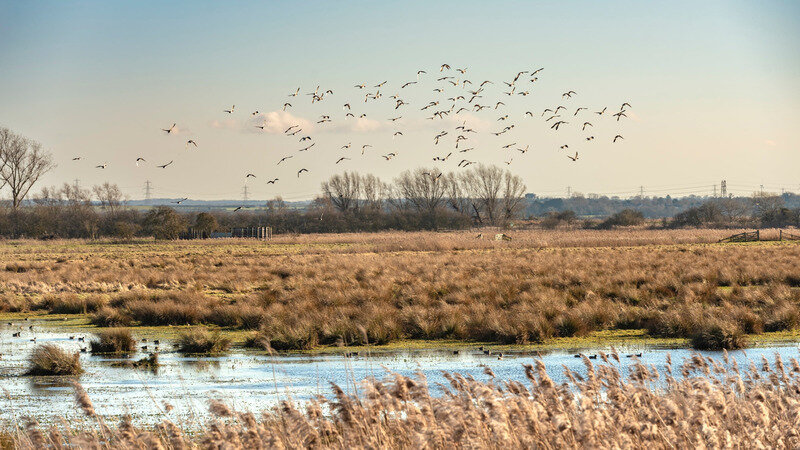
Restore and create wetlands to mitigate flood risks
The Issue
At a time when climate change is leading to more frequent and severe floods, it is vital to adopt innovative and sustainable approaches to flood management. One such approach is the restoration and creation of wetlands in suitable locations. Wetlands have a remarkable ability to absorb and slow down water flow, reducing the impact of floods. By allowing water to be held and slowed naturally, damage to infrastructure and communities can be minimized.
We urge local and national governments to integrate soft-engineering measures into their flood-defense strategies. This includes floodplain restoration, creating natural water storage areas, and reconnecting wetland habitats. These measures should work in tandem with existing hard infrastructure, such as dams and levees, to create a more resilient flood management system.
Wetlands are not only vital for flood risk mitigation, but they also provide numerous co-benefits. They improve water quality by filtering pollutants, support biodiversity by offering habitats to countless species, and contribute to carbon storage, aiding in the fight against global warming.
Restoring and creating wetlands requires a collaborative effort among governments, environmental organizations, and local communities. It is crucial to identify suitable locations through scientific research and implement plans that consider local needs and ecosystems.
We, the undersigned members of the local community, are asking the water authorities, and the Fens 2100+ programme to give greater weight to soft-engineering and nature-based approaches in how our flood risk is managed.

437
The Issue
At a time when climate change is leading to more frequent and severe floods, it is vital to adopt innovative and sustainable approaches to flood management. One such approach is the restoration and creation of wetlands in suitable locations. Wetlands have a remarkable ability to absorb and slow down water flow, reducing the impact of floods. By allowing water to be held and slowed naturally, damage to infrastructure and communities can be minimized.
We urge local and national governments to integrate soft-engineering measures into their flood-defense strategies. This includes floodplain restoration, creating natural water storage areas, and reconnecting wetland habitats. These measures should work in tandem with existing hard infrastructure, such as dams and levees, to create a more resilient flood management system.
Wetlands are not only vital for flood risk mitigation, but they also provide numerous co-benefits. They improve water quality by filtering pollutants, support biodiversity by offering habitats to countless species, and contribute to carbon storage, aiding in the fight against global warming.
Restoring and creating wetlands requires a collaborative effort among governments, environmental organizations, and local communities. It is crucial to identify suitable locations through scientific research and implement plans that consider local needs and ecosystems.
We, the undersigned members of the local community, are asking the water authorities, and the Fens 2100+ programme to give greater weight to soft-engineering and nature-based approaches in how our flood risk is managed.
Supporter Voices
Petition Updates
Share this petition
Petition created on 16 July 2026