Remove GVSU from the NCAA Division 2 level
The Issue
FOR DECADES, GRAND VALLEY STATE UNIVERSITY ATHLETICS has systematically sought out and exploited structural loopholes within NCAA Division II and the GLIAC, and the rollout of the NCAA Division I hard roster limits following the House v. NCAA settlement has indirectly created a massive windfall for high-resourced D-II programs like Grand Valley State, further compounding their competitive advantage over smaller D-II schools.
As student-athletes competing in the GLIAC, we pour our lives into this sport. We run 80+ miles a week, balance grueling academic schedules, grit through injuries, and make endless sacrifices for our teams under the promise of fair collegiate competition. But the reality is that we step onto a starting line where the outcome has already been structurally pre-determined. What should be a fair collegiate athletic conference has been transformed into a complete disregard for competitive fairness. By maintaining Division II status while operating with Division I scale, GVSU has created an unlevel playing field that undermines the very purpose of D-II competition.
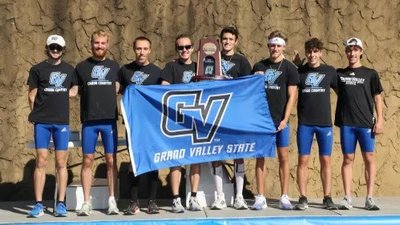
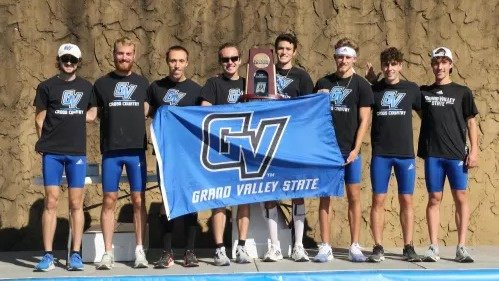
FOR EVERY SINGLE YEAR SINCE 2001, Grand Valley State has won every GLIAC Women's Cross Country Championship meet and every GLIAC Men's Cross Country Championship since 2002. For over two full decades, no other program in the conference has touched a team cross country trophy. Sweeping top podium spots year after year deprives student-athletes across every other GLIAC institution of fair postseason recognition, all-conference honors, and genuine competition. We are so tired. GVSU's dominance is not built on grit alone, and framing it like this ignores the exploited financial and structural gap that smaller Division II institutions cannot match. Grand Valley State operates an athletic department budget exceeding $26 million, significantly larger than multiple NCAA Division I institutions (such as Chicago State or Coppin State) and double to triple the $6M–$13M operating budgets of standard GLIAC peer schools. Operating with a student body of over 22,000 allows GVSU to draw in dozens of walk-on athletes who would be varsity leaders at smaller D-II colleges. Their 6th, 7th, and 8th runners consistently outpace top starters from rival conference squads. While mid-sized and smaller D-II programs must split fractional financial aid across small rosters due to limited budgets, GVSU fully funds 100% of the maximum allowable D-II scholarship limits (12.6 equivalencies for both men's and women's track/cross country).
This resource advantage has been massively exacerbated by the rollout of NCAA Division I roster limits under the House v. NCAA settlement (which capped Division I rosters at 17 runners for Cross Country and 45 for Track & Field). As Division I programs trim rosters and turn away high-upside developmental recruits, GVSU—unbound by D-I roster caps—uses its $26 million budget to absorb these D-I-caliber athletes and transfer portal cuts. While smaller D-II schools lack the funds to add these athletes, GVSU acts as a catch-basin for D-I talent, expanding a talent gap that makes fair conference competition impossible. Moving up to Division I (FCS/FBS) requires multi-million-dollar reclassification fees, mandatory facility expansions, and a formal D-I conference invitation. Rather than taking on the financial challenge and mid-tier status of Division I, GVSU intentionally remains in Division II, allowing them to hoard D-I level resources, collect trophies (winning 18 of the last 21 D-II Director’s Cups), and dominate smaller D-II programs on a rigged playing field.
We didn't join Division II athletics to be background noise for a D-I program operating under a D-II badge. We are calling directly on the GLIAC Council of Presidents, GLIAC Commissioner Kris Dunbar, member Athletic Directors, and the NCAA Division II Presidents Council to stop ignoring this glaring resource loophole.
We demand an immediate administrative audit and concrete regulatory action, including:
- Implementing strict limits on championship roster sizes to prevent high-budget institutions from hoarding talent and flooding conference meets with D-I depth.
- Establish regional scholarship equity guidelines and capping measures to equalize total sport expenditures across GLIAC member institutions.
- Initiate a comprehensive review of GLIAC membership criteria, assessing whether institutions whose operating budgets and student body sizes double or triple conference averages should be mandated to transition to Division I or compete as Division II independents.
- Initiate a comprehensive review of GLIAC membership criteria, assessing whether institutions whose operating budgets and student body sizes double or triple conference averages should be mandated to transition to Division I or compete as Division II independents.
Every athlete on every starting line across this conference puts in the exact same early mornings, heavy mileage, and the grueling sacrifices it takes to compete on this level... and yet, we are forced to compete in a system where the outcome is structurally rigged before the gun even goes off. It is long overdue for conference and NCAA leadership to protect the integrity of Division II athletics and ensure that collegiate competition is decided by student-athletes on the course - not by athletic budget imbalances in administrative boardrooms.
8
The Issue
FOR DECADES, GRAND VALLEY STATE UNIVERSITY ATHLETICS has systematically sought out and exploited structural loopholes within NCAA Division II and the GLIAC, and the rollout of the NCAA Division I hard roster limits following the House v. NCAA settlement has indirectly created a massive windfall for high-resourced D-II programs like Grand Valley State, further compounding their competitive advantage over smaller D-II schools.
As student-athletes competing in the GLIAC, we pour our lives into this sport. We run 80+ miles a week, balance grueling academic schedules, grit through injuries, and make endless sacrifices for our teams under the promise of fair collegiate competition. But the reality is that we step onto a starting line where the outcome has already been structurally pre-determined. What should be a fair collegiate athletic conference has been transformed into a complete disregard for competitive fairness. By maintaining Division II status while operating with Division I scale, GVSU has created an unlevel playing field that undermines the very purpose of D-II competition.
FOR EVERY SINGLE YEAR SINCE 2001, Grand Valley State has won every GLIAC Women's Cross Country Championship meet and every GLIAC Men's Cross Country Championship since 2002. For over two full decades, no other program in the conference has touched a team cross country trophy. Sweeping top podium spots year after year deprives student-athletes across every other GLIAC institution of fair postseason recognition, all-conference honors, and genuine competition. We are so tired. GVSU's dominance is not built on grit alone, and framing it like this ignores the exploited financial and structural gap that smaller Division II institutions cannot match. Grand Valley State operates an athletic department budget exceeding $26 million, significantly larger than multiple NCAA Division I institutions (such as Chicago State or Coppin State) and double to triple the $6M–$13M operating budgets of standard GLIAC peer schools. Operating with a student body of over 22,000 allows GVSU to draw in dozens of walk-on athletes who would be varsity leaders at smaller D-II colleges. Their 6th, 7th, and 8th runners consistently outpace top starters from rival conference squads. While mid-sized and smaller D-II programs must split fractional financial aid across small rosters due to limited budgets, GVSU fully funds 100% of the maximum allowable D-II scholarship limits (12.6 equivalencies for both men's and women's track/cross country).
This resource advantage has been massively exacerbated by the rollout of NCAA Division I roster limits under the House v. NCAA settlement (which capped Division I rosters at 17 runners for Cross Country and 45 for Track & Field). As Division I programs trim rosters and turn away high-upside developmental recruits, GVSU—unbound by D-I roster caps—uses its $26 million budget to absorb these D-I-caliber athletes and transfer portal cuts. While smaller D-II schools lack the funds to add these athletes, GVSU acts as a catch-basin for D-I talent, expanding a talent gap that makes fair conference competition impossible. Moving up to Division I (FCS/FBS) requires multi-million-dollar reclassification fees, mandatory facility expansions, and a formal D-I conference invitation. Rather than taking on the financial challenge and mid-tier status of Division I, GVSU intentionally remains in Division II, allowing them to hoard D-I level resources, collect trophies (winning 18 of the last 21 D-II Director’s Cups), and dominate smaller D-II programs on a rigged playing field.
We didn't join Division II athletics to be background noise for a D-I program operating under a D-II badge. We are calling directly on the GLIAC Council of Presidents, GLIAC Commissioner Kris Dunbar, member Athletic Directors, and the NCAA Division II Presidents Council to stop ignoring this glaring resource loophole.
We demand an immediate administrative audit and concrete regulatory action, including:
- Implementing strict limits on championship roster sizes to prevent high-budget institutions from hoarding talent and flooding conference meets with D-I depth.
- Establish regional scholarship equity guidelines and capping measures to equalize total sport expenditures across GLIAC member institutions.
- Initiate a comprehensive review of GLIAC membership criteria, assessing whether institutions whose operating budgets and student body sizes double or triple conference averages should be mandated to transition to Division I or compete as Division II independents.
- Initiate a comprehensive review of GLIAC membership criteria, assessing whether institutions whose operating budgets and student body sizes double or triple conference averages should be mandated to transition to Division I or compete as Division II independents.
Every athlete on every starting line across this conference puts in the exact same early mornings, heavy mileage, and the grueling sacrifices it takes to compete on this level... and yet, we are forced to compete in a system where the outcome is structurally rigged before the gun even goes off. It is long overdue for conference and NCAA leadership to protect the integrity of Division II athletics and ensure that collegiate competition is decided by student-athletes on the course - not by athletic budget imbalances in administrative boardrooms.
The Decision Makers

Petition Updates
Share this petition
Petition created on November 8, 2025