Milestone Victory — Clearer Discharge Protocols for Abusive Patients

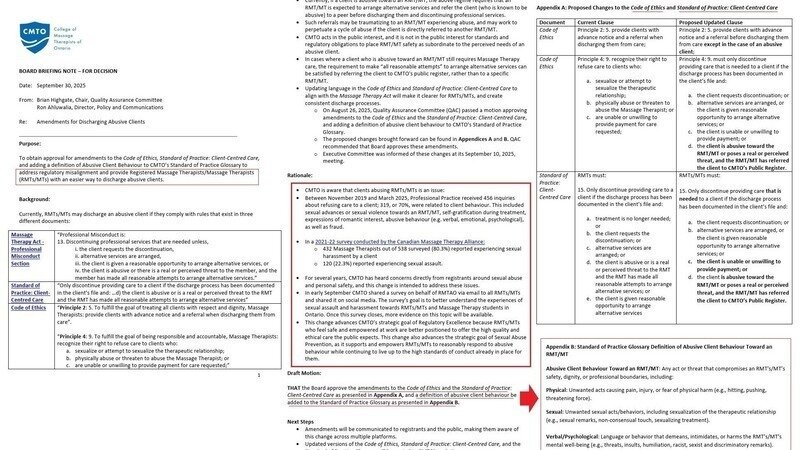
The CMTO has just announced proposed amendments to the Code of Ethics and Standards of Practice that will make it easier for RMTs to discharge abusive patients.
For the first time:
- “Abusive Client Behaviour” will be clearly defined in the Standards Glossary (physical, sexual, verbal, psychological abuse).
- RMTs will no longer be required to personally arrange care for abusive patients. Instead, we can simply refer them to the CMTO Public Register.
- The Code of Ethics and Client-Centred Care Standard will be updated to make discharge rights clearer and more consistent.
📊 Between 2019–2025, CMTO received 456 inquiries about refusing care. 70% were related to patient misconduct, including sexual harassment and assault. National survey data shows 80% of RMTs report sexual harassment, and 22% report sexual assault by patients.
This is a significant milestone. For years, RMTs have been left with vague or buried guidance, pressured to refer abusive patients to peers, and made to feel that our safety was secondary. These amendments finally begin to recognize that RMT safety = public safety.
Where It Still Falls Short
While this progress is important, gaps remain:
- Reactive, not proactive: The changes help us discharge abusive clients, but don’t include preventative measures like standardized intake language, visible clinic policies, or public-facing education.
- No trauma-informed supports: There’s no mention of counselling, peer support, or aftercare for RMTs impacted by patient abuse.
- No tracking system: Abusive patients can still move between practitioners without accountability — there’s no reporting mechanism or central database.
- Clarity in practice: “Refer to the Public Register” is vague; without scripts or templates, some RMTs may still feel uncertain.
- Communication risk: If CMTO doesn’t clearly communicate and train RMTs on these changes, many may not even realize their new rights.
Why Language Matters
These amendments would carry even more strength if they were fully aligned with the Regulated Health Professions Act (RHPA) by using the word patient. The RHPA’s sexual abuse provisions are framed around the patient-provider relationship, not client. Consistent use of patient would both strengthen these changes under the law and affirm that RMTs are healthcare professionals deserving the same protections as other regulated providers. Words matter — they shape how misconduct is understood, named, and acted upon.
Why We Must Keep Going
This amendment is a hard-won step forward, and it happened because RMTs spoke up. But it cannot stop here.
We will now await public-facing, preventative measures, and training through STRiVE so that these changes are not just words on paper, or in meetings, but real tools RMTs can apply in practice. Practitioner safety must be supported through:
- Trauma-informed training and supports for RMTs who experience misconduct.
- Preventative, public-facing education tools to reduce risks in the first place.
- Clear, accessible STRiVE modules that give every RMT confidence in applying these new standards.
Thank you to every RMT who has signed, shared, and added your voice. This milestone proves our advocacy matters — and together, we can ensure safety is not just written into our Standards, but truly lived in practice.