Practical Tools — and the Need for Systemic Action

Registered Massage Therapists (RMTs) face unique risks of sexual misconduct in the workplace. To make these incidents real, recognizable, and actionable, we need clear definitions, strong boundaries, and practical steps.
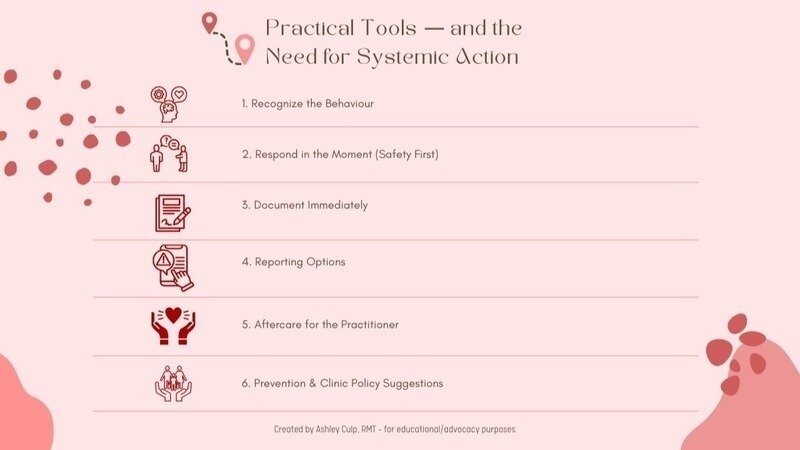
This example protocol is one way RMTs can respond in practice:
1. Recognize the Behaviour
- Sexual Assault (Criminal Code s. 271): Non-consensual sexual touching (e.g., groping, attempted kiss, forced hand placement).
- Indecent Act (Criminal Code s. 173): Sexual or offensive conduct without touching, intended to shock or offend (e.g., exposure, masturbation, lewd gestures, sexualized comments).
- Sexual Harassment (Human Rights/OHSA): Behaviour that creates a hostile or unsafe work environment (e.g., remarks, propositions, comments about your body).
2. Respond in the Moment (Safety First)
- End the session immediately:
“Your behaviour is inappropriate. This session is over. Please get dressed. You will not be rebooked.” - Leave the room and allow the patient to dress.
- Do not argue or negotiate. Exit if unsafe.
3. Document Immediately
- Record date, time, patient name, actions, your response, any witnesses.
- Keep in the patient's file; adapt an incident form for police, CMTO, or OHSA if needed.
4. Reporting Options
- Police: Sexual Assault or Indecent Act charges.
- CMTO: Mandatory reporting only if another RMT is the perpetrator; no current system for client misconduct.
- Employer/Landlord: File a harassment complaint under OHSA.
- HRTO: If harassment is linked to a protected ground.
5. Aftercare for the Practitioner
- Debrief with a trusted colleague.
- Access counselling or peer support.
- Document income loss (for HRTO/WSIB/insurance).
6. Prevention & Clinic Policy Suggestions
- Post visible zero-tolerance policies in clinics and online.
- Add consent/boundary statements to intake forms.
- Safety measures: accessible phone/panic button, code words, RMT positioned near exit.
Why This Matters
Naming these behaviours outright — sexual assault, indecent act, sexual harassment — makes them legally defined acts, not “uncomfortable situations.” This clarity empowers RMTs to respond, document, and report.
But without stronger protections, many incidents still go untracked, under-reported, or unaddressed — leaving practitioners vulnerable.
We are calling for:
- Strong, standardized protocols (like this one, as a model).
- Zero-tolerance policies to ensure safety in every workplace.
- Trauma-informed supports for practitioners.
- Public education tools to build awareness and reduce stigma.
Sharing resources like this is a start. But we need CMTO and RMTAO to go further — to move beyond surveys and web pages into real, enforceable protections for RMTs.
This example protocol is provided for educational purposes only and is not a substitute for official CMTO or legal guidance.
Thank you for continuing to sign and share this petition. Together, we can make the profession safer for everyone.