Reconsider Collaboration with Ocean Univeristy of China and the People's Liberation Army
Reconsider Collaboration with Ocean Univeristy of China and the People's Liberation Army
Das Problem
Protecting Academic Integrity and Maritime Security: A Call to Reconsider Collaboration with Ocean University of China.
Dear fellow academics, researchers and global citizens,
The integrity of academic research and maritime security are under threat, and we need your help to take a stand.
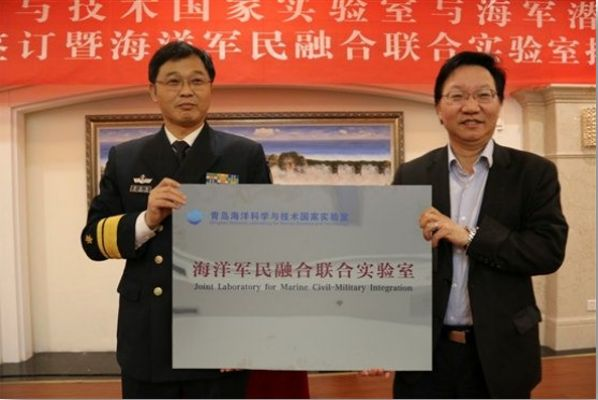
We are deeply concerned over the recent revelations about the relationship between China's Qingdao National Laboratory of Marine Science and Technology (QNLM), now rebranded as Laoshan Laboratories, and the People's Liberation Army Navy (PLAN). We are particularly troubled by the role of the Ocean University of China (OUC) in providing QNLM, and by extension, the PLAN the cover and conduit to pursue their military agenda.
As advocates for academic integrity, environmental sustainability, and ethical research, we believe that it is our responsibility to uphold the values that underpin our scientific community. The discovery of the dual-use nature of QNLM/Laoshan Laboratories' scientific equipment and sensors, which supports the Chinese military by providing surveillance of our sovereign and international waters, has raised serious questions about the nature of their collaborations with universities and scientific institutions worldwide.
As researchers, we should have the right to know whether our work is being weaponized. Imagine finding out that your life's work has been taken to pursue military goals which directly harm our fellow citizens, disrupt global peace, and wreak havoc on our delicate marine ecosystems. We must demand answers from our institutions and ask why countries are allowing the deployment of this technology into their waters, and if they truly know what it is used for?
We are calling on universities, particularly those that have recently signed agreements with OUC to reconsider their partnerships in light of this information. We urge these institutions to sever ties with OUC, given its duplicitous role in facilitating the PLA's military agenda. We hope this petition reaches the eyes of those who may be contemplating future research participation with OUC and QNLM, as it is currently not well publicized that you may be inadvertently working to achieve military goals.
Please sign and share this petition!
By reaching a large audience of our fellow researchers, academics and global citizens we stand the best chance of raising awareness of this issue and ensuring that our work is not exploited for purposes that are harmful to our fellow humans and the maritime environment.
We acknowledge there may be sensitivities surrounding this issue, so please reach out directly if you want to discuss further or are unsure about how you can show your support in a way that is safe for you.
Sincerely,
Li Chen
Research Assistant and Global Citizen
References
KHARON. China’s Underwater Ambitions Built on U.S. Technology
This article details QNLM's ocean observation network and civil military joint laboratory programs, including more than 200 sets of ocean sensors conducting continuous long term observations for research and military use.
ASIA TIMES. China’s air-sea drone could rewrite the rules of naval warfare
This article explains that Chinese civillian research vessels deploy advanced underwater gliders and profiling floats to build a real-time ocean observation network, the data is capable of aiding the PLA Navy’s (PLAN) submarine operations.
KHARON. Pentagon Mandates Tighter Security Reviews for Foreign Influence in University Research
This article expands on the relationship between QNLM, OUC and the PLA, and the strategic value their joint laboratories bring to China's military modernization.
FORBES. China Builds Surveillance Network In South China Sea
CSIS Report. Surveying the Seas: China's Dual-Use Research Operations in the Indian Ocean.
This analysis explores the scale of China's dual use activities, the blurred lines between them, and how QNLM and other oceanographic research institutes support the PLA's maritime warfare capabilities.

17
Das Problem
Protecting Academic Integrity and Maritime Security: A Call to Reconsider Collaboration with Ocean University of China.
Dear fellow academics, researchers and global citizens,
The integrity of academic research and maritime security are under threat, and we need your help to take a stand.
We are deeply concerned over the recent revelations about the relationship between China's Qingdao National Laboratory of Marine Science and Technology (QNLM), now rebranded as Laoshan Laboratories, and the People's Liberation Army Navy (PLAN). We are particularly troubled by the role of the Ocean University of China (OUC) in providing QNLM, and by extension, the PLAN the cover and conduit to pursue their military agenda.
As advocates for academic integrity, environmental sustainability, and ethical research, we believe that it is our responsibility to uphold the values that underpin our scientific community. The discovery of the dual-use nature of QNLM/Laoshan Laboratories' scientific equipment and sensors, which supports the Chinese military by providing surveillance of our sovereign and international waters, has raised serious questions about the nature of their collaborations with universities and scientific institutions worldwide.
As researchers, we should have the right to know whether our work is being weaponized. Imagine finding out that your life's work has been taken to pursue military goals which directly harm our fellow citizens, disrupt global peace, and wreak havoc on our delicate marine ecosystems. We must demand answers from our institutions and ask why countries are allowing the deployment of this technology into their waters, and if they truly know what it is used for?
We are calling on universities, particularly those that have recently signed agreements with OUC to reconsider their partnerships in light of this information. We urge these institutions to sever ties with OUC, given its duplicitous role in facilitating the PLA's military agenda. We hope this petition reaches the eyes of those who may be contemplating future research participation with OUC and QNLM, as it is currently not well publicized that you may be inadvertently working to achieve military goals.
Please sign and share this petition!
By reaching a large audience of our fellow researchers, academics and global citizens we stand the best chance of raising awareness of this issue and ensuring that our work is not exploited for purposes that are harmful to our fellow humans and the maritime environment.
We acknowledge there may be sensitivities surrounding this issue, so please reach out directly if you want to discuss further or are unsure about how you can show your support in a way that is safe for you.
Sincerely,
Li Chen
Research Assistant and Global Citizen
References
KHARON. China’s Underwater Ambitions Built on U.S. Technology
This article details QNLM's ocean observation network and civil military joint laboratory programs, including more than 200 sets of ocean sensors conducting continuous long term observations for research and military use.
ASIA TIMES. China’s air-sea drone could rewrite the rules of naval warfare
This article explains that Chinese civillian research vessels deploy advanced underwater gliders and profiling floats to build a real-time ocean observation network, the data is capable of aiding the PLA Navy’s (PLAN) submarine operations.
KHARON. Pentagon Mandates Tighter Security Reviews for Foreign Influence in University Research
This article expands on the relationship between QNLM, OUC and the PLA, and the strategic value their joint laboratories bring to China's military modernization.
FORBES. China Builds Surveillance Network In South China Sea
CSIS Report. Surveying the Seas: China's Dual-Use Research Operations in the Indian Ocean.
This analysis explores the scale of China's dual use activities, the blurred lines between them, and how QNLM and other oceanographic research institutes support the PLA's maritime warfare capabilities.
Neuigkeiten zur Petition
Diese Petition teilen
Petition am 7. April 2025 erstellt