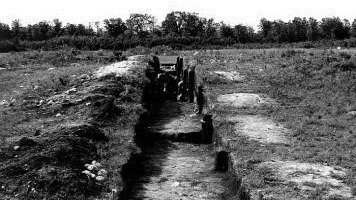

Recognize & Protect the St. James Burial Mound
The Issue
Just east of Sturgeon Road and north of the Living Prairie Museum sits a small collection of rock in the middle of an empty field. In the summer months, it is almost invisible within the long grasses. Even on bare spring days like today, the aviation plant that sits adjacent draws the eye up and away.
I have lived in Winnipeg all my life. As an avid runner who loves spending time outdoors in our short warm months, I have spent a lot of time in the area of the site I speak of. Never could I have anticipated that in the shadow of industry and in the midst of the western, suburban community that has colonized this space, sits a historic burial site where First Nations people were laid to rest.
The research that has been done previous, including speaking to elders in the area, carbon dating of posts and excavation of artifacts from the site lead us to believe the following about the site.
- Burial site is said to be associated with either the Sioux or Assiniboine peoples. Both are noted depending on the sources viewed. These are separate First Nations cultures.
- Dated to the late 1700s
- Assumed to be the resting place for First Nations smallpox victims
- Connected to a First Nations settlement site identified North of Saskatchewan and west of Sturgeon Road. (Lot 10 Saskatchewan Ave)
The site has been repeatedly abused over the years.
- In the 1930s, the remains of 7 individuals were removed from the site. It is unknown where these human remains ended up.
- In 1969 it was disturbed again at the permission of the City of Winnipeg under the supervision of the University of Winnipeg Archaeological Field School as it was in the way of development occurring. The partial remains of 2 individuals (a child and an adult) were removed at this time and transferred to the Manitoba Museum.
- In 1980, as part of the City of Winnipeg Pre-1880 Historical Resources Inventory, on-going chemical contamination continues to disturb the site
The City of Winnipeg has been aware of the existence of this site for decades. As noted, the 1969 excavation was approved by the city. In the 70s, the media called out the city for not doing anything about it. It was included within the Historical Resources Inventory in 1980.
When approaching my city councilor, now Mayor Scott Gillingham about this matter in spring of 2022, it was met with surprise.
The following conversations with government have occurred since that time with the noted outcomes.
- May 2022 - City councilor Scott Gillingham expressed he was not aware of the site. Forwarded matter to the Indigenous Relations Division with the City of Winnipeg
- November 2022 - After repeated requests for follow-up, conversation with Indigenous Relations Division at City of Winnipeg occurred. No action noted to being taken at that time. Expressed that acknowledging the site may not fall under their mandate. If the site was acknowledged, how many other sites would also have to be? Noted they would continue to consider what should be done.
- December 2022 - Contacted Minister of Sport, Culture & Heritage with Manitoba Government inquiring about a Historical Resource Impact Assessment. The office confirmed they have been contacted by the City who have been informed of legislated heritage requirements and advised to perform a heritage resource impact assessment due to the potential to impact heritage resources or human remains.
- January 2023 - Discussed matter with the Special Interlocutor for Missing Children & Unmarked Graves and Burial Sites, Kimberly Murray. She notes she will follow-up and look into things further.
Some progress has been made and I am hopeful, but cautious, particularly given the government's history of pushing this matter under the rug when it is not convenient.
I continue to have the following concerns about the site:
- No decedents of the burial mound or the adjacent community have been identified so that the site may be reclaimed and its future path directed by those who rightful are entitled to make these decisions.
- Awareness of the site's existence continues to be minimal.
- Potential ongoing chemical contamination from the aviation plant as noted in the 1980 historical resources inventory.
- No evidence exists that remains looted from the site have been repatriated. Contact with the Manitoba Museum reveals that any human remains are no longer held at the Museum, but would have been transferred to the Manitoba Government. The notion that the remains of First Nations ancestors, including a child, could currently be in the possession of the colonizing government is not in the interest of reconciliation.
- Unknown who will be completing the Historical Resource Impact Assessment and what approach they will take to appreciating the significance of an Indigenous site.
- History of government "forgetting" about the site combined with lack of awareness creates concern of it never being fully acknowledged.
- 1969 excavation along the peripheral of the mound found additional remains. Technology has improved tenfold since this time to potentially identify if additional remains exist and within what boundary, without the need for full excavation. This is important information to have when considering next steps.
- Site continues to sit unacknowledged and unprotected on City owned land.
You can help.
Share with your circle that this site exists and deserves recognition. Follow-up with your city councilor and MLA. As a community, we can keep this matter in forefront of the government's mind and hopefully ensure the message is passed to those who really need to be brought into this discussion - the decedents of those laid to rest in our backyard. If we are to advance truth and reconciliation, this is our responsibility.
219
The Issue
Just east of Sturgeon Road and north of the Living Prairie Museum sits a small collection of rock in the middle of an empty field. In the summer months, it is almost invisible within the long grasses. Even on bare spring days like today, the aviation plant that sits adjacent draws the eye up and away.
I have lived in Winnipeg all my life. As an avid runner who loves spending time outdoors in our short warm months, I have spent a lot of time in the area of the site I speak of. Never could I have anticipated that in the shadow of industry and in the midst of the western, suburban community that has colonized this space, sits a historic burial site where First Nations people were laid to rest.
The research that has been done previous, including speaking to elders in the area, carbon dating of posts and excavation of artifacts from the site lead us to believe the following about the site.
- Burial site is said to be associated with either the Sioux or Assiniboine peoples. Both are noted depending on the sources viewed. These are separate First Nations cultures.
- Dated to the late 1700s
- Assumed to be the resting place for First Nations smallpox victims
- Connected to a First Nations settlement site identified North of Saskatchewan and west of Sturgeon Road. (Lot 10 Saskatchewan Ave)
The site has been repeatedly abused over the years.
- In the 1930s, the remains of 7 individuals were removed from the site. It is unknown where these human remains ended up.
- In 1969 it was disturbed again at the permission of the City of Winnipeg under the supervision of the University of Winnipeg Archaeological Field School as it was in the way of development occurring. The partial remains of 2 individuals (a child and an adult) were removed at this time and transferred to the Manitoba Museum.
- In 1980, as part of the City of Winnipeg Pre-1880 Historical Resources Inventory, on-going chemical contamination continues to disturb the site
The City of Winnipeg has been aware of the existence of this site for decades. As noted, the 1969 excavation was approved by the city. In the 70s, the media called out the city for not doing anything about it. It was included within the Historical Resources Inventory in 1980.
When approaching my city councilor, now Mayor Scott Gillingham about this matter in spring of 2022, it was met with surprise.
The following conversations with government have occurred since that time with the noted outcomes.
- May 2022 - City councilor Scott Gillingham expressed he was not aware of the site. Forwarded matter to the Indigenous Relations Division with the City of Winnipeg
- November 2022 - After repeated requests for follow-up, conversation with Indigenous Relations Division at City of Winnipeg occurred. No action noted to being taken at that time. Expressed that acknowledging the site may not fall under their mandate. If the site was acknowledged, how many other sites would also have to be? Noted they would continue to consider what should be done.
- December 2022 - Contacted Minister of Sport, Culture & Heritage with Manitoba Government inquiring about a Historical Resource Impact Assessment. The office confirmed they have been contacted by the City who have been informed of legislated heritage requirements and advised to perform a heritage resource impact assessment due to the potential to impact heritage resources or human remains.
- January 2023 - Discussed matter with the Special Interlocutor for Missing Children & Unmarked Graves and Burial Sites, Kimberly Murray. She notes she will follow-up and look into things further.
Some progress has been made and I am hopeful, but cautious, particularly given the government's history of pushing this matter under the rug when it is not convenient.
I continue to have the following concerns about the site:
- No decedents of the burial mound or the adjacent community have been identified so that the site may be reclaimed and its future path directed by those who rightful are entitled to make these decisions.
- Awareness of the site's existence continues to be minimal.
- Potential ongoing chemical contamination from the aviation plant as noted in the 1980 historical resources inventory.
- No evidence exists that remains looted from the site have been repatriated. Contact with the Manitoba Museum reveals that any human remains are no longer held at the Museum, but would have been transferred to the Manitoba Government. The notion that the remains of First Nations ancestors, including a child, could currently be in the possession of the colonizing government is not in the interest of reconciliation.
- Unknown who will be completing the Historical Resource Impact Assessment and what approach they will take to appreciating the significance of an Indigenous site.
- History of government "forgetting" about the site combined with lack of awareness creates concern of it never being fully acknowledged.
- 1969 excavation along the peripheral of the mound found additional remains. Technology has improved tenfold since this time to potentially identify if additional remains exist and within what boundary, without the need for full excavation. This is important information to have when considering next steps.
- Site continues to sit unacknowledged and unprotected on City owned land.
You can help.
Share with your circle that this site exists and deserves recognition. Follow-up with your city councilor and MLA. As a community, we can keep this matter in forefront of the government's mind and hopefully ensure the message is passed to those who really need to be brought into this discussion - the decedents of those laid to rest in our backyard. If we are to advance truth and reconciliation, this is our responsibility.
Supporter Voices
Petition Updates
Share this petition
Petition created on March 22, 2023