
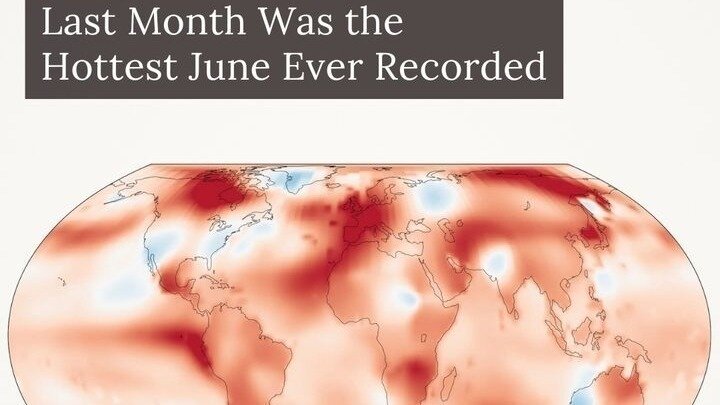
Last month was the hottest June on record going back 174 years, according to the National Oceanic and Atmospheric Administration. It's the latest temperature record to fall this summer, as the El Niño climate pattern exacerbates the effects of human-caused climate change.
The average global temperature in June 2023 was slightly hotter than the previous record June, which occurred in 2020.
Millions of people around the world suffered as a result, as heat waves hit every continent. In the U.S., record-breaking heat gripped much of the country including the Northeast, Texas, the Plains and Puerto Rico in June, and another round of deadly heat is affecting people across the southern half of the country this week.
Every June for the last 47 years has been hotter than the twentieth century average for the month, a stark reminder that greenhouse gas emissions, largely from burning fossil fuels, are causing steady and devastating warming worldwide.
The El Niño climate pattern, which officially began last month, is one reason temperatures are so hot right now. The cyclic pattern causes hotter than normal water in the Pacific Ocean, and the extra heat alters weather around the world and raises global temperatures. Usually, the hottest years on record occur when El Niño is active.
Sponsor Message
But the main driver of record-breaking heat is human-caused climate change. This June is just the latest reminder that heat-trapping greenhouse gasses continue to accumulate in the atmosphere and disrupt the planet's climate. The last eight years were the hottest ever recorded, and forecasters say the next five years will be the hottest on record.
Oceans are trending even hotter than the planet as a whole. This June was the hottest month ever recorded for the world's oceans. One of many hotspots is in the Gulf of Mexico, where water temperatures in some areas hovered around 90 degrees Fahrenheit this week. That's dangerously hot for some marine species, including coral.
Oceans have absorbed more than 90% of the extra heat in the atmosphere generated by human-caused warming.
Many parts of the U.S. are continuing to see dangerously high temperatures in July. Heat waves are the deadliest weather-related disasters in the U.S., and are especially dangerous for people who live or work outside, and for people with cardiovascular or respiratory diseases. Officials recommend learning the signs of heatstroke and other heat-related illnesses, staying hydrated and taking time to adjust when outside temperatures are high.
june
global temperature
global warming
climate change
Facebook
Flipboard
Email
More Stories From NPR
CLIMATE
Natural gas can rival coal's climate-warming potential when leaks are counted
WEATHER
The Southwest's enduring heat wave is expected to intensify over the weekend
EUROPE
Heat waves in Europe killed more than 61,600 people last summer, a study estimates
WEATHER
Should we invest more in weather forecasting? It may save your life
WEATHER
Extreme heat will smother the South from Arizona to Florida
WEATHER
Dangerous heat waves will hit the Southwest and Florida over the next week
Popular on NPR.org
ANIMALS
A record-breaking Burmese python — as long as a giraffe is tall — caught in Florida
EDUCATION
You could still be eligible for student loan forgiveness under this plan
EDUCATION
Student loan forgiveness is on the way for more than 800,000 borrowers
RELIGION
Megachurches are getting even bigger as churches close across the country
STRANGE NEWS
An otter in Santa Cruz is hassling surfers — and stealing their boards
FOOD
Famous Chocolate Wafers are no more, but the icebox cake lives on
NPR Editors' Picks
GLOBAL HEALTH
Opinion: Life hacks from India on how to stay cool (without an air conditioner)
SPORTS
Gabby Douglas aims a comeback at the Paris 2024 Olympics
WORLD
78 pilot whales were slaughtered near a cruise ship carrying marine conservationists
POLITICS
President Biden posts 'blockbuster' three-month fundraising total: $72 million
ART & DESIGN
How DOES your cellphone work? A new exhibition dials into the science
POLITICS
House passes defense bill.
Public Editor
Corrections
Contact & Help
ABOUT NPR
Overview
Diversity
NPR Network
Accessibility
Ethics
Finances
GET INVOLVED
Support Public Radio
Sponsor NPR
NPR Careers
NPR Shop
NPR Events
NPR Extra
terms of use
privacy
your privacy choices
text only
© 2023 npr