HOW DOES RACISM INTERSECT WITH CLASSISM?

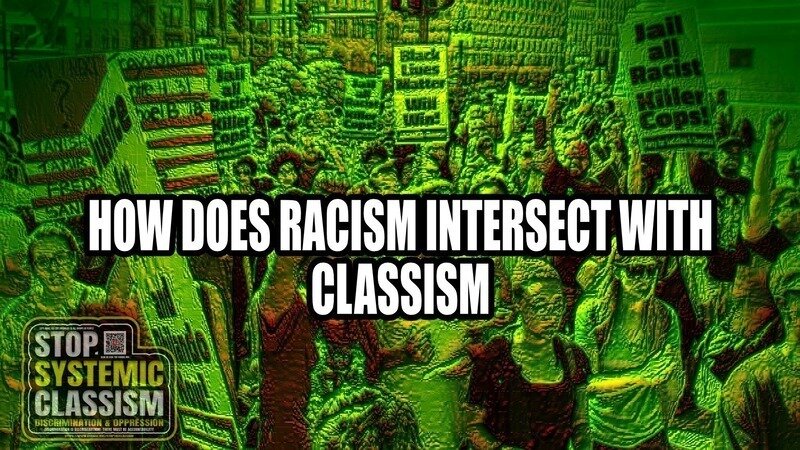
Classism intersects with racism in significant ways, creating complex systems of oppression that disproportionately affect marginalized communities. Here's how the intersection of classism and racism manifests:
Structural Inequities: Both classism and racism are rooted in structural inequities that perpetuate inequalities across socioeconomic and racial lines. Systems and institutions favoring privileged classes and racial groups maintain power dynamics that disadvantage marginalized communities.
Wealth Disparities: Classism and racism contribute to wealth disparities, where racial minorities, especially Black, Indigenous, and People of Color (BIPOC) communities, are disproportionately represented in lower-income brackets due to historical and systemic discrimination in employment, education, housing, and access to resources.
Employment Discrimination: Intersectional discrimination occurs in employment practices, with BIPOC individuals facing both racial and class-based discrimination. They often encounter barriers in hiring, promotion, and fair wages, leading to economic disadvantages and limited career opportunities.
Education Disparities: Classism and racism intersect in educational disparities, where BIPOC students from lower-income backgrounds face compounded challenges such as underfunded schools, limited access to quality education, discriminatory discipline practices, and systemic barriers to academic achievement.
Housing Segregation: Both classism and racism contribute to housing segregation and discrimination. BIPOC individuals experience higher rates of housing discrimination, predatory lending practices, redlining, gentrification, and lack of access to affordable housing, perpetuating cycles of poverty and housing instability.
Healthcare Inequities: The intersection of classism and racism leads to healthcare inequities, with BIPOC communities experiencing higher rates of health disparities, limited access to healthcare services, medical bias, inadequate health insurance coverage, and systemic barriers to addressing health needs effectively.
Criminal Justice Disparities: Classism and racism intersect in the criminal justice system, where BIPOC individuals from lower-income backgrounds are disproportionately targeted, arrested, incarcerated, and subjected to harsher sentencing compared to their white counterparts, highlighting systemic biases and inequalities in law enforcement and legal proceedings.
Political Marginalization: Marginalized communities facing intersectional discrimination often experience political marginalization, voter suppression, and limited representation in decision-making processes. Structural barriers prevent BIPOC individuals from fully participating in politics and advocating for their rights and interests.
Social Stigma and Stereotyping: Intersectional discrimination perpetuates social stigma, stereotypes, and prejudices against BIPOC individuals from lower-income backgrounds. They may face multiple forms of discrimination based on race, class, and intersecting identities, leading to social exclusion, marginalization, and systemic biases in various aspects of life.
Community Disinvestment: BIPOC communities experiencing intersectional discrimination often face community disinvestment, lack of economic opportunities, environmental injustices, and limited access to essential services and infrastructure, exacerbating social and economic disparities.
Gentrification intersects significantly with classism and racism, contributing to complex dynamics of displacement, inequality, and social change. Here's how these intersecting factors play out:
Displacement of Marginalized Communities: Gentrification often leads to the displacement of lower-income residents, many of whom belong to marginalized communities, including BIPOC individuals. As wealthier residents move into gentrified neighborhoods, property values rise, leading to increased housing costs that force long-time residents out due to unaffordability.
Racial and Economic Segregation: Gentrification can reinforce racial and economic segregation by attracting predominantly white, affluent residents to revitalized neighborhoods, while pushing out low-income residents, often BIPOC individuals, to less desirable areas with fewer resources and opportunities.
Loss of Affordable Housing: Gentrification contributes to the loss of affordable housing stock as older buildings are renovated or replaced with upscale developments catering to higher-income residents. This reduces housing options for lower-income individuals and exacerbates homelessness and housing insecurity.
Cultural Erasure and Displacement: Gentrification can result in the erasure of cultural heritage and displacement of communities with deep historical ties to gentrified neighborhoods. As neighborhoods undergo rapid changes in demographics and aesthetics, long-standing cultural institutions, businesses, and social networks may be disrupted or displaced.
Unequal Access to Neighborhood Amenities: Gentrified neighborhoods often experience improvements in infrastructure, amenities, and services, such as parks, schools, and retail establishments. However, these benefits are often unequally distributed, with wealthier residents having greater access and influence over community resources compared to marginalized residents who may face barriers to participation and representation.
Increased Policing and Surveillance: Gentrification can lead to increased policing and surveillance in gentrified areas, disproportionately targeting low-income residents, especially BIPOC individuals, through practices such as broken windows policing, gentrification-related evictions, and heightened scrutiny of informal economies.
Economic Disparities: Gentrification contributes to widening economic disparities within communities, as wealthier newcomers may have more purchasing power and influence over local economies, leading to changes in pricing, businesses, and employment opportunities that may exclude or marginalize existing residents.
Resistance and Community Organizing: Communities impacted by gentrification often engage in resistance efforts and community organizing to advocate for affordable housing, tenant protections, equitable development, and policies that prioritize the needs and voices of long-time residents, particularly those from marginalized backgrounds.
Understanding the intersection of classism and racism is crucial for addressing systemic inequalities, advocating for social justice, and implementing inclusive policies and practices that dismantle oppressive structures and promote equity and opportunity for all individuals and communities.
Educating those around you, even those on social media can go a long way. Intersectionality, Gentrification, Racism and Classism should become the hot topics of this generation if we want any chance in repairing this broken system only in favor of those with wealth and Class.
We must get the words out. Regardless how painful the truth is for some.
Share! Share!! Share!!!
https://www.change.org/stoptheclassism