HOW CLASSISM IS A FORM OF DEMONIZING

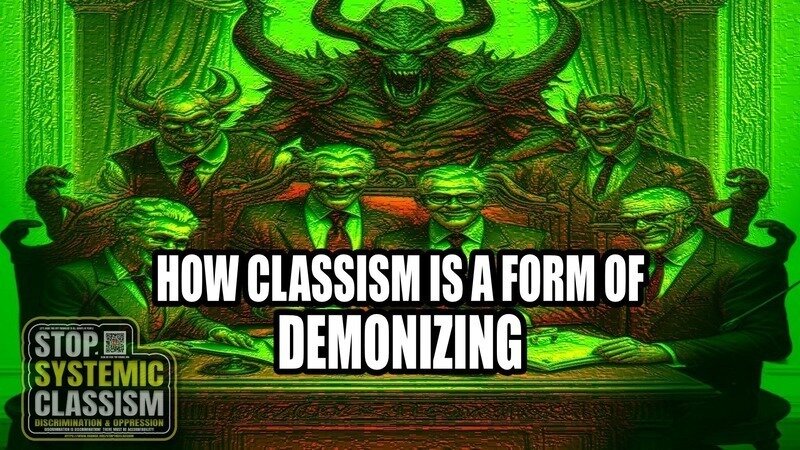
Classism can be considered a form of demonizing because it involves the stigmatization and dehumanization of individuals or groups based on their socioeconomic status. Here's how classism embodies elements of demonizing:
Dehumanization: Classism often dehumanizes individuals or communities by reducing their worth or value based on economic factors. It reinforces stereotypes and biases that portray lower-income individuals as inferior, lazy, or undeserving, stripping them of their humanity and dignity.
Scapegoating: Classism may scapegoat marginalized groups for broader societal problems or economic challenges. It blames individuals for their financial struggles without considering systemic barriers, unequal opportunities, or structural inequalities that contribute to socioeconomic disparities.
Moral Judgments: Classism involves making moral judgments about individuals' worth or character based on their economic status. It assigns virtue or vice to wealth or poverty, perpetuating myths of meritocracy and deservingness that justify unequal distribution of resources and opportunities.
Justification of Inequality: Classism demonizes lower-income individuals or communities by justifying economic inequality as a natural or deserved outcome. It rationalizes wealth accumulation and privilege while minimizing the impact of systemic barriers and discriminatory practices that perpetuate poverty and exclusion.
Othering and Exclusion: Classism creates divisions and reinforces "us vs. them" mentalities, where higher-income groups are positioned as superior and lower-income groups are marginalized or excluded. This othering reinforces social hierarchies and reinforces power dynamics that benefit the privileged at the expense of the marginalized.
Social Stigma: Classism attaches social stigma to poverty or financial hardship, leading to shame, discrimination, and social exclusion for individuals or families experiencing economic challenges. This stigma reinforces negative stereotypes and prevents meaningful dialogue about structural inequalities and systemic injustices.
Psychological Impact: Classism can have profound psychological impacts on individuals, contributing to feelings of inadequacy, shame, and self-blame based on socioeconomic status. It perpetuates cycles of poverty, marginalization, and limited opportunities, further entrenching social and economic disparities.
In summary, classism as a form of demonizing operates through dehumanization, scapegoating, moral judgments, justification of inequality, othering and exclusion, social stigma, and psychological impacts. It reinforces harmful stereotypes, perpetuates discrimination, and undermines efforts to create inclusive and equitable societies based on principles of dignity, fairness, and human rights. Addressing classism requires challenging stigma, dismantling stereotypes, promoting empathy and understanding, and advocating for policies and practices that promote social justice and economic equality for all.
The US Pledge of Allegiance claims that we are all indivisible. Yet, here are many systemic divides by a loophole within the term discrimination to not include classism discrimination within its description...
'I pledge allegiance to the Flag of the United States of America, and to the Republic for which it stands, one Nation under God, indivisible, with liberty and justice for all.'
So, where is: "With Liberty and Justice for All"?
If America's people aren't getting the Liberty and Justice promised in its pledge, then America is set up to cause these inequalities as equal justice for all...
Let's keep spreading these topics & facts!!!