
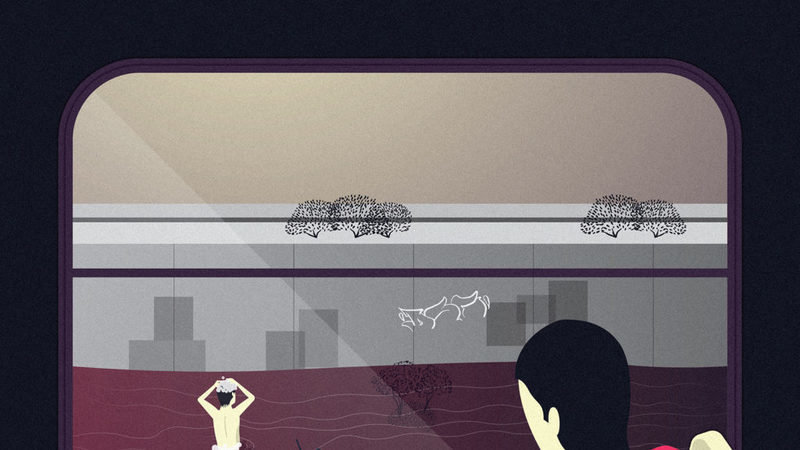
For Los Angeles County’s homeless, a shower and clean clothes are more than a hygiene issue. They’re a matter of humanity.
Eric Finister feels fresh. As fresh as a chronically homeless man can feel. The 53-year-old has just emerged from the showers at a Lava Mae portable trailer parked alongside Mount Tabor Missionary Baptist Church in South Los Angeles, and he looks sharp: his soft face glowing, salt-and-pepper beard trimmed and wearing new clothes.
For a moment, he can forget about the crowded, trash-strewn reality of Western Avenue and the hustle that exist only a few yards away.
“This is what helps,” Finister says. “I count this as a blessing to be able to come get a shower, have some fresh clothes and a meal to eat. This helps me along the way until I get back to where I know to be, and when I do, I will never forget this place.”
Also Read These Stories
For the roughly 53,000 men and women in Los Angeles County who don’t have permanent housing (and for some who do), a shower and clean clothes are more than a matter of hygiene. They’re a matter of humanity. Cleaning up can dissolve the separateness between a homeless person and the rest of society. It’s a door through which some will come to mental health services, substance abuse counseling, church and other community contacts and, finally, housing.
Lava Mae calls it “radical hospitality,” and it’s in very short supply in Los Angeles. The privately funded group runs two trailers with three showers each on a daily schedule around town. The city operates one similar trailer at the Skid Row Community ReFresh Spot on Crocker Street downtown; the other option is shelters, which are avoided by a significant number of the homeless.
If L.A. County were a refugee camp, by United Nations standards its number of public showers would be considered woefully insufficient.
The United Nations High Commission for Refugees’ standard for displaced-persons camps is one shower for every 50 people; if we think of Los Angeles County as one giant refugee camp, that would mean about 1,140 showers. A 2017 study looking at the lack of toilets on L.A.’s Skid Row (nine public toilets for roughly 2,000 people at night) also found a “scarcity of showers.”
“[The shower] transmits that we care about you and that you have dignity as a human being,” says Paul Asplund, Lava Mae’s director of partnerships and development. He’s a big, voluble guy with a graying beard who was once homeless himself 30 years ago, and has since had several successful careers.
“We notice a change when people emerge from the shower,” Asplund adds. “They’ve pressed the pause button on a chaotic life. They’ve had 15 to 20 minutes of privacy, peace and hot water, clean towels and some products. We know that has got to improve their health, if only from a psychological aspect. We haven’t quantified this in a larger way, but we’re not a health mission. We’re on a dignity mission.”