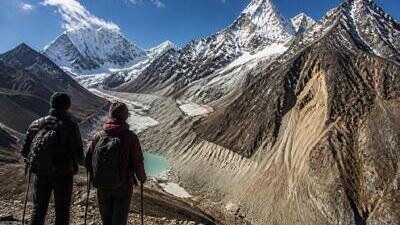
Protect the Himalayas: Act Now on Climate and Environmental Destruction
The issue
To: The United Nations, World Governments, International Climate and Disaster-Risk Authorities, Scientific Institutions, Major Industries, and Responsible Decision Makers
We Have Already Faced the Devastation
We are not speaking about a disaster that may happen someday. We have already faced devastating floods, destruction, and catastrophic loss. Human lives have been lost. Animals and wildlife have also been affected as disasters destroy habitats and ecosystems. Families and communities have lost homes, property, infrastructure, livelihoods, and their sense of safety.
"This is not just simply an environmental issue. It is also human, ecological, animal, community, and planetary emergency. We cannot wait for another disaster before taking meaningful action."
The 2026 Langtang Lirung Disaster: A Warning to the World
On 26 August 2026, a catastrophic debris flow and flood occurred in the Himalayan region near the Nepal–China border. According to preliminary scientific analysis by the U.S. Geological Survey (USGS), the disaster was likely triggered by a glacial collapse in the Langtang region.
The resulting debris flow and flooding travelled nearly 100 kilometres, affecting populated areas downstream along the Bhote Koshi and Trishuli river systems, including areas Rasuwa District, Gorkha District, Nuwakot District and Chitwan District and near Gyirong Port.
"USGS analysis indicated that the seismic signal associated with the event originated from a glaciated mountain cliff on the north side of Langtang Lirung, a mountain approximately 7,200 metres high. The collapse generated seismic energy equivalent to a magnitude-5.2 event. The event was initially interpreted as an earthquake. However, further scientific analysis indicated that the seismic signal was associated with a glacial collapse and debris flow rather than a conventional tectonic earthquake."
The disaster demonstrated how rapidly a high-mountain hazard can become a cascading disaster affecting communities and infrastructure far downstream. Scientific investigations into the precise causes and contributing factors are continuing. We must listen to science, strengthen monitoring, and prepare for emerging risks before another disaster occurs.
The Bigger Climate and Environmental Challenge
The Earth's climate is warming because of the continued accumulation of greenhouse gases in the atmosphere, primarily from human activities, including the burning of fossil fuels. Climate change is placing increasing pressure on fragile environments, including the Himalayas.
At the same time, deforestation, ecosystem destruction, pollution, animal agriculture, unsustainable resource extraction, and environmentally harmful production systems are placing additional pressure on forests, rivers, wildlife, land, and communities. Rising temperatures can affect Glaciers and snow, Permafrost and frozen ground, Mountain ecosystems, Water systems, Forests and biodiversity and the stability of high-altitude slopes
These changes can interact with extreme rainfall, unstable slopes, landslides, glacier and ice collapses, and floods. The precise cause of every individual disaster must be scientifically investigated.
However, the broader warning is clear:
A warming and rapidly changing planet requires stronger climate action, environmental protection, scientific monitoring, disaster preparedness, and a transition away from destructive practices that place people, animals, and ecosystems at greater risk.
Why Should the World Care?
The Himalayas are among the world's most important mountain systems. Their glaciers, snow, rivers, forests, ecosystems, and communities are connected to the lives and livelihoods of millions of people.
Environmental destruction and climate-related disasters can affect Human lives, Animal lives and wildlife, Homes and communities, Food and water security, Livelihoods and infrastructure, Rivers and forests, Glaciers and mountain ecosystems, Wildlife habitats and biodiversity and Children and future generations
We have already experienced devastating loss. We cannot accept a future in which people, animals, ecosystems, and communities remain increasingly exposed to preventable environmental and climate risks.
Our Global Demands
We call on governments, international organizations, scientific institutions, industries, and responsible decision makers to take urgent action on these our global demands:
1. Rapidly Reduce Greenhouse-Gas Emissions
Take stronger and faster action to reduce greenhouse-gas emissions and limit further global warming. Major carbon-emitting industries must take responsibility for reducing their environmental impact.
2. Accelerate the Transition to Cleaner and Sustainable Energy
Reduce dependence on highly polluting energy systems and accelerate a fair transition toward cleaner, sustainable, and lower-carbon energy. This transition should protect both ecosystems and vulnerable communities.
3. Transition Toward Sustainable and Plant-Based Food Systems
Accelerate the transition toward sustainable, plant-based, and environmentally responsible food systems. Reduce the environmental impacts associated with intensive and environmentally destructive animal agriculture, including greenhouse-gas emissions, deforestation, land degradation, water pollution, and biodiversity loss. Governments should support farmers and communities in transitioning toward sustainable food production while protecting livelihoods and food security. We call for an urgent global transition away from environmentally destructive and high-impact animal agriculture and toward food systems that better protect animals, forests, ecosystems, water, and the climate.
4. Halt Deforestation and Protect Natural Forests
Take urgent action to halt deforestation and the unnecessary destruction of natural forests. Protect and restore forests because they are essential for Wildlife habitats, Biodiversity, Water systems, Soil protection, Carbon storage, Climate stability and Community resilience.
Governments and industries must strengthen action against illegal deforestation and prevent unnecessary destruction of forests for environmentally harmful development. Protecting existing natural forests must be a global priority.
5. Stop Destructive Mining and Resource Extraction in Fragile Ecosystems
Prevent destructive mining, quarrying, and large-scale mineral extraction in environmentally sensitive and high-risk areas. Special protection should be given to Himalayan and high-mountain ecosystems, Glacier and permafrost regions, protected forests, Critical wildlife habitats, Major watersheds and river systems, Areas vulnerable to landslides and floods and Projects that pose unacceptable risks to ecosystems, water sources, wildlife, or vulnerable communities should not proceed. Governments and industries must reduce unnecessary resource extraction, strengthen environmental protections, require transparent and independent environmental assessments, and prioritize recycling, reuse, and responsible use of natural resources.
6. Protect the Himalayas and Fragile Mountain Ecosystems
Strengthen protection for Glaciers, Snow and ice systems, Rivers and watersheds, Forests, Wildlife habitats, High-altitude ecosystems and Other fragile mountain environments.
The Himalayas must be treated as globally important ecosystems requiring stronger international cooperation and protection.
7. Expand Scientific Monitoring of Mountain Hazards
Increase scientific monitoring of Glaciers, Glacial lakes, High-altitude slopes, Permafrost and frozen ground, Landslide-prone areas, River systems and Other high-risk mountain environments Scientific knowledge must be used to identify risks before they become disasters.
8. Strengthen Early Warning and Disaster Preparedness
Invest in stronger: Hazard detection, Early-warning systems, Emergency communication, Flood forecasting, Community preparedness, Disaster-response capacity, Evacuation planning where appropriate Communities living in high-risk areas deserve timely information and effective protection.
9. Strengthen International Scientific Cooperation
Improve cooperation and rapid information-sharing among countries, scientific institutions, and disaster-risk authorities responsible for Himalayan ecosystems and shared river systems. Environmental and mountain hazards do not stop at national borders. International cooperation is essential.
10. Support Vulnerable Communities
Provide financial, technical, humanitarian, and long-term recovery support to communities affected by environmental and mountain disasters. Communities living in high-risk mountain and flood-prone areas must receive greater assistance to prepare for future hazards.
11. Invest in Safer and More Resilient Infrastructure
Support infrastructure planning and development that considers climate change, mountain hazards, flood risks, landslides, and environmental protection. Development must not increase the vulnerability of communities or ecosystems.
12. Protect Animals, Wildlife, and Ecosystems
Include animals, wildlife habitats, forests, rivers, and ecosystems in climate adaptation and disaster-risk reduction planning. Environmental disasters affect more than human communities. Animals, wildlife, and ecosystems also suffer and require protection.
13. Strengthen Environmental Laws and Corporate Accountability
Governments must properly enforce environmental and climate-protection laws. Major industries must be held accountable for pollution, environmental destruction, and avoidable ecological damage. No major industry should be beyond environmental responsibility.
14. Reduce Plastic Pollution and Waste
Take stronger action to reduce unnecessary plastic production, plastic pollution, and waste. Protect rivers, forests, mountains, wildlife, and communities from the long-term damage caused by pollution.
15. Increase Climate Finance and Technical Assistance
Increase international climate finance, scientific cooperation, technology, and technical assistance for vulnerable countries and communities facing climate-related and environmental risks. Countries and communities facing severe impacts should not be left to confront these challenges alone.
16. Ensure Transparency and Public Access to Scientific Information
Scientific information about high-mountain hazards and environmental risks should be shared rapidly, responsibly, and transparently with authorities and vulnerable communities whenever possible. People have the right to know about serious risks affecting their communities.
17. Put Protection Before Destructive Exploitation
Economic development must not come at the cost of irreversible destruction of forests, mountains, rivers, wildlife habitats, ecosystems, and communities. We call on governments and industries to place the protection of people, animals, ecosystems, and future generations at the centre of environmental and economic decision-making. A sustainable future requires responsible consumption, reduced waste, ecosystem protection, and development that respects the limits of nature.
18. Act Before Another Disaster
We must not wait for another catastrophic flood, glacier collapse, landslide, or environmental disaster before taking action. Prevention, scientific monitoring, environmental protection, and preparedness must become priorities now. The cost of prevention is far less than the cost of losing lives, communities, ecosystems, and irreplaceable natural environments.
We Cannot Bring Back What We Have Lost
We cannot undo the devastation that has already occurred. We cannot bring back the people who have died. We cannot restore every home, possession, road, bridge, farm, business, habitat, or livelihood exactly as it was. But we can learn. We can reduce emissions. We can protect forests. We can transition toward more sustainable food systems. We can protect animals and wildlife. We can stop destructive exploitation of fragile ecosystems. We can strengthen scientific monitoring. We can improve disaster preparedness. We can develop better early-warning systems. We can help vulnerable communities prepare for future risks. And we can work together to reduce the likelihood and impact of future disasters.
Let the Langtang Lirung Disaster Be a Warning — Not a Forgotten Tragedy
The 2026 disaster associated with the glacial collapse near Langtang Lirung demonstrated how quickly a high-mountain hazard can become a cascading disaster affecting communities and infrastructure far downstream. The Himalayas are not isolated from the rest of the world. Their glaciers, rivers, forests, ecosystems, animals, wildlife, and communities are connected to millions of lives.
We must not wait for another disaster before strengthening climate action, scientific monitoring, disaster preparedness, forest protection, ecosystem conservation, and international cooperation. The world must act before vulnerable communities and fragile ecosystems face another catastrophe without adequate protection.
Sign This Petition
We cannot change the past. But we can still help protect the future. Every signature sends a message to governments, international institutions, industries, and decision makers: People are demanding action, Communities are demanding protection, Animals and wildlife need protection, Forests and ecosystems need protection, The Himalayas need protection and Future generations deserve a safer future.
Please sign and share this petition.
Stand with communities affected by devastating floods and environmental disasters. Stand for human lives. Stand for animals and wildlife. Stand against deforestation. Stand against destructive exploitation of fragile ecosystems. Stand for the Himalayas. Stand for future generations.
WE HAVE ALREADY LOST TOO MUCH.
ACT NOW ON CLIMATE CHANGE.
STOP ENVIRONMENTAL DESTRUCTION.
PROTECT THE HIMALAYAS.
PROTECT FORESTS, RIVERS, ANIMALS, AND WILDLIFE.
STRENGTHEN DISASTER PREPAREDNESS.
PROTECT OUR PLANET AND OUR FUTURE.

81
The issue
To: The United Nations, World Governments, International Climate and Disaster-Risk Authorities, Scientific Institutions, Major Industries, and Responsible Decision Makers
We Have Already Faced the Devastation
We are not speaking about a disaster that may happen someday. We have already faced devastating floods, destruction, and catastrophic loss. Human lives have been lost. Animals and wildlife have also been affected as disasters destroy habitats and ecosystems. Families and communities have lost homes, property, infrastructure, livelihoods, and their sense of safety.
"This is not just simply an environmental issue. It is also human, ecological, animal, community, and planetary emergency. We cannot wait for another disaster before taking meaningful action."
The 2026 Langtang Lirung Disaster: A Warning to the World
On 26 August 2026, a catastrophic debris flow and flood occurred in the Himalayan region near the Nepal–China border. According to preliminary scientific analysis by the U.S. Geological Survey (USGS), the disaster was likely triggered by a glacial collapse in the Langtang region.
The resulting debris flow and flooding travelled nearly 100 kilometres, affecting populated areas downstream along the Bhote Koshi and Trishuli river systems, including areas Rasuwa District, Gorkha District, Nuwakot District and Chitwan District and near Gyirong Port.
"USGS analysis indicated that the seismic signal associated with the event originated from a glaciated mountain cliff on the north side of Langtang Lirung, a mountain approximately 7,200 metres high. The collapse generated seismic energy equivalent to a magnitude-5.2 event. The event was initially interpreted as an earthquake. However, further scientific analysis indicated that the seismic signal was associated with a glacial collapse and debris flow rather than a conventional tectonic earthquake."
The disaster demonstrated how rapidly a high-mountain hazard can become a cascading disaster affecting communities and infrastructure far downstream. Scientific investigations into the precise causes and contributing factors are continuing. We must listen to science, strengthen monitoring, and prepare for emerging risks before another disaster occurs.
The Bigger Climate and Environmental Challenge
The Earth's climate is warming because of the continued accumulation of greenhouse gases in the atmosphere, primarily from human activities, including the burning of fossil fuels. Climate change is placing increasing pressure on fragile environments, including the Himalayas.
At the same time, deforestation, ecosystem destruction, pollution, animal agriculture, unsustainable resource extraction, and environmentally harmful production systems are placing additional pressure on forests, rivers, wildlife, land, and communities. Rising temperatures can affect Glaciers and snow, Permafrost and frozen ground, Mountain ecosystems, Water systems, Forests and biodiversity and the stability of high-altitude slopes
These changes can interact with extreme rainfall, unstable slopes, landslides, glacier and ice collapses, and floods. The precise cause of every individual disaster must be scientifically investigated.
However, the broader warning is clear:
A warming and rapidly changing planet requires stronger climate action, environmental protection, scientific monitoring, disaster preparedness, and a transition away from destructive practices that place people, animals, and ecosystems at greater risk.
Why Should the World Care?
The Himalayas are among the world's most important mountain systems. Their glaciers, snow, rivers, forests, ecosystems, and communities are connected to the lives and livelihoods of millions of people.
Environmental destruction and climate-related disasters can affect Human lives, Animal lives and wildlife, Homes and communities, Food and water security, Livelihoods and infrastructure, Rivers and forests, Glaciers and mountain ecosystems, Wildlife habitats and biodiversity and Children and future generations
We have already experienced devastating loss. We cannot accept a future in which people, animals, ecosystems, and communities remain increasingly exposed to preventable environmental and climate risks.
Our Global Demands
We call on governments, international organizations, scientific institutions, industries, and responsible decision makers to take urgent action on these our global demands:
1. Rapidly Reduce Greenhouse-Gas Emissions
Take stronger and faster action to reduce greenhouse-gas emissions and limit further global warming. Major carbon-emitting industries must take responsibility for reducing their environmental impact.
2. Accelerate the Transition to Cleaner and Sustainable Energy
Reduce dependence on highly polluting energy systems and accelerate a fair transition toward cleaner, sustainable, and lower-carbon energy. This transition should protect both ecosystems and vulnerable communities.
3. Transition Toward Sustainable and Plant-Based Food Systems
Accelerate the transition toward sustainable, plant-based, and environmentally responsible food systems. Reduce the environmental impacts associated with intensive and environmentally destructive animal agriculture, including greenhouse-gas emissions, deforestation, land degradation, water pollution, and biodiversity loss. Governments should support farmers and communities in transitioning toward sustainable food production while protecting livelihoods and food security. We call for an urgent global transition away from environmentally destructive and high-impact animal agriculture and toward food systems that better protect animals, forests, ecosystems, water, and the climate.
4. Halt Deforestation and Protect Natural Forests
Take urgent action to halt deforestation and the unnecessary destruction of natural forests. Protect and restore forests because they are essential for Wildlife habitats, Biodiversity, Water systems, Soil protection, Carbon storage, Climate stability and Community resilience.
Governments and industries must strengthen action against illegal deforestation and prevent unnecessary destruction of forests for environmentally harmful development. Protecting existing natural forests must be a global priority.
5. Stop Destructive Mining and Resource Extraction in Fragile Ecosystems
Prevent destructive mining, quarrying, and large-scale mineral extraction in environmentally sensitive and high-risk areas. Special protection should be given to Himalayan and high-mountain ecosystems, Glacier and permafrost regions, protected forests, Critical wildlife habitats, Major watersheds and river systems, Areas vulnerable to landslides and floods and Projects that pose unacceptable risks to ecosystems, water sources, wildlife, or vulnerable communities should not proceed. Governments and industries must reduce unnecessary resource extraction, strengthen environmental protections, require transparent and independent environmental assessments, and prioritize recycling, reuse, and responsible use of natural resources.
6. Protect the Himalayas and Fragile Mountain Ecosystems
Strengthen protection for Glaciers, Snow and ice systems, Rivers and watersheds, Forests, Wildlife habitats, High-altitude ecosystems and Other fragile mountain environments.
The Himalayas must be treated as globally important ecosystems requiring stronger international cooperation and protection.
7. Expand Scientific Monitoring of Mountain Hazards
Increase scientific monitoring of Glaciers, Glacial lakes, High-altitude slopes, Permafrost and frozen ground, Landslide-prone areas, River systems and Other high-risk mountain environments Scientific knowledge must be used to identify risks before they become disasters.
8. Strengthen Early Warning and Disaster Preparedness
Invest in stronger: Hazard detection, Early-warning systems, Emergency communication, Flood forecasting, Community preparedness, Disaster-response capacity, Evacuation planning where appropriate Communities living in high-risk areas deserve timely information and effective protection.
9. Strengthen International Scientific Cooperation
Improve cooperation and rapid information-sharing among countries, scientific institutions, and disaster-risk authorities responsible for Himalayan ecosystems and shared river systems. Environmental and mountain hazards do not stop at national borders. International cooperation is essential.
10. Support Vulnerable Communities
Provide financial, technical, humanitarian, and long-term recovery support to communities affected by environmental and mountain disasters. Communities living in high-risk mountain and flood-prone areas must receive greater assistance to prepare for future hazards.
11. Invest in Safer and More Resilient Infrastructure
Support infrastructure planning and development that considers climate change, mountain hazards, flood risks, landslides, and environmental protection. Development must not increase the vulnerability of communities or ecosystems.
12. Protect Animals, Wildlife, and Ecosystems
Include animals, wildlife habitats, forests, rivers, and ecosystems in climate adaptation and disaster-risk reduction planning. Environmental disasters affect more than human communities. Animals, wildlife, and ecosystems also suffer and require protection.
13. Strengthen Environmental Laws and Corporate Accountability
Governments must properly enforce environmental and climate-protection laws. Major industries must be held accountable for pollution, environmental destruction, and avoidable ecological damage. No major industry should be beyond environmental responsibility.
14. Reduce Plastic Pollution and Waste
Take stronger action to reduce unnecessary plastic production, plastic pollution, and waste. Protect rivers, forests, mountains, wildlife, and communities from the long-term damage caused by pollution.
15. Increase Climate Finance and Technical Assistance
Increase international climate finance, scientific cooperation, technology, and technical assistance for vulnerable countries and communities facing climate-related and environmental risks. Countries and communities facing severe impacts should not be left to confront these challenges alone.
16. Ensure Transparency and Public Access to Scientific Information
Scientific information about high-mountain hazards and environmental risks should be shared rapidly, responsibly, and transparently with authorities and vulnerable communities whenever possible. People have the right to know about serious risks affecting their communities.
17. Put Protection Before Destructive Exploitation
Economic development must not come at the cost of irreversible destruction of forests, mountains, rivers, wildlife habitats, ecosystems, and communities. We call on governments and industries to place the protection of people, animals, ecosystems, and future generations at the centre of environmental and economic decision-making. A sustainable future requires responsible consumption, reduced waste, ecosystem protection, and development that respects the limits of nature.
18. Act Before Another Disaster
We must not wait for another catastrophic flood, glacier collapse, landslide, or environmental disaster before taking action. Prevention, scientific monitoring, environmental protection, and preparedness must become priorities now. The cost of prevention is far less than the cost of losing lives, communities, ecosystems, and irreplaceable natural environments.
We Cannot Bring Back What We Have Lost
We cannot undo the devastation that has already occurred. We cannot bring back the people who have died. We cannot restore every home, possession, road, bridge, farm, business, habitat, or livelihood exactly as it was. But we can learn. We can reduce emissions. We can protect forests. We can transition toward more sustainable food systems. We can protect animals and wildlife. We can stop destructive exploitation of fragile ecosystems. We can strengthen scientific monitoring. We can improve disaster preparedness. We can develop better early-warning systems. We can help vulnerable communities prepare for future risks. And we can work together to reduce the likelihood and impact of future disasters.
Let the Langtang Lirung Disaster Be a Warning — Not a Forgotten Tragedy
The 2026 disaster associated with the glacial collapse near Langtang Lirung demonstrated how quickly a high-mountain hazard can become a cascading disaster affecting communities and infrastructure far downstream. The Himalayas are not isolated from the rest of the world. Their glaciers, rivers, forests, ecosystems, animals, wildlife, and communities are connected to millions of lives.
We must not wait for another disaster before strengthening climate action, scientific monitoring, disaster preparedness, forest protection, ecosystem conservation, and international cooperation. The world must act before vulnerable communities and fragile ecosystems face another catastrophe without adequate protection.
Sign This Petition
We cannot change the past. But we can still help protect the future. Every signature sends a message to governments, international institutions, industries, and decision makers: People are demanding action, Communities are demanding protection, Animals and wildlife need protection, Forests and ecosystems need protection, The Himalayas need protection and Future generations deserve a safer future.
Please sign and share this petition.
Stand with communities affected by devastating floods and environmental disasters. Stand for human lives. Stand for animals and wildlife. Stand against deforestation. Stand against destructive exploitation of fragile ecosystems. Stand for the Himalayas. Stand for future generations.
WE HAVE ALREADY LOST TOO MUCH.
ACT NOW ON CLIMATE CHANGE.
STOP ENVIRONMENTAL DESTRUCTION.
PROTECT THE HIMALAYAS.
PROTECT FORESTS, RIVERS, ANIMALS, AND WILDLIFE.
STRENGTHEN DISASTER PREPAREDNESS.
PROTECT OUR PLANET AND OUR FUTURE.
The Decision Makers


Supporter voices
Petition Updates
Share this petition
Petition created on 29 August 2026