Protect prairie dogs on undeveloped land
The Issue
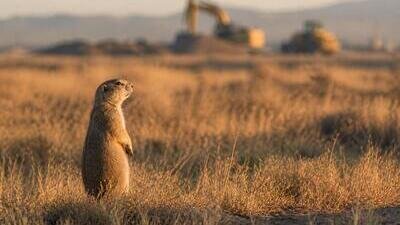
Four years ago, when I moved to Boulder, Colorado, I became fascinated by the bustling communities of prairie dogs thriving on the undeveloped lands within and around my neighborhood. Their intricate tunnels and lively chirps filled my heart with joy and curiosity. Unfortunately, over the past year, I've witnessed developers move in, obliterating these precious habitats without a second thought. Every bulldozer that rolls over their colonies symbolizes an end to these vibrant ecosystems, along with the countless lives that are lost.
In regions like the American Midwest and West, where these scenes are all too familiar, prairie dogs play a critical role in maintaining ecological balance. According to the National Wildlife Federation, prairie dogs are considered a keystone species, meaning they are essential for the survival of countless other wildlife, including burrowing owls, foxes, and ferrets. Prairie rattlesnakes, tiger salamanders, horned lizards, and badgers use them, too. With demand for development continuing to surge, these animals are losing their homes, and ultimately, their lives. The Modern Farmer states that their tunnel systems, which can extend across an area larger than a football field, are similar to bustling apartment complexes where every family has its separate unit.
A report by the U.S. Fish and Wildlife Service indicates that the black-tailed prairie dog's range has diminished to less than 2% of its historical spread. This decline isn't just a loss of wildlife; it's a grave threat to biodiversity and the health of our ecosystems. The Great Plains Restoration Council indicates that prairie dog burrows act as aquifers that prevent water from eroding land while helping to cool it. Extermination efforts require 72 hours of poisoning to kill the animals, while some of the most "humane" methods to do so are through carbon monoxide poisoning.
Despite these alarming statistics, many developers proceed with their projects without any efforts to relocate these animals. Prairie dogs are often seen as pests, rather than integral components of their environment. Yet, there are peaceful, effective ways to coexist. Relocation programs have been successful in saving colonies, such as those through non-profits like Grasslands Colorado, as evidenced by local conservation initiatives in cities like Boulder and Longmont, Colorado.
We need to call on developers, city planners, and local governments to extend the review process for development on undeveloped land and to mandate prairie dog relocation efforts before any construction on undeveloped land. These steps are not just possible, but necessary. Although prairie dogs have more complex language systems than humans, they are unable to communicate with humans. We need to implement strict guidelines for relocation, involving local wildlife experts to ensure humane and successful transfers. Additionally, by establishing conservation credits, developers can be incentivized to protect prairie dog habitats rather than destroy them.
Join us in supporting these critical actions to safeguard our prairie dogs. Sign this petition to make sure development is balanced with environmental stewardship, preserving these essential creatures for future generations.

29
The Issue
Four years ago, when I moved to Boulder, Colorado, I became fascinated by the bustling communities of prairie dogs thriving on the undeveloped lands within and around my neighborhood. Their intricate tunnels and lively chirps filled my heart with joy and curiosity. Unfortunately, over the past year, I've witnessed developers move in, obliterating these precious habitats without a second thought. Every bulldozer that rolls over their colonies symbolizes an end to these vibrant ecosystems, along with the countless lives that are lost.
In regions like the American Midwest and West, where these scenes are all too familiar, prairie dogs play a critical role in maintaining ecological balance. According to the National Wildlife Federation, prairie dogs are considered a keystone species, meaning they are essential for the survival of countless other wildlife, including burrowing owls, foxes, and ferrets. Prairie rattlesnakes, tiger salamanders, horned lizards, and badgers use them, too. With demand for development continuing to surge, these animals are losing their homes, and ultimately, their lives. The Modern Farmer states that their tunnel systems, which can extend across an area larger than a football field, are similar to bustling apartment complexes where every family has its separate unit.
A report by the U.S. Fish and Wildlife Service indicates that the black-tailed prairie dog's range has diminished to less than 2% of its historical spread. This decline isn't just a loss of wildlife; it's a grave threat to biodiversity and the health of our ecosystems. The Great Plains Restoration Council indicates that prairie dog burrows act as aquifers that prevent water from eroding land while helping to cool it. Extermination efforts require 72 hours of poisoning to kill the animals, while some of the most "humane" methods to do so are through carbon monoxide poisoning.
Despite these alarming statistics, many developers proceed with their projects without any efforts to relocate these animals. Prairie dogs are often seen as pests, rather than integral components of their environment. Yet, there are peaceful, effective ways to coexist. Relocation programs have been successful in saving colonies, such as those through non-profits like Grasslands Colorado, as evidenced by local conservation initiatives in cities like Boulder and Longmont, Colorado.
We need to call on developers, city planners, and local governments to extend the review process for development on undeveloped land and to mandate prairie dog relocation efforts before any construction on undeveloped land. These steps are not just possible, but necessary. Although prairie dogs have more complex language systems than humans, they are unable to communicate with humans. We need to implement strict guidelines for relocation, involving local wildlife experts to ensure humane and successful transfers. Additionally, by establishing conservation credits, developers can be incentivized to protect prairie dog habitats rather than destroy them.
Join us in supporting these critical actions to safeguard our prairie dogs. Sign this petition to make sure development is balanced with environmental stewardship, preserving these essential creatures for future generations.
The Decision Makers


Petition Updates
Share this petition
Petition created on July 29, 2026