
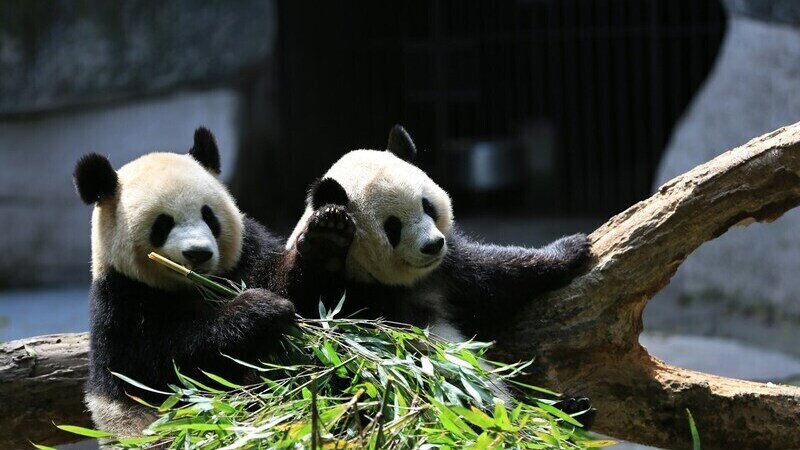
Protect Pandas Bao Li & Qing Bao From Forced Breeding at the National Zoo
The Issue
Bao Li and Qing Bao, the two giant pandas at the Smithsonian’s National Zoo in Washington, D.C., have both turned five. According to the zoo’s own website, that puts them at breeding age. Female pandas can only conceive once a year, in the spring. If the pair doesn’t mate naturally, the zoo’s past points to artificial insemination: darting and repeated invasive procedures.
The zoo’s history shows what that means for an animal. Its previous female panda, Mei Xiang, went through at least 21 rounds of artificial insemination, according to a 2024 New York Times investigation of Smithsonian records. Four of her cubs survived. Three others were stillborn or lived only a few days. In 2011, she vomited after one procedure, and the next day she was darted four times after a dart didn’t fully work.
The danger goes beyond one panda. The Times reported that at least one panda has died from artificial breeding, and others were hurt. In 2010, a male panda in Japan died while sperm was being collected from him.
Captive breeding is often defended as a way to help wild pandas. But according to In Defense of Animals, none of the pandas born in US or European zoos, and none of their cubs, has ever been returned to the wild.
Bao Li and Qing Bao are set to live in Washington until April 2034. When the zoo applied to bring them over, nearly 38,000 public comments came in, and many raised concerns about invasive breeding. The Smithsonian’s National Zoo can make a clear promise now: no artificial insemination and no sperm collection for these two pandas.
Sign the petition to tell the National Zoo to protect Bao Li and Qing Bao from forced breeding before next spring’s breeding season.
219
The Issue
Bao Li and Qing Bao, the two giant pandas at the Smithsonian’s National Zoo in Washington, D.C., have both turned five. According to the zoo’s own website, that puts them at breeding age. Female pandas can only conceive once a year, in the spring. If the pair doesn’t mate naturally, the zoo’s past points to artificial insemination: darting and repeated invasive procedures.
The zoo’s history shows what that means for an animal. Its previous female panda, Mei Xiang, went through at least 21 rounds of artificial insemination, according to a 2024 New York Times investigation of Smithsonian records. Four of her cubs survived. Three others were stillborn or lived only a few days. In 2011, she vomited after one procedure, and the next day she was darted four times after a dart didn’t fully work.
The danger goes beyond one panda. The Times reported that at least one panda has died from artificial breeding, and others were hurt. In 2010, a male panda in Japan died while sperm was being collected from him.
Captive breeding is often defended as a way to help wild pandas. But according to In Defense of Animals, none of the pandas born in US or European zoos, and none of their cubs, has ever been returned to the wild.
Bao Li and Qing Bao are set to live in Washington until April 2034. When the zoo applied to bring them over, nearly 38,000 public comments came in, and many raised concerns about invasive breeding. The Smithsonian’s National Zoo can make a clear promise now: no artificial insemination and no sperm collection for these two pandas.
Sign the petition to tell the National Zoo to protect Bao Li and Qing Bao from forced breeding before next spring’s breeding season.
The Decision Makers

Supporter Voices
Petition Updates
Share this petition
Petition created on October 19, 2026