Join Us In Protecting Florida’s Black Bears - Online Event Link Included

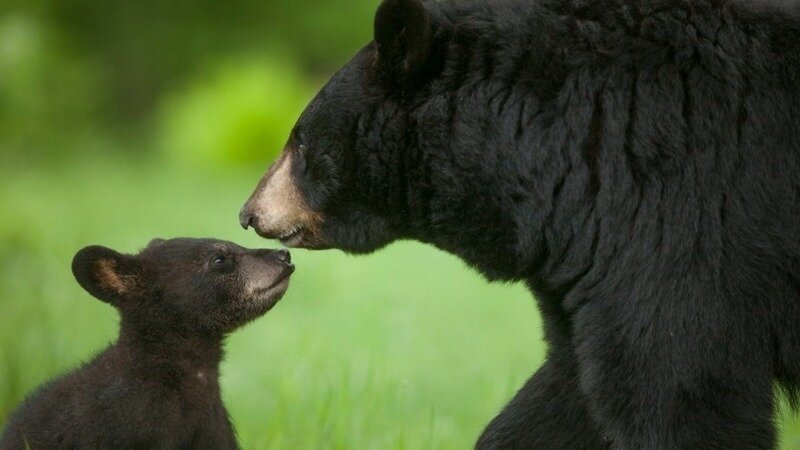
This online event allows you to take meaningful action for Florida’s bears. It includes calls to action, which you can complete by scrolling down to access the action items.
Click here to attend virtual event.
During the December 11, 2024, Florida Fish and Wildlife Conservation Commission (FWC) meeting in Lakeland, Commissioner Gary Lester publicly advocated for reinstating a bear hunt. This came after FWC staff, including experienced bear biologists, presented their comprehensive bear management plan. The presentation covered critical areas such as population status, habitat conservation, human-bear conflicts, and public education.
FWC staff clearly advised against a bear hunt, stating that the current bear population does not require such an action. Despite this expert recommendation, the Commission requested a proposal for a potential bear hunt, leaving the door open for a decision that could have devastating consequences for Florida’s black bears.
This is a pivotal moment to make your voice heard. We urge you to email the FWC Commissioners and submit comments to the designated Bear Comments email. All emails will become part of the public record, so please ensure your message is respectful.
You may simply state: "I OPPOSE ANY FUTURE FLORIDA BEAR HUNTS."
Alternatively, you can provide a detailed message expressing your concerns. Scroll down for factual points to strengthen your email.
Suggested Email Subject Line
"I OPPOSE BEAR HUNTING IN FLORIDA"
Bear Comments Email:
BearComments@MyFWC.com
Contact the FWC Commissioners Directly:
Rodney Barreto (Chairman)
Rodney.Barreto@myfwc.com
Steven Hudson (Vice Chairman)
Steven.Hudson@myfwc.com
Preston Farrior
Preston.Farrior@myfwc.com
Sonya Rood
Sonya.Rood@myfwc.com
Albert Maury
Albert.Maury@myfwc.com
Gary Nicklaus
Gary.Nicklaus@myfwc.com
Gary Lester
Gary.Lester@myfwc.com
Contact all the commissioners at once:
https://myfwc.com/contact/fwc-office/senior-staff/commissioners/
Florida Black Bear Facts
In 1974, unregulated hunting and habitat loss were responsible for the near extinction of the Florida black bear, with only an estimated 300-500 bears left in the state. It has taken nearly 50 years for Florida’s black bear population to rebound to approximately 4,050 today. Black bears are slow to reproduce and regulate their own populations through a biological process known as delayed implantation. This is nature’s way of keeping bear populations in check. If food is scarce, female bears will not reproduce every two years but instead every 3-4 years.
In 2015, special interest groups and trophy hunters pressured the FWC to approve a bear hunt for the first time in more than 20 years. There was overwhelming public outrage over this decision and a collective effort from organizations and people not only in Florida but worldwide to stop the bear hunt. Our efforts failed in 2015. But, our organization, along with several others, continued our fight to stop the bear hunt.
On June 22, 2016, over a hundred people attended the FWC’s meeting in Eastpoint, Florida, to speak in opposition to the bear hunt. At that meeting, FWC Commissioners voted 4-3 against a 2016 black bear hunt.
On April 19, 2017, FWC Commissioners agreed to revamp the bear management plan and report back in two years (2019). FWC Commissioners also stated they would not be revisiting having a bear hunt until 2019. The FWC's reason for calling off the hunt was due to the overwhelming public pressure they received.
The Commissioner Chair at that time, Brian Yablonski, said, "A hunt is consuming; it is consuming to this agency all the way around and the benefit that we get with this species at this moment in time, I don't know if it's worth the consumption that our team is going to go through, and we're all going to go through."
Since the 2015 Florida black bear hunt, the FWC has done a tremendous job in listening to their stakeholders regarding bears and implementing effective non-lethal solutions to bear-human conflicts. They understand that non-hunters have a say in wildlife conservation and management practices.
Conservation, in the context of environmental science and wildlife management, refers to the careful management, protection, and sustainable use of natural resources, including wildlife, forests, water, and habitats, to ensure their long-term viability and health. Conservation aims to strike a balance between human needs and the preservation of ecosystems and biodiversity for future generations.
During FWC Commission Meetings, a handful of the same bear hunters who pushed for the 2015 bear hunt have consistently requested/demanded that a bear hunting season be re-established.
Bear trophy hunters claim that bears were killed so quickly during the 2015 Florida Black Bear Hunt because of overpopulation. That could not be further from the truth. They fail to mention that 78% of the bears killed during the 2015 Florida Black Bear Hunt were killed on private lands. In the Eastern Panhandle Bear Management Unit (BMU), 90-100% of the bears killed during the 2015 bear hunt were on private property. When the bears were brought to check stations and gutted, many had corn in their stomachs, indicative of deer baiting stations. The majority of the bear hunters who hunted back in 2015 knew where the bears were located, which is why so many were killed so quickly. The bears were easy targets.
It is important to note that killing bears or establishing a bear hunting season will not resolve bear-human conflicts. As long as attractants are present, another bear will come in place of the bear that was killed.
Since recorded history, no one in the State of Florida has ever been killed by a Florida black bear.
Since 1900, only 61 people in North America have been killed by black bears.
Unprovoked bear attacks are extremely rare. You are 45 times more likely to be killed by a dog, 120 times more likely to be killed by bees, and 60,000 times more likely to be murdered by another human being than to be killed by a black bear.
From the FWC’s website: "Studies show black bears avoid confrontation 90% of the time. They are naturally shy animals that give plenty of warnings (e.g., jaw popping, huffing, bluff charging) before attacking. FWC has been keeping track of incidents where a person has been injured by a bear in Florida since 1976, and it is a very rare event. In most cases, the bear acted defensively protecting itself, its young, or a food source." https://myfwc.com/wildlifehabitats/wildlife/bear/living/myths/
Florida black bears are predominantly vegetarian, with 80% of their diet consisting of plants, 15% insects, and only 5% animal matter, usually carrion. They are not the voracious man-eating carnivores that the people who wish to kill them would like you to believe.
Research shows that securing trash and removing bear attractants can reduce bear-human conflicts by over 95%
Effective conservation requires a comprehensive and science-based approach that considers the complex interactions between humans, wildlife, and the environment while striving to ensure the long-term health and resilience of natural systems. Conservation practices should emphasize sustainable management of wildlife populations based on scientific research and data-driven decision-making. The FWC's bear population study will not be completed until 2029.
Thank you for taking action.