More COVID Vaccines for Vietnam
The Issue
A vaccine program to protect American supply chain in Vietnam and to help end the Pandemic in Vietnam
By Kien Pham and Peter L. Levin
Mr. Pham is President of Vietnam Foundation
Mr. Levin is Adjunct Senior Fellow at Center for a New American Security
August 17, 2021
President Clinton established full diplomatic relations with Vietnam in 1995. Since then, bilateral trade with this country of almost 100 million people grew from $450 million to more than $90 billion in 2020; the United States is now Vietnam’s largest trading partner. Vietnam is our second largest supplier of apparel, footwear, and travel goods, and three million U.S. workers are connected to this critical supply chain. Additionally, millions of Vietnamese workers produce goods for American consumers under well-known brands like Nike, the Gap, Walmart, Target, and Intel.
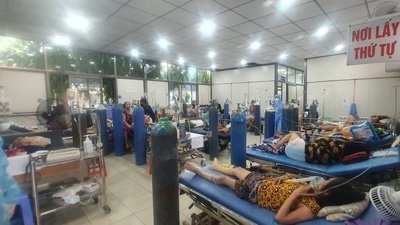
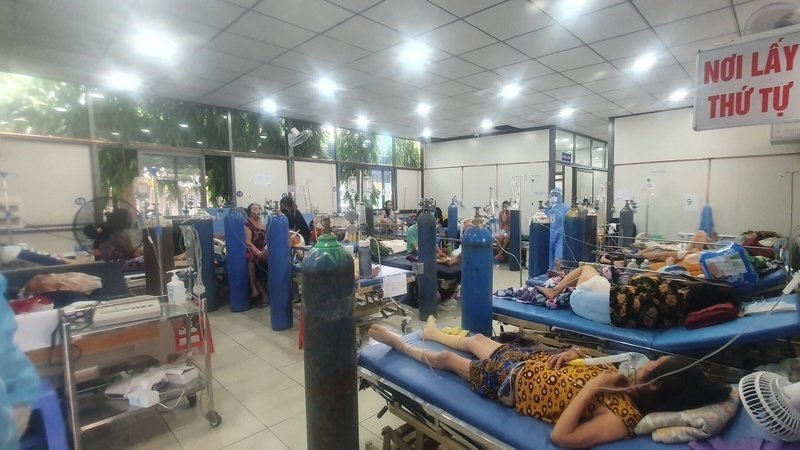
During the first 18 months of the COVID pandemic, Vietnam set an exemplary standard of effective response. Vietnam even gifted the U.S. with a plane load of PPE when the U.S. needed help. Until June 30 of this year, because of effective isolation, comprehensive contact tracing, and targeted testing, there were cumulatively 17,052 cases, total, and only 81 deaths. Sadly, because of the delta mutation – coupled to an inaccessibility of vaccines – all that changed last month. The caseload in Vietnam grew by a factor of twelve to 124,678 and 1,059 people died. In the first half of August there are already 151,764 infected people and 5,658 deaths.
This while tens of millions of doses – some estimate as many as 50 million – remain unused in the United States and will expire if not deployed soon.
Now the Vietnamese economy is at a sudden standstill, with thousands of factories in lockdown, and millions of workers cannot go to work. Although Vietnam is expected to receive 51 million doses from Pfizer, with 31 million doses under contract; and 5 million doses from Moderna, the purchased stocks will not arrive until this fall and next spring. Tragically, for a key ally with no unscientific reluctance to inoculate, the COVID death toll is rising rapidly every day.
Earlier this month President Biden said, “We know that COVID-19 in other countries stifles economic growth, disrupts supply chains, and risks instability and weakness of governments. And as we’ve seen in the United States, the key to growing economies is to vaccinate people. So just as the American economy is recovering, it’s in all our interests to have . . . the global economy begin to recover as well.” Nowhere is this statement more true, and more strategically important to the U.S., than in Vietnam.
Consequently, we believe that the U.S. Government should “lend” up to 30 million doses of unused COVID vaccine to Vietnam during the next two months so Vietnamese factory workers can be vaccinated and return to work. The vaccine doses "on loan" from the U.S. under this program will expire this fall and will be wasted if not used soon. Under this framework, the Government of Vietnam would direct Pfizer and Moderna to re-direct delivery of Vietnam's already-purchased vaccine back to the U.S. when the replenished stocks are ready for delivery this fall and next spring, and when more people here are ready to receive them.
Viet Nam is a key friend in the Asian Pacific, and an essential part of the U.S. supply chain. The domestic COVID vaccine stockpile will expire and this plan allows for their strategic replacement. Strategically, a broken and weakened Vietnam would not be in the interest of the U.S. in the Southeast Asia region. By lending unused vaccines to Vietnam, the U.S. would protect the American supply chain and help an ally regain its strength in a uniquely American way, without any financial transaction between them.
If supply chain disruptions continue, there will be inevitable pressure on retail inflation in the U.S. due to dwindling goods supply from Vietnam and rising consumer demand at home. Re-directing those vaccines would save lives, save jobs, and increase supply of durable goods. Not re-directing about-to-expire vaccines is in no one’s interest at all.
Vice President Harris will be in Vietnam next week. She could announce this program, say with a down payment of 10 million doses, while in Hanoi. It would be a rare opportunity for enlightened policy - a friend helping a friend - that is in the economic interest of the United States, the public health interests of Viet Nam, and the moral interests of both.
Petition Closed
The Issue
A vaccine program to protect American supply chain in Vietnam and to help end the Pandemic in Vietnam
By Kien Pham and Peter L. Levin
Mr. Pham is President of Vietnam Foundation
Mr. Levin is Adjunct Senior Fellow at Center for a New American Security
August 17, 2021
President Clinton established full diplomatic relations with Vietnam in 1995. Since then, bilateral trade with this country of almost 100 million people grew from $450 million to more than $90 billion in 2020; the United States is now Vietnam’s largest trading partner. Vietnam is our second largest supplier of apparel, footwear, and travel goods, and three million U.S. workers are connected to this critical supply chain. Additionally, millions of Vietnamese workers produce goods for American consumers under well-known brands like Nike, the Gap, Walmart, Target, and Intel.
During the first 18 months of the COVID pandemic, Vietnam set an exemplary standard of effective response. Vietnam even gifted the U.S. with a plane load of PPE when the U.S. needed help. Until June 30 of this year, because of effective isolation, comprehensive contact tracing, and targeted testing, there were cumulatively 17,052 cases, total, and only 81 deaths. Sadly, because of the delta mutation – coupled to an inaccessibility of vaccines – all that changed last month. The caseload in Vietnam grew by a factor of twelve to 124,678 and 1,059 people died. In the first half of August there are already 151,764 infected people and 5,658 deaths.
This while tens of millions of doses – some estimate as many as 50 million – remain unused in the United States and will expire if not deployed soon.
Now the Vietnamese economy is at a sudden standstill, with thousands of factories in lockdown, and millions of workers cannot go to work. Although Vietnam is expected to receive 51 million doses from Pfizer, with 31 million doses under contract; and 5 million doses from Moderna, the purchased stocks will not arrive until this fall and next spring. Tragically, for a key ally with no unscientific reluctance to inoculate, the COVID death toll is rising rapidly every day.
Earlier this month President Biden said, “We know that COVID-19 in other countries stifles economic growth, disrupts supply chains, and risks instability and weakness of governments. And as we’ve seen in the United States, the key to growing economies is to vaccinate people. So just as the American economy is recovering, it’s in all our interests to have . . . the global economy begin to recover as well.” Nowhere is this statement more true, and more strategically important to the U.S., than in Vietnam.
Consequently, we believe that the U.S. Government should “lend” up to 30 million doses of unused COVID vaccine to Vietnam during the next two months so Vietnamese factory workers can be vaccinated and return to work. The vaccine doses "on loan" from the U.S. under this program will expire this fall and will be wasted if not used soon. Under this framework, the Government of Vietnam would direct Pfizer and Moderna to re-direct delivery of Vietnam's already-purchased vaccine back to the U.S. when the replenished stocks are ready for delivery this fall and next spring, and when more people here are ready to receive them.
Viet Nam is a key friend in the Asian Pacific, and an essential part of the U.S. supply chain. The domestic COVID vaccine stockpile will expire and this plan allows for their strategic replacement. Strategically, a broken and weakened Vietnam would not be in the interest of the U.S. in the Southeast Asia region. By lending unused vaccines to Vietnam, the U.S. would protect the American supply chain and help an ally regain its strength in a uniquely American way, without any financial transaction between them.
If supply chain disruptions continue, there will be inevitable pressure on retail inflation in the U.S. due to dwindling goods supply from Vietnam and rising consumer demand at home. Re-directing those vaccines would save lives, save jobs, and increase supply of durable goods. Not re-directing about-to-expire vaccines is in no one’s interest at all.
Vice President Harris will be in Vietnam next week. She could announce this program, say with a down payment of 10 million doses, while in Hanoi. It would be a rare opportunity for enlightened policy - a friend helping a friend - that is in the economic interest of the United States, the public health interests of Viet Nam, and the moral interests of both.
The Decision Makers

Petition Updates
Share this petition
Petition created on August 19, 2021