Postpone or Move Rio Olympics 2016 due to Zika
The Issue
Join doctors, scientists and health care experts from around the world in an urgent bid to have the Rio Olympics moved or postponed. Sign this petition and have your voice counted.
There are different strains of Zika.
The strain of Zika virus found in Brazil has more serious medical consequences than was previously known. It is unethical to risk spreading it to the rest of the world for a sporting event, when the event can be relocated or delayed.
207 countries are to be represented in the Olympics. It is unfair to risk the strain of Zika virus found in Brazil being carried to the worlds' poorest countries by people returning from the Olympics. Regions that don't have medical facilities, means of education or birth control in place needed to manage this virus, deal with its consequences and stop it spreading.
It's very misleading to say the Olympics shouldn't be moved because 60 countries have reported Zika already, when few of those countries have the new strain of virus found in Brazil that is causing microcephaly and brain damage in newborns.
It is unethical to risk spreading it to the rest of the world for a sporting event, when the event can be relocated or delayed so that the epidemic can be controlled first.
Below is a copy of the open letter sent to Dr. Margaret Chan, Director-General, WHO and The International Olympic Committee.
Visit http://rioolympicslater.org to view the doctors and professors around the world who have put their name to this letter including all references to data.
Beginning of letter:
'We are writing to express our concern about the upcoming Olympic and Paralympic Games in Rio de Janeiro. WHO’s declaration of Zika as a “Public Health Emergency of International Concern,” coupled with new scientific findings that underscore the seriousness of that problem, call for the Rio 2016 Games to be postponed and/or moved to another location—but not cancelled—in the name of public health.1
We make this call despite the widespread fatalism that the Rio 2016 Games are inevitable or “too big to fail”. History teaches this is wrong: the 1916, 1940, and 1944 Olympic Games were not just postponed or moved, but cancelled. Other sporting events were moved because of disease, as Major League Baseball did for Zika, and the Africa Cup of Nations did for Ebola. FIFA moved the 2003 Women’s World Cup from China to the USA because of the SARS epidemic, based on the advice from university-based experts, as many of us are.
Currently, many athletes, delegations, and journalists are struggling with the decision of whether to participate in the Rio 2016 Games. We agree with the U.S. Centers for Disease Control recommendation that workers should “Consider delaying travel to areas with active Zika virus transmission”.2 If that advice were followed uniformly, no athlete would have to choose between risking disease and participating in a competition that many have trained for their whole lives.
But our greater concern is for global health. The Brazilian strain of Zika virus harms health in ways that science has not observed before. An unnecessary risk is posed when 500,000 foreign tourists from all countries attend the Games, potentially acquire that strain, and return home to places where it can become endemic. Should that happen to poor, as-yet unaffected places (e.g., most of South Asia and Africa) the suffering can be great. It is unethical to run the risk, just for Games that could proceed anyway, if postponed and/or moved.
In our view, several new scientific findings require WHO to reconsider its advice on the 2016 Olympic and Paralympic Games. For example:
1. That the Brazilian viral strain causes microcephaly3 and probably Guillain-Barré syndrome4. Further, because human5, animal6 and in vitro studies7 demonstrate that the virus is neurotrophic and causes cell death, it is biologically plausible that there are other as yet undiscovered neurological injuries, as exist for similar viruses (e.g. dengue).8
2. That while Zika’s risk to any single individual is low, the risk to a population is undeniably high. Currently, Brazil’s government reports 120,000 probable Zika cases,9 and 1,300 confirmed cases of microcephaly (with another 3,300 under investigation)10, which is above the historical level of microcephaly.11
3. That Rio de Janeiro is highly affected by Zika. Brazil’s government reports Rio de Janeiro state has the second-highest number of probable Zika cases in the country (32,000) and the fourth-highest incidence rate (195 per 100,000), demonstrating active transmission.8
4. That despite Rio’s new mosquito-killing program, the transmission of mosquito-borne disease has gone up rather than down. While Zika is a new epidemic and lacks historical data, using dengue fever as a proxy, cases in Rio from January thru April 2016 are up 320% and 1150% over the same periods in 2015 and 2014, respectively.12 In the specific neighborhood of the Olympic Park (Barra da Tijuca) there have been more dengue cases in just the first quarter of 2016 than in all of 2015.11
5. That Rio’s health system is so severely weakened as to make a last-minute push against Zika impossible. Recently Rio’s state government declared a health sector emergency,13 and Rio’s city government cut funding against mosquito-borne disease by 20%.14 While the virus is the infectious agent of Zika, its real cause is Rio’s poor social conditions and sanitation—factors that lack a quick fix, and that are not helped when shrinking health resources are diverted to the Games.
6. That it is possible to eradicate the Aedes aegypti mosquito, which transmits Zika, from Rio. Actually that mosquito was totally eradicated from Brazil in the 1950s, but came back after control efforts lapsed.15 Thus holding the Games, in the presence of Zika-carrying mosquitoes, is a choice and not necessary.
7. That one cannot count on nature for defence. While lower mosquito activity during Rio’s winter months reduces the individual risk to travelers of infection, that is partly offset when travelers who became infected return home during the northern hemisphere’s summer months and peak mosquito activity, which increases the public health risk that local mosquitos acquire and spread the virus—meaning that both seasons are relevant to the epidemic’s course.16 Also, infection can spread through blood donations and transfusions, particularly in poor countries that lack screening for Zika.17
In sum, the evidence shows: (i) that Brazil’s Zika virus strain has more serious medical consequences than previously known, (ii) that Rio de Janeiro is one of the most affected parts of Brazil, and (iii) that Rio’s mosquito-killing efforts are not meeting expectations, but rather mosquito-borne disease is up this year. It is therefore imperative that WHO conduct a fresh, evidence-based assessment of Zika and the Games, and its recommendations for travelers.
Because Zika is a new emergency, its many uncertainties—of travel flows during the Games, of epidemiology, and of entomology—currently make it impossible for mathematical models to predict the epidemic’s course accurately. Therefore, for now, any decision about Zika and the Games has to be more qualitative than quantitative. If one considers the following options:
(a) Holding the Games in Rio in 2016 as scheduled;
(b) Holding the Games in Rio at a later date after Zika is controlled, and;
(c) Holding the Games at Zika-free sites having Olympic-standard facilities.
It is indisputable that option (a) of holding the Games as scheduled has a greater risk of accelerating the spread of the Brazilian viral strain than the alternatives. Postponing and/or moving the Games also mitigates other risks brought on by historic turbulence in Brazil’s economy, governance, and society at large—which are not isolated problems, but context that makes the Zika problem all but impossible to solve with the Games fast approaching.
We are concerned that WHO is rejecting these alternatives because of a conflict of interest. Specifically, WHO entered into an official partnership with the International Olympic Committee, in a Memorandum of Understanding that remains secret.18 There is no good reason for WHO not to disclose this Memorandum of Understanding, as is standard practice for conflicts of interest. Not doing so casts doubt on WHO’s neutrality, for reasons described further in the Appendix.
WHO must revisit the question of Zika and postponing and/or moving the Games. Similar to what FIFA did for SARS and the Women’s World Cup, we recommend that WHO convene an independent group to advise it and the IOC in a transparent, evidence-based process in which science, public health, and the spirit of sport come first. Given the public health and ethical consequences, not doing so is irresponsible.
Appendix: WHO and IOC in Partnership
WHO has a decades-long, high-level partnership with the International Olympic Committee. That partnership was last affirmed in 2010 at an event where the Director General of WHO and President of the IOC signed a Memorandum of Understanding, which is secret because neither has disclosed it.17
Inappropriately, WHO sees its role as not just providing public health advice. It established a “Virtual Interdisciplinary Advisory Group”, whose “important promotional point,” according to WHO is “that the Group can help in bidding for major events (like the Olympic Games)”.19 That is a clear conflict of interest, when WHO must also evaluate and make recommendations about Olympic travel during a Public Health Emergency of International Concern (PHEIC).
The overly close relationship between WHO and the IOC is apparent in the comments of WHO’s Executive Director responsible for Zika, just days after it was declared a PHIEC:
“Brazil is going to have a fantastic Olympics and it’s going to be a successful Olympics and the world is going to go there. I just wish I was going there, but there’s not going to be a lot of problems there by then.”20
With respect, this is a troubling statement. WHO cannot credibly assess the public health risks of Zika and the Olympics when it sets neutrality aside. Declaring that “it’s going to be a successful Olympics and the world is going to be there” implies that WHO has given the Olympics an unconditional green light, without regard to rapidly emerging medical, entomological, and epidemiological evidence—all of which must be considered in assessing whether this mass gathering could accelerate the global spread of the Brazilian strain of Zika virus. To prejudge that “there’s not going to be a lot of problems” before reviewing this evidence is extremely inappropriate of WHO, and suggests that a change in leadership may be required to restore WHO’s credibility.'
End of Letter.
Assist this campaign by sharing on social networks. We will keep you updated on new information and developments.
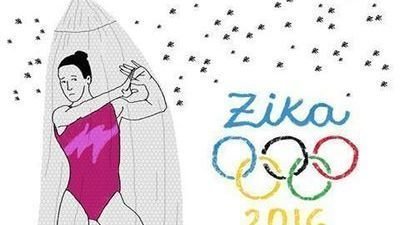
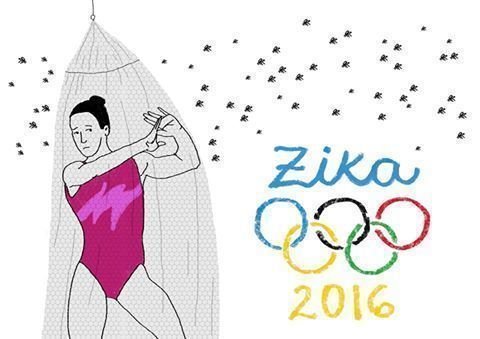
Thanks to Anis-Instituto de Bioética for the artwork. Visit their Zika info page: http://www.anis.org.br/noticia/documentario-da-voz-as-mulheres-vitimas-da-zika

Petition Closed
The Issue
Join doctors, scientists and health care experts from around the world in an urgent bid to have the Rio Olympics moved or postponed. Sign this petition and have your voice counted.
There are different strains of Zika.
The strain of Zika virus found in Brazil has more serious medical consequences than was previously known. It is unethical to risk spreading it to the rest of the world for a sporting event, when the event can be relocated or delayed.
207 countries are to be represented in the Olympics. It is unfair to risk the strain of Zika virus found in Brazil being carried to the worlds' poorest countries by people returning from the Olympics. Regions that don't have medical facilities, means of education or birth control in place needed to manage this virus, deal with its consequences and stop it spreading.
It's very misleading to say the Olympics shouldn't be moved because 60 countries have reported Zika already, when few of those countries have the new strain of virus found in Brazil that is causing microcephaly and brain damage in newborns.
It is unethical to risk spreading it to the rest of the world for a sporting event, when the event can be relocated or delayed so that the epidemic can be controlled first.
Below is a copy of the open letter sent to Dr. Margaret Chan, Director-General, WHO and The International Olympic Committee.
Visit http://rioolympicslater.org to view the doctors and professors around the world who have put their name to this letter including all references to data.
Beginning of letter:
'We are writing to express our concern about the upcoming Olympic and Paralympic Games in Rio de Janeiro. WHO’s declaration of Zika as a “Public Health Emergency of International Concern,” coupled with new scientific findings that underscore the seriousness of that problem, call for the Rio 2016 Games to be postponed and/or moved to another location—but not cancelled—in the name of public health.1
We make this call despite the widespread fatalism that the Rio 2016 Games are inevitable or “too big to fail”. History teaches this is wrong: the 1916, 1940, and 1944 Olympic Games were not just postponed or moved, but cancelled. Other sporting events were moved because of disease, as Major League Baseball did for Zika, and the Africa Cup of Nations did for Ebola. FIFA moved the 2003 Women’s World Cup from China to the USA because of the SARS epidemic, based on the advice from university-based experts, as many of us are.
Currently, many athletes, delegations, and journalists are struggling with the decision of whether to participate in the Rio 2016 Games. We agree with the U.S. Centers for Disease Control recommendation that workers should “Consider delaying travel to areas with active Zika virus transmission”.2 If that advice were followed uniformly, no athlete would have to choose between risking disease and participating in a competition that many have trained for their whole lives.
But our greater concern is for global health. The Brazilian strain of Zika virus harms health in ways that science has not observed before. An unnecessary risk is posed when 500,000 foreign tourists from all countries attend the Games, potentially acquire that strain, and return home to places where it can become endemic. Should that happen to poor, as-yet unaffected places (e.g., most of South Asia and Africa) the suffering can be great. It is unethical to run the risk, just for Games that could proceed anyway, if postponed and/or moved.
In our view, several new scientific findings require WHO to reconsider its advice on the 2016 Olympic and Paralympic Games. For example:
1. That the Brazilian viral strain causes microcephaly3 and probably Guillain-Barré syndrome4. Further, because human5, animal6 and in vitro studies7 demonstrate that the virus is neurotrophic and causes cell death, it is biologically plausible that there are other as yet undiscovered neurological injuries, as exist for similar viruses (e.g. dengue).8
2. That while Zika’s risk to any single individual is low, the risk to a population is undeniably high. Currently, Brazil’s government reports 120,000 probable Zika cases,9 and 1,300 confirmed cases of microcephaly (with another 3,300 under investigation)10, which is above the historical level of microcephaly.11
3. That Rio de Janeiro is highly affected by Zika. Brazil’s government reports Rio de Janeiro state has the second-highest number of probable Zika cases in the country (32,000) and the fourth-highest incidence rate (195 per 100,000), demonstrating active transmission.8
4. That despite Rio’s new mosquito-killing program, the transmission of mosquito-borne disease has gone up rather than down. While Zika is a new epidemic and lacks historical data, using dengue fever as a proxy, cases in Rio from January thru April 2016 are up 320% and 1150% over the same periods in 2015 and 2014, respectively.12 In the specific neighborhood of the Olympic Park (Barra da Tijuca) there have been more dengue cases in just the first quarter of 2016 than in all of 2015.11
5. That Rio’s health system is so severely weakened as to make a last-minute push against Zika impossible. Recently Rio’s state government declared a health sector emergency,13 and Rio’s city government cut funding against mosquito-borne disease by 20%.14 While the virus is the infectious agent of Zika, its real cause is Rio’s poor social conditions and sanitation—factors that lack a quick fix, and that are not helped when shrinking health resources are diverted to the Games.
6. That it is possible to eradicate the Aedes aegypti mosquito, which transmits Zika, from Rio. Actually that mosquito was totally eradicated from Brazil in the 1950s, but came back after control efforts lapsed.15 Thus holding the Games, in the presence of Zika-carrying mosquitoes, is a choice and not necessary.
7. That one cannot count on nature for defence. While lower mosquito activity during Rio’s winter months reduces the individual risk to travelers of infection, that is partly offset when travelers who became infected return home during the northern hemisphere’s summer months and peak mosquito activity, which increases the public health risk that local mosquitos acquire and spread the virus—meaning that both seasons are relevant to the epidemic’s course.16 Also, infection can spread through blood donations and transfusions, particularly in poor countries that lack screening for Zika.17
In sum, the evidence shows: (i) that Brazil’s Zika virus strain has more serious medical consequences than previously known, (ii) that Rio de Janeiro is one of the most affected parts of Brazil, and (iii) that Rio’s mosquito-killing efforts are not meeting expectations, but rather mosquito-borne disease is up this year. It is therefore imperative that WHO conduct a fresh, evidence-based assessment of Zika and the Games, and its recommendations for travelers.
Because Zika is a new emergency, its many uncertainties—of travel flows during the Games, of epidemiology, and of entomology—currently make it impossible for mathematical models to predict the epidemic’s course accurately. Therefore, for now, any decision about Zika and the Games has to be more qualitative than quantitative. If one considers the following options:
(a) Holding the Games in Rio in 2016 as scheduled;
(b) Holding the Games in Rio at a later date after Zika is controlled, and;
(c) Holding the Games at Zika-free sites having Olympic-standard facilities.
It is indisputable that option (a) of holding the Games as scheduled has a greater risk of accelerating the spread of the Brazilian viral strain than the alternatives. Postponing and/or moving the Games also mitigates other risks brought on by historic turbulence in Brazil’s economy, governance, and society at large—which are not isolated problems, but context that makes the Zika problem all but impossible to solve with the Games fast approaching.
We are concerned that WHO is rejecting these alternatives because of a conflict of interest. Specifically, WHO entered into an official partnership with the International Olympic Committee, in a Memorandum of Understanding that remains secret.18 There is no good reason for WHO not to disclose this Memorandum of Understanding, as is standard practice for conflicts of interest. Not doing so casts doubt on WHO’s neutrality, for reasons described further in the Appendix.
WHO must revisit the question of Zika and postponing and/or moving the Games. Similar to what FIFA did for SARS and the Women’s World Cup, we recommend that WHO convene an independent group to advise it and the IOC in a transparent, evidence-based process in which science, public health, and the spirit of sport come first. Given the public health and ethical consequences, not doing so is irresponsible.
Appendix: WHO and IOC in Partnership
WHO has a decades-long, high-level partnership with the International Olympic Committee. That partnership was last affirmed in 2010 at an event where the Director General of WHO and President of the IOC signed a Memorandum of Understanding, which is secret because neither has disclosed it.17
Inappropriately, WHO sees its role as not just providing public health advice. It established a “Virtual Interdisciplinary Advisory Group”, whose “important promotional point,” according to WHO is “that the Group can help in bidding for major events (like the Olympic Games)”.19 That is a clear conflict of interest, when WHO must also evaluate and make recommendations about Olympic travel during a Public Health Emergency of International Concern (PHEIC).
The overly close relationship between WHO and the IOC is apparent in the comments of WHO’s Executive Director responsible for Zika, just days after it was declared a PHIEC:
“Brazil is going to have a fantastic Olympics and it’s going to be a successful Olympics and the world is going to go there. I just wish I was going there, but there’s not going to be a lot of problems there by then.”20
With respect, this is a troubling statement. WHO cannot credibly assess the public health risks of Zika and the Olympics when it sets neutrality aside. Declaring that “it’s going to be a successful Olympics and the world is going to be there” implies that WHO has given the Olympics an unconditional green light, without regard to rapidly emerging medical, entomological, and epidemiological evidence—all of which must be considered in assessing whether this mass gathering could accelerate the global spread of the Brazilian strain of Zika virus. To prejudge that “there’s not going to be a lot of problems” before reviewing this evidence is extremely inappropriate of WHO, and suggests that a change in leadership may be required to restore WHO’s credibility.'
End of Letter.
Assist this campaign by sharing on social networks. We will keep you updated on new information and developments.
Thanks to Anis-Instituto de Bioética for the artwork. Visit their Zika info page: http://www.anis.org.br/noticia/documentario-da-voz-as-mulheres-vitimas-da-zika
The Decision Makers

Petition Updates
Share this petition
Petition created on 29 May 2016