Please allow Northern Lights Wildlife Society rescue animals without delay!
The Issue
For more than 30 years, Northern Lights Wildlife Society has worked with wildlife officials in the Omineca region to respond when orphaned animals need help. Over those decades, many young animals have been successfully rescued, raised with as little human contact as possible, and ultimately returned to the wild. Unfortunately, the situation we are facing in the region today is very different, and it has become increasingly difficult for us to provide that help when it is needed. https://www.wildlifeshelter.com/omineca-black-bear-cubs-nlws-canada
In May, we were informed without warning that the intake of orphaned ungulates, including deer fawns and moose calves, would require direct approval from the Omineca Fish & Wildlife Section Head. We were also informed that Conservation Officers could no longer provide rescue approval themselves and that requests involving orphaned wildlife had to be handled through email during regular business hours, approximately 8:30 a.m. to 4:30 p.m., with no equivalent coverage available to us after hours, on weekends or on holidays.
Wildlife emergencies, of course, do not happen according to office hours. A mother can be struck by a vehicle late on a Friday evening. A newborn calf can be discovered alone on a weekend. A member of the public may encounter an orphaned animal when government offices are closed. In those situations, time matters. Young animals can deteriorate rapidly from dehydration, exposure, starvation, injury and stress. Throughout the summer, we repeatedly tried to communicate and find a workable way forward. Instead, we found ourselves in the heartbreaking position of knowing that deer fawns and moose calves needed help while being unable to obtain the permission required to bring them into care.
Now we are entering the fall period when calls about orphaned bear cubs begin to increase, and we are encountering the same difficulty. We are being told that some of these cubs are considered capable of surviving on their own and that, should hunger eventually drive them toward homes, garbage or other human attractants, the public should contact the
Conservation Officer Service. From our perspective as a wildlife rewilding facility with decades of experience raising and rewilding orphaned bears, this creates an extremely difficult situation. There can be a narrow window in which a genuinely orphaned cub is still wild, fearful of people and an excellent candidate for rewilding. If that window is missed, hunger can change the animal's behaviour and dramatically complicate its future.
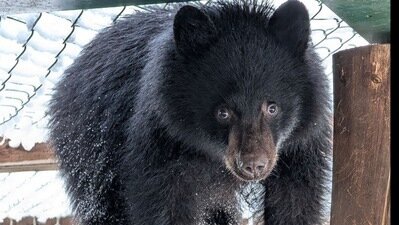
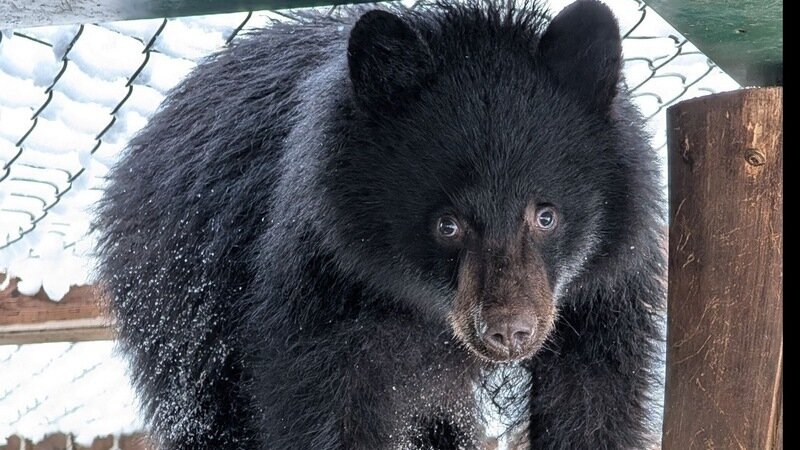
That concern is no longer theoretical. We are currently aware of two small black bear cubs that need help. Both are estimated to weigh approximately 20 pounds or less, and we believe they may have lost their mother several weeks ago following a vehicle collision. Most importantly, the cubs have not, to our knowledge, begun relying on human food or other attractants. They remain wild animals behaving like wild animals — exactly the kind of situation in which early intervention can provide an opportunity for successful rehabilitation and eventual rewilding.
17366 TELKWA HIGH RD SMITHERS, BC V0J2N7 250 - 847 - 5101 • WILDLIFESHELTER.COM 1
Permission to bring these cubs into care has been repeatedly denied. Every day that passes matters. Their need for food will only become more urgent, and if hunger eventually pushes them toward garbage, livestock feed, homes or other human-associated food sources, they risk becoming food-conditioned and being labelled problem bears. At that point, an opportunity that exists today may disappear entirely.
This is what makes the situation so difficult for our team. We are not asking to remove healthy wildlife from the landscape unnecessarily. Rewilding has always required careful assessment, appropriate approvals and responsible decisions about which animals should enter care. What we are asking for is a system that allows genuinely orphaned wildlife to be assessed and responded to quickly enough that rewilding remains a realistic option.
After more than three decades of successfully working in the Omineca region, watching opportunities to help orphaned wildlife disappear because timely authorization cannot be obtained has been devastating. We believe there must be a practical way for wildlife professionals, Conservation Officers, government biologists and permitted rewilding facilities to work together while still responding to the realities of wildlife emergencies.
For supporters who wish to raise their own concerns about how orphaned wildlife cases are being handled in the Omineca, the elected representatives connected to this issue include Honourable Randene Neill (Randene.Neill.MLA@leg.bc.ca), Prince George Major Simon Yu (simon.yu@princegeorge.ca) and MLA John Rustad (John.Rustad.MLA@leg.bc.ca or any other person you think may have influence on this issue.
Above all, our concern remains with the animals. Right now, two small bear cubs still have an opportunity to remain wild, receive the care they need and, if all goes well, return to the wild where they belong. We hope that opportunity is not lost simply because help could not reach them in time.
With hope,
Angelika Langen
17366 TELKWA HIGH RD SMITHERS, BC V0J2N7 250 - 847 - 5101 • WILDLIFESHELTER.COM 2

4
The Issue
For more than 30 years, Northern Lights Wildlife Society has worked with wildlife officials in the Omineca region to respond when orphaned animals need help. Over those decades, many young animals have been successfully rescued, raised with as little human contact as possible, and ultimately returned to the wild. Unfortunately, the situation we are facing in the region today is very different, and it has become increasingly difficult for us to provide that help when it is needed. https://www.wildlifeshelter.com/omineca-black-bear-cubs-nlws-canada
In May, we were informed without warning that the intake of orphaned ungulates, including deer fawns and moose calves, would require direct approval from the Omineca Fish & Wildlife Section Head. We were also informed that Conservation Officers could no longer provide rescue approval themselves and that requests involving orphaned wildlife had to be handled through email during regular business hours, approximately 8:30 a.m. to 4:30 p.m., with no equivalent coverage available to us after hours, on weekends or on holidays.
Wildlife emergencies, of course, do not happen according to office hours. A mother can be struck by a vehicle late on a Friday evening. A newborn calf can be discovered alone on a weekend. A member of the public may encounter an orphaned animal when government offices are closed. In those situations, time matters. Young animals can deteriorate rapidly from dehydration, exposure, starvation, injury and stress. Throughout the summer, we repeatedly tried to communicate and find a workable way forward. Instead, we found ourselves in the heartbreaking position of knowing that deer fawns and moose calves needed help while being unable to obtain the permission required to bring them into care.
Now we are entering the fall period when calls about orphaned bear cubs begin to increase, and we are encountering the same difficulty. We are being told that some of these cubs are considered capable of surviving on their own and that, should hunger eventually drive them toward homes, garbage or other human attractants, the public should contact the
Conservation Officer Service. From our perspective as a wildlife rewilding facility with decades of experience raising and rewilding orphaned bears, this creates an extremely difficult situation. There can be a narrow window in which a genuinely orphaned cub is still wild, fearful of people and an excellent candidate for rewilding. If that window is missed, hunger can change the animal's behaviour and dramatically complicate its future.
That concern is no longer theoretical. We are currently aware of two small black bear cubs that need help. Both are estimated to weigh approximately 20 pounds or less, and we believe they may have lost their mother several weeks ago following a vehicle collision. Most importantly, the cubs have not, to our knowledge, begun relying on human food or other attractants. They remain wild animals behaving like wild animals — exactly the kind of situation in which early intervention can provide an opportunity for successful rehabilitation and eventual rewilding.
17366 TELKWA HIGH RD SMITHERS, BC V0J2N7 250 - 847 - 5101 • WILDLIFESHELTER.COM 1
Permission to bring these cubs into care has been repeatedly denied. Every day that passes matters. Their need for food will only become more urgent, and if hunger eventually pushes them toward garbage, livestock feed, homes or other human-associated food sources, they risk becoming food-conditioned and being labelled problem bears. At that point, an opportunity that exists today may disappear entirely.
This is what makes the situation so difficult for our team. We are not asking to remove healthy wildlife from the landscape unnecessarily. Rewilding has always required careful assessment, appropriate approvals and responsible decisions about which animals should enter care. What we are asking for is a system that allows genuinely orphaned wildlife to be assessed and responded to quickly enough that rewilding remains a realistic option.
After more than three decades of successfully working in the Omineca region, watching opportunities to help orphaned wildlife disappear because timely authorization cannot be obtained has been devastating. We believe there must be a practical way for wildlife professionals, Conservation Officers, government biologists and permitted rewilding facilities to work together while still responding to the realities of wildlife emergencies.
For supporters who wish to raise their own concerns about how orphaned wildlife cases are being handled in the Omineca, the elected representatives connected to this issue include Honourable Randene Neill (Randene.Neill.MLA@leg.bc.ca), Prince George Major Simon Yu (simon.yu@princegeorge.ca) and MLA John Rustad (John.Rustad.MLA@leg.bc.ca or any other person you think may have influence on this issue.
Above all, our concern remains with the animals. Right now, two small bear cubs still have an opportunity to remain wild, receive the care they need and, if all goes well, return to the wild where they belong. We hope that opportunity is not lost simply because help could not reach them in time.
With hope,
Angelika Langen
17366 TELKWA HIGH RD SMITHERS, BC V0J2N7 250 - 847 - 5101 • WILDLIFESHELTER.COM 2
The Decision Makers

Petition Updates
Share this petition
Petition created on September 25, 2026