
Petition to Prohibit Permanent Human Settlement Beyond Earth and Preserve Celestial Bodies
The Issue
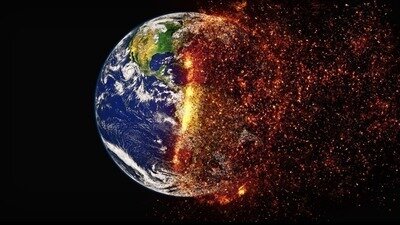
Humanity has spent centuries taking from this planet without fully considering what we were taking from it—or what would be left behind. We cut down forests, polluted oceans, poisoned ecosystems, exhausted resources, and pushed countless species toward extinction. We have altered the climate of the only world we have ever called home, and some of the damage may never be completely undone. Yet while we are still struggling to care for Earth, we are discussing permanent human settlements on the Moon and other celestial bodies. To me, that is deeply disturbing. We have barely begun to repair the damage we have caused here, yet we are already looking toward other worlds as potential places to expand.
At times, I look at humanity and wonder whether we have become a parasite on our own planet. We discover something valuable, consume it, expand into it, and leave damage behind. Then we repeat the process somewhere else. Humanity has accomplished extraordinary things, but our ability to create does not erase our repeated ability to destroy. I feel genuine anger and grief when I think about what our species has done to the world that gave us life. If we cannot keep our freaking home planet alive, how can we possibly convince ourselves that we deserve to build another home somewhere else? Earth is not a disposable stepping stone. It is the only naturally functioning home humanity has ever had.
A settlement beyond Earth would be an artificial, fragile environment dependent on life-support systems, carefully managed resources, constant maintenance, and technology that could fail. Unlike Earth, there would be no naturally functioning atmosphere, oceans, ecosystems, or biosphere waiting to recover from our mistakes. The Moon and other celestial bodies also contain scientific information that humanity has barely begun to understand. Permanently altering them could destroy environments, geological records, and scientific opportunities that can never be restored. To me, the answer is therefore not simply to postpone colonization until we become better at it. I believe there is a fundamental difference between exploring another world and claiming it as another place for humanity to live.
Space exploration itself is not something I oppose. Scientific research, astronomy, planetary science, robotic exploration, and careful observation can expand our understanding of the universe without turning every reachable world into another human settlement. My position is that humanity should preserve celestial bodies as places to study and understand, rather than treating them as future neighborhoods, colonies, or sources of unlimited resources. I believe permanent human habitation beyond Earth should remain off-limits indefinitely, except in the most extraordinary circumstance imaginable: a genuine and unavoidable necessity for the survival of humanity itself. Exploration does not require ownership. Discovery does not require settlement. Curiosity does not require conquest.
We have one home. We should not abandon our responsibility to it simply because we have found places beyond it. I believe humanity should remain on Earth and dedicate itself to protecting, repairing, and understanding the planet that made our existence possible. If we carry the same destructive mindset that has damaged Earth into space, changing planets will not change the problem. It will only give us more places to destroy. The universe is not an empty warehouse waiting for humanity to move in. There are worlds we may never fully understand, environments we may never completely comprehend, and scientific records that cannot be recreated once destroyed. My deepest concern is that humanity will look outward before it has learned how to look inward—and mistake having the ability to reach another world for having the right to make it our own.

1
The Issue
Humanity has spent centuries taking from this planet without fully considering what we were taking from it—or what would be left behind. We cut down forests, polluted oceans, poisoned ecosystems, exhausted resources, and pushed countless species toward extinction. We have altered the climate of the only world we have ever called home, and some of the damage may never be completely undone. Yet while we are still struggling to care for Earth, we are discussing permanent human settlements on the Moon and other celestial bodies. To me, that is deeply disturbing. We have barely begun to repair the damage we have caused here, yet we are already looking toward other worlds as potential places to expand.
At times, I look at humanity and wonder whether we have become a parasite on our own planet. We discover something valuable, consume it, expand into it, and leave damage behind. Then we repeat the process somewhere else. Humanity has accomplished extraordinary things, but our ability to create does not erase our repeated ability to destroy. I feel genuine anger and grief when I think about what our species has done to the world that gave us life. If we cannot keep our freaking home planet alive, how can we possibly convince ourselves that we deserve to build another home somewhere else? Earth is not a disposable stepping stone. It is the only naturally functioning home humanity has ever had.
A settlement beyond Earth would be an artificial, fragile environment dependent on life-support systems, carefully managed resources, constant maintenance, and technology that could fail. Unlike Earth, there would be no naturally functioning atmosphere, oceans, ecosystems, or biosphere waiting to recover from our mistakes. The Moon and other celestial bodies also contain scientific information that humanity has barely begun to understand. Permanently altering them could destroy environments, geological records, and scientific opportunities that can never be restored. To me, the answer is therefore not simply to postpone colonization until we become better at it. I believe there is a fundamental difference between exploring another world and claiming it as another place for humanity to live.
Space exploration itself is not something I oppose. Scientific research, astronomy, planetary science, robotic exploration, and careful observation can expand our understanding of the universe without turning every reachable world into another human settlement. My position is that humanity should preserve celestial bodies as places to study and understand, rather than treating them as future neighborhoods, colonies, or sources of unlimited resources. I believe permanent human habitation beyond Earth should remain off-limits indefinitely, except in the most extraordinary circumstance imaginable: a genuine and unavoidable necessity for the survival of humanity itself. Exploration does not require ownership. Discovery does not require settlement. Curiosity does not require conquest.
We have one home. We should not abandon our responsibility to it simply because we have found places beyond it. I believe humanity should remain on Earth and dedicate itself to protecting, repairing, and understanding the planet that made our existence possible. If we carry the same destructive mindset that has damaged Earth into space, changing planets will not change the problem. It will only give us more places to destroy. The universe is not an empty warehouse waiting for humanity to move in. There are worlds we may never fully understand, environments we may never completely comprehend, and scientific records that cannot be recreated once destroyed. My deepest concern is that humanity will look outward before it has learned how to look inward—and mistake having the ability to reach another world for having the right to make it our own.
The Decision Makers


Petition Updates
Share this petition
Petition created on September 30, 2026