2,211 and Rising: Reparative Citizenship Must Be on the Agenda

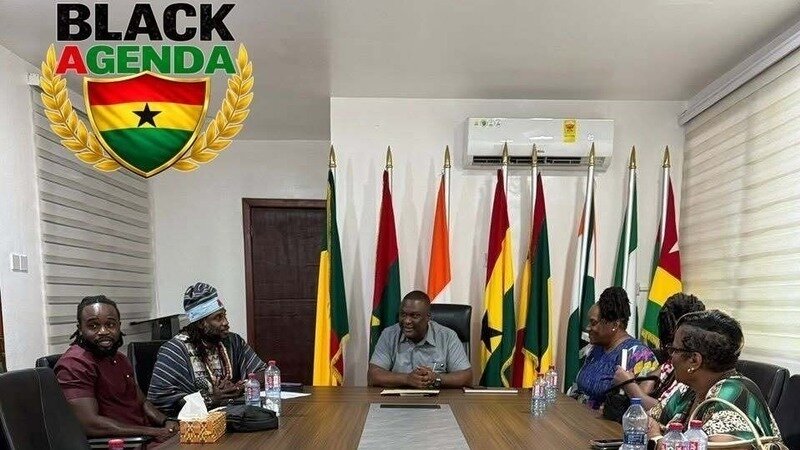
To the Founding 2,200 and everyone who has joined since:
Thank you.
Because of your signatures, comments, shares, posts, conversations, and sustained pressure, this petition has now reached 2,211 supporters.
We are only 289 signatures away from the next Change.org goal of 2,500.
Current momentum at a glance:
2,211 supporters
6,279 petition views
1,246 petition shares
Petition strength: 10 / Great
Please keep signing, commenting, and sharing:
https://www.change.org/ghanacitizenship
QUICK SUMMARY
The petition has reached 2,211 supporters and is only 289 signatures away from 2,500.
At the Next Steps High-Level Consultative Conference on Reparatory Justice in Accra, reparative citizenship was not centered in the official outcome document, even though the document includes a broad section on diaspora engagement, citizenship, and right of return.
Ɔbenfo Ọbádélé Kambon of D.O.O.R. raised reparative citizenship directly in the room, and Mr. Kwesi Pratt Jr. responded that authorities in Ghana and other African countries must look at migration from the point of view of reparative justice.
Now we must make sure reparative citizenship moves from petition to policy.
COMING FROM THE NEXT STEPS CONFERENCE
Representatives connected to this petition have just come from the Next Steps High-Level Consultative Conference on Reparatory Justice in Accra, Ghana.
The conference was hosted under the leadership of President John Dramani Mahama and focused on moving the landmark United Nations Resolution on the trafficking of enslaved Africans and racialised chattel enslavement of Africans toward a global framework for action.
That conference was important.
The adopted outcome document speaks broadly of reparatory justice, citizenship, right of return, diaspora engagement, apology, compensation, cultural restitution, health, education, public memory, and global reform.
But the specific language of reparative citizenship was missing.
The framework of self-reparations was missing.
The practical concerns at the heart of this petition were not centered: the GHS 25,000 citizenship application fee, DNA as an exclusionary barrier, unclear timelines, lack of a clear appeals process, and the absence of real constituency-mandated seats for the Historic Diaspora.
That makes one thing clear:
Our message has still not reached the upper echelons of government in the way it must.
REPARATIVE CITIZENSHIP WAS RAISED IN THE ROOM
Although reparative citizenship was not centered on the official agenda or in the outcome document, one of the petition organizers, Ɔbenfo Ọbádélé Kambon of D.O.O.R., was able to raise the issue directly during the conference.
He reminded the gathering that during the recent citizenship process, interested applicants were given only a few days’ notice and were asked to provide GHS 25,000, DNA testing, background checks from Ghana and their home country, birth certificates, proof of strong ties to Ghana, and several other requirements.
He then made the point clearly:
“Repatriation is one form of reparations.”
He also stated:
“The one aspect of reparatory justice that we have full control over is this one, which is reparatory or reparative citizenship.”
Ɔbenfo Ọbádélé Kambon further noted that more than 2,000 people had expressed interest in citizenship, yet only about 150 received it, while many long-term Ghana-based Historic Diaspora residents were left outside the process.
He brought into the room the concerns now represented by thousands of petition supporters.
And Mr. Kwesi Pratt Jr. responded from the panel by saying:
“The authorities in Ghana and other African countries have to look at the questions of migration from the point of view of reparative justice.”
That response matters.
It shows that the issue can be raised, heard, and engaged.
But being heard once in the room is not enough.
Reparative citizenship must be placed formally on the agenda.
WHAT SUPPORTERS ARE SAYING
The comments and videos from petition supporters show why this issue matters.
Supporters are speaking about the right to repatriation, the need for a more affordable citizenship pathway, the contributions Historic Diaspora residents are already making in Ghana, and the double standards many feel when they are invited “home” but then treated as revenue sources rather than as family returning through repair.
Christian Barber put it clearly:
“We’re not asking for handouts. We’re asking for a hand in.”
He continued:
“It should be seamless. It should not be another hurdle with everything that we’ve had hurled at us.”
That is the heart of this petition.
True reparative citizenship is not a favor.
It is not charity.
It is the removal of unnecessary barriers so that the Historic Diaspora can participate, contribute, build, and belong through a fair process grounded in repair.
Other supporters have echoed the same concerns. One wrote that “true citizenship should never be bought because of the value that it will bring to a country in more ways than one.” Another wrote that the current process risks inviting people to Ghana only to burden them with “high fees, unclear timelines, and rigid requirements.”
Supporters have also emphasized that Historic Diaspora residents are investing in businesses, employing local people, sharing technical skills, and helping improve living standards, while still facing unfair charges, double standards, and treatment as revenue sources.
These are not isolated complaints.
They are the lived concerns of people who believe Ghana can lead, but must back the words with action that can be felt.
REPARATORY JUSTICE MUST BE MADE REAL AT HOME
If Ghana is taking global leadership on reparatory justice, then reparative citizenship must be part of the conversation here at home.
The one aspect of reparatory justice Ghana can act on immediately, directly, and without waiting for any foreign government is reparative citizenship.
Reparative citizenship means citizenship is treated as restoration, not charity.
It treats repatriation as repair, not revenue.
The Historic Diaspora must not be spoken of internationally as part of the reparatory justice agenda while our practical pathway to repatriation remains unclear, expensive, exclusionary, and without a clear constituency mandate.
THE PETITION IS DOING ITS WORK
The petition is already documenting public demand, pressing for formal institutional review, and building momentum toward accountable representation.
Through this petition, thousands of supporters have already entrusted The Black Agenda to carry forward concerns that have too often gone unheard, ignored, or spoken for by others.
No one person, private group, appointed figure, or closed-door process should be allowed to speak for millions for another quarter of a century without transparency, accountability, or a clear constituency mandate.
That is why real constituency-mandated seats for the Historic Diaspora must come first.
WHAT WE ARE CALLING FOR
Without seats at the table, fees can return, DNA barriers can return, timelines can shift, requirements can change without notice, appeals can remain unclear, and decisions can continue to be made about the Historic Diaspora without the Historic Diaspora.
That is why our current demands remain:
Real constituency-mandated seats for the Historic Diaspora
These seats should recognize and build from the public mandate already demonstrated through The Black Agenda’s petition, organizing, documented supporter base, and any public organizational sign-ons or representative lists submitted with the petition.
They should be formal, transparent, constituency-accountable consultative and decision-shaping seats within any government process addressing Historic Diaspora citizenship, repatriation, reparatory justice, or right of return.
They must not be reduced to executive appointment, private gatekeeping, or closed-door selection.
Suspension and review of the GHS 25,000 citizenship application fee
Permanent removal of DNA as an exclusionary barrier
Robust vetting and anti-fraud safeguards are necessary, but they must not be used to exclude legitimate descendants through rigid or inappropriate DNA requirements.
A clear, year-round pathway to reparative citizenship
At least 90 days’ notice for major changes in fees, requirements, vetting dates, documents, or deadlines
A clear appeals and review process
A process grounded in reparative justice, not administrative exclusion
Every signature strengthens the case that reparative citizenship must move from petition to policy.
JOIN THE BLACK AGENDA ONLINE TOWN HALL
We are inviting all petition signatories and supporters to join The Black Agenda’s online town hall on:
Sunday, July 5, 2026
7 PM GMT
We will give a full update on the petition, the Next Steps Conference, what was missing from the outcome document, what was raised in the room, and what must happen next.
This will be an important collective space to align petition supporters around the next phase of action.
The meeting link will be shared soon.
HELP US REACH 2,500
We are only 289 signatures away from 2,500.
Please do three things today:
Sign the petition if you have not already signed.
Leave a comment explaining why reparative citizenship matters.
Share the petition with at least three people, groups, organizations, media contacts, community leaders, or traditional leaders.
Petition link:
https://www.change.org/ghanacitizenship
COPY AND PASTE THIS MESSAGE TO YOUR NETWORKS:
The petition for fair Historic Diaspora reparative citizenship, representation, and inclusion in Ghana has reached 2,211 supporters. At the Next Steps High-Level Consultative Conference on Reparatory Justice in Accra, Ɔbenfo Ọbádélé Kambon of D.O.O.R. raised the issue of reparative citizenship directly, and Mr. Kwesi Pratt Jr. responded that authorities in Ghana and other African countries must look at migration from the point of view of reparative justice. As supporter Christian Barber said, “We’re not asking for handouts. We’re asking for a hand in.” Now we must make sure reparative citizenship is formally placed on the agenda. Sign, comment, and share: https://www.change.org/ghanacitizenship
FIRST-PERSON SHARE OPTION
I signed the petition for fair Historic Diaspora reparative citizenship, representation, and inclusion in Ghana because this issue is real.
People are being invited home, but too many are facing high fees, unclear timelines, DNA barriers, and a process that does not yet reflect reparative justice in practice.
At the Next Steps High-Level Consultative Conference on Reparatory Justice in Accra, Ɔbenfo Ọbádélé Kambon of D.O.O.R. raised reparative citizenship directly, and Mr. Kwesi Pratt Jr. responded that authorities in Ghana and other African countries must look at migration from the point of view of reparative justice.
As supporter Christian Barber said, “We’re not asking for handouts. We’re asking for a hand in.”
Now we need to make sure reparative citizenship is formally placed on the agenda.
Please sign, comment, and share:
https://www.change.org/ghanacitizenship
MEDIA AND ORGANIZATIONAL INQUIRIES
For media interviews with representatives of The Black Agenda in English or Twi, or for organizations wishing to stand publicly with the petition, email:
STAY CONNECTED
Abibitumi Public Group:
https://www.abibitumi.com/groups/the-black-agenda-ghana-public/
AbibitumiTV:
https://abibitumitv.com/@1776457481414614
YouTube:
https://youtube.com/@blackagendagh
Instagram:
https://www.instagram.com/blackagendagh
Facebook:
@blackagendagh
The Founding 2,200 started this phase.
Everyone who has joined since has built it further.
Now let’s push to 2,500.
Sign. Comment. Share. Organize.
Restore reparative citizenship in principle and in practice.