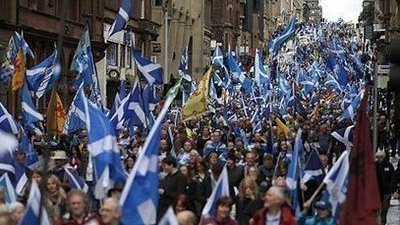
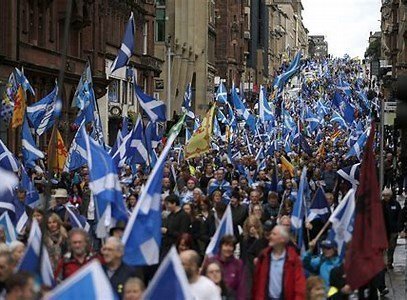
Campaign for the recall of the Independent Sovereign Parliament of Scotland.
The Issue
This petition is as the name suggests is to petition Scotland's First Minister, currently Nicola Sturgeon to Instruct Scotland's law lords to recall Scotland's sovereign parliament which has been in abeyance since the act of union. The Act of Union contains the premise for this to happen if the sovereign people of Scotland call for it. It has the power to overturn any laws or trade agreements made that are found to be detrimental to either Scotland or the sovereign Scottish nation. It could also be used as a mechanism to end the union itself should that be the will of the people of Scotland. No section 30 required. The Basis for this is given below
SCOTLAND´S PARLIAMENT - THE RIGHT OF RECALL BY THE PEOPLE - By John J.G. McGill, For and on behalf of the "Scotland-UN Committee"
(Shorter Edited Version) by Charlotte Liston Sutherland
Under the terms of the Union Treaty of 1707
SCOTLAND'S LAW LORDS retain the right to OVERTURN any ACT of the UNION PARLIAMENT that is perceived to be NOT in the BEST INTERESTS
of the PEOPLE OF SCOTLAND.
There exists a widespread myth – peddled by even the most learned historians – that something called the "Union of the Crowns" took place in the year 1603, and something called the "Union of the Parliaments" in 1707. There is not one word of truth in either of these assertions. What happened in 1603 was a purely PERSONAL UNION - the crowns of two independent states were held simultaneously by one man, without affecting the sovereign independence of either. The union of these crowns into one single monarchy took place only under the terms of the 1707 TREATY OF UNION and the two enabling ACTS OF UNION by the Scottish and English parliaments. Anyone who asserts the contrary should take the trouble to read Article 1. of any of these three measures.
NO UNION OF THE NATIONAL PARLIAMENTS OF SCOTLANDAND ENGLAND HAS EVER TAKEN PLACE. What happened was laid down in Article 3. of the Treaty and the Acts, namely, that the affairs of the Union were to be decided by one and the same parliament. The two national parliaments were not united by this agreement. What happened was that a COMPLETELY NEW Union Parliament was set up at Westminster under the terms of Article 3. which, unlike Article 1., is a NON-ENTRENCHED PROVISION that can be altered at any time. NEITHER THE SCOTTISH NOR THE ENGLISH PARLIAMENT WAS ABOLISHED BY THE UNION AGREEMENT. There is not one word in the relevant legislation to this effect. They simply stopped meeting and went into abeyance when the new joint legislature to administer the affairs of the United Kingdom was set up.
There are therefore no obstacles from this source to the implementation of the will of the Scottish people - a will which has been expressed with more than adequate clarity for generations. THE SCOTTISH PARLIAMENT COULD BE RECALLED TO DEAL WITH EXCLUSIVELY SCOTTISH AFFAIRS - as distinct from those of the Union - WITHOUT ONE WORD OF ALTERATION TO THE UNION AGREEMENT - and if the sovereign Scottish people decide that their Parliament is to have further-reaching autonomy involving alterations to the union agreement, then, under international law governing the self-determination of peoples, they are bound to have their way, and no authority at home or abroad has the power to refuse them.
SOVEREIGNTY RESIDES WITH THE PEOPLE OF SCOTLAND. Sovereignty is supreme and unrestricted legitimate authority independent of any outside influence. The people of Scotland alone hold the inalienable right to recall their Parliament. In Scotland the people are the supreme constitutional authority over Monarch and Parliament. The single and ultimate source of all parliamentary and governmental power is the people, represented by a qualified and registered electorate.
THE SCOTTISH ELECTED REPRESENTATIVES - IRRESPECTIVE OF THEIR OWN VIEWS - ARE, THEREFORE, BOUND BY THE SUPREMACY OF THE EXPRESSED WILL OF THE MAJORITY OF VOTERS IN SCOTLAND. That sovereign will takes precedence over any other concept, form or notion of outside authority or influence, including the subordinate authorities, Government, Parliament, Judiciary or Head of State. The people's elected representatives must therefore act in accordance with this first principle of Scottish constitutional law. The will of the people comes first before any other consideration, quite certainly in matters pertaining to the constitutional structure. It is a matter of elementary logic that any action or purported legislation that breaches this fundamental principle is unconstitutional and therefore illegitimate. Proof, if proof were needed, is legion. THE LEGITIMACY OF SCOTLAND'S RIGHT TO DECIDE ITS OWN CONSTITUTIONAL POSITION IS UNCHALLENGEABLE.
Scots Law is unique. In 1953 the then Lord President of the Court of Session, Scotland's Chief Judge, Lord Cooper, pronouncing in the case of McCormick versus Lord Advocate, held that "THE ULTIMATE SOVEREIGNTY OF PARLIAMENT IS A DISTINCTIVELY ENGLISH PRINCIPLE WHICH HAS NO COUNTERPART IN SCOTTISH CONSTITUTIONAL LAW."
It has taken a long time to understand that oil and water do not mix. So we can say with certainty that the English doctrine of parliamentary sovereignty and Scottish popular sovereignty cannot be "united". IN SCOTLAND, SOVEREIGNTY RESTS WITH THE PEOPLE OF SCOTLAND, AND NOWHERE ELSE. It cannot be altered, "repealed" or otherwise redefined.
The inspiring DECLARATION OF ARBROATH and its constitutional principles have been reinforced over the centuries by Scottish constitutional writers and is in complete accord with modern concepts of modern democracy. It will be noted that the writers refer to "our kingdom" and not "the king's kingdom". The Declaration also makes it clear that THE HEAD OF STATE AND EXECUTIVE IS SUBJECT TO THE WILL OF THE PEOPLE, and may be deposed for defying it. Thus Scotland's right to self-determination, reinforced unequivocally by international law, is unassailable. There is much more legitimacy to Scotland's right to recall Scotland's Parliament than there is to send representatives to another place. The first duty of the Scottish elected representatives is to sit in Scotland's Parliament, and in no other.
In 1707 the last sitting of Scotland's Parliament was exactly that - merely the last one, not the final one. Scotland's Parliament was never abolished; there is not one word to that effect in the relevant legislation. The recall of the Scottish Parliament, if the Scottish people so decide - as they have done - is constitutionally correct and its legitimacy is unchallengeable in any court in any land. NOR IS IT ANYWHERE LAID DOWN, OR NECESSARY, THAT THIS RECALL HAS TO BE ORGANISED BY OR SANCTIONED FROM LONDON.
Indeed, under the terms of the Union Treaty of 1707, SCOTLAND'S LAW LORDS RETAIN THE RIGHT TO OVERTURN ANY ACT OF THE UNION PARLIAMENT THAT IS PERCEIVED TO BE NOT IN THE BEST INTERESTS OF THE PEOPLE OF SCOTLAND. The fact that Scotland's law lords have never exercised this right on behalf of the people of Scotland changes nothing. The right exists. Everywhere we look in Scottish constitutional and legal records we see at the very heart of these matters the recognition and assertion, the supremacy of the will of the people. Scottish sovereignty needs no arbiter: it exists as a permanent beacon of hope and assertiveness handed down to us by our very far sighted forbears. We owe it to them and to ourselves to insist that our Scottish elected representatives recall Scotland's Parliament. Political will and courage based on unchallengeable legitimate constitutional conviction are the only ingredients in the recipe for action. CONSTITUTIONAL CHANGE IS NOT REQUIRED - CONSTITUTIONAL ACTION IS.
For more information please visit https://www.facebook.com/groups/3318088581559343/?ref=group_header

2,265
The Issue
This petition is as the name suggests is to petition Scotland's First Minister, currently Nicola Sturgeon to Instruct Scotland's law lords to recall Scotland's sovereign parliament which has been in abeyance since the act of union. The Act of Union contains the premise for this to happen if the sovereign people of Scotland call for it. It has the power to overturn any laws or trade agreements made that are found to be detrimental to either Scotland or the sovereign Scottish nation. It could also be used as a mechanism to end the union itself should that be the will of the people of Scotland. No section 30 required. The Basis for this is given below
SCOTLAND´S PARLIAMENT - THE RIGHT OF RECALL BY THE PEOPLE - By John J.G. McGill, For and on behalf of the "Scotland-UN Committee"
(Shorter Edited Version) by Charlotte Liston Sutherland
Under the terms of the Union Treaty of 1707
SCOTLAND'S LAW LORDS retain the right to OVERTURN any ACT of the UNION PARLIAMENT that is perceived to be NOT in the BEST INTERESTS
of the PEOPLE OF SCOTLAND.
There exists a widespread myth – peddled by even the most learned historians – that something called the "Union of the Crowns" took place in the year 1603, and something called the "Union of the Parliaments" in 1707. There is not one word of truth in either of these assertions. What happened in 1603 was a purely PERSONAL UNION - the crowns of two independent states were held simultaneously by one man, without affecting the sovereign independence of either. The union of these crowns into one single monarchy took place only under the terms of the 1707 TREATY OF UNION and the two enabling ACTS OF UNION by the Scottish and English parliaments. Anyone who asserts the contrary should take the trouble to read Article 1. of any of these three measures.
NO UNION OF THE NATIONAL PARLIAMENTS OF SCOTLANDAND ENGLAND HAS EVER TAKEN PLACE. What happened was laid down in Article 3. of the Treaty and the Acts, namely, that the affairs of the Union were to be decided by one and the same parliament. The two national parliaments were not united by this agreement. What happened was that a COMPLETELY NEW Union Parliament was set up at Westminster under the terms of Article 3. which, unlike Article 1., is a NON-ENTRENCHED PROVISION that can be altered at any time. NEITHER THE SCOTTISH NOR THE ENGLISH PARLIAMENT WAS ABOLISHED BY THE UNION AGREEMENT. There is not one word in the relevant legislation to this effect. They simply stopped meeting and went into abeyance when the new joint legislature to administer the affairs of the United Kingdom was set up.
There are therefore no obstacles from this source to the implementation of the will of the Scottish people - a will which has been expressed with more than adequate clarity for generations. THE SCOTTISH PARLIAMENT COULD BE RECALLED TO DEAL WITH EXCLUSIVELY SCOTTISH AFFAIRS - as distinct from those of the Union - WITHOUT ONE WORD OF ALTERATION TO THE UNION AGREEMENT - and if the sovereign Scottish people decide that their Parliament is to have further-reaching autonomy involving alterations to the union agreement, then, under international law governing the self-determination of peoples, they are bound to have their way, and no authority at home or abroad has the power to refuse them.
SOVEREIGNTY RESIDES WITH THE PEOPLE OF SCOTLAND. Sovereignty is supreme and unrestricted legitimate authority independent of any outside influence. The people of Scotland alone hold the inalienable right to recall their Parliament. In Scotland the people are the supreme constitutional authority over Monarch and Parliament. The single and ultimate source of all parliamentary and governmental power is the people, represented by a qualified and registered electorate.
THE SCOTTISH ELECTED REPRESENTATIVES - IRRESPECTIVE OF THEIR OWN VIEWS - ARE, THEREFORE, BOUND BY THE SUPREMACY OF THE EXPRESSED WILL OF THE MAJORITY OF VOTERS IN SCOTLAND. That sovereign will takes precedence over any other concept, form or notion of outside authority or influence, including the subordinate authorities, Government, Parliament, Judiciary or Head of State. The people's elected representatives must therefore act in accordance with this first principle of Scottish constitutional law. The will of the people comes first before any other consideration, quite certainly in matters pertaining to the constitutional structure. It is a matter of elementary logic that any action or purported legislation that breaches this fundamental principle is unconstitutional and therefore illegitimate. Proof, if proof were needed, is legion. THE LEGITIMACY OF SCOTLAND'S RIGHT TO DECIDE ITS OWN CONSTITUTIONAL POSITION IS UNCHALLENGEABLE.
Scots Law is unique. In 1953 the then Lord President of the Court of Session, Scotland's Chief Judge, Lord Cooper, pronouncing in the case of McCormick versus Lord Advocate, held that "THE ULTIMATE SOVEREIGNTY OF PARLIAMENT IS A DISTINCTIVELY ENGLISH PRINCIPLE WHICH HAS NO COUNTERPART IN SCOTTISH CONSTITUTIONAL LAW."
It has taken a long time to understand that oil and water do not mix. So we can say with certainty that the English doctrine of parliamentary sovereignty and Scottish popular sovereignty cannot be "united". IN SCOTLAND, SOVEREIGNTY RESTS WITH THE PEOPLE OF SCOTLAND, AND NOWHERE ELSE. It cannot be altered, "repealed" or otherwise redefined.
The inspiring DECLARATION OF ARBROATH and its constitutional principles have been reinforced over the centuries by Scottish constitutional writers and is in complete accord with modern concepts of modern democracy. It will be noted that the writers refer to "our kingdom" and not "the king's kingdom". The Declaration also makes it clear that THE HEAD OF STATE AND EXECUTIVE IS SUBJECT TO THE WILL OF THE PEOPLE, and may be deposed for defying it. Thus Scotland's right to self-determination, reinforced unequivocally by international law, is unassailable. There is much more legitimacy to Scotland's right to recall Scotland's Parliament than there is to send representatives to another place. The first duty of the Scottish elected representatives is to sit in Scotland's Parliament, and in no other.
In 1707 the last sitting of Scotland's Parliament was exactly that - merely the last one, not the final one. Scotland's Parliament was never abolished; there is not one word to that effect in the relevant legislation. The recall of the Scottish Parliament, if the Scottish people so decide - as they have done - is constitutionally correct and its legitimacy is unchallengeable in any court in any land. NOR IS IT ANYWHERE LAID DOWN, OR NECESSARY, THAT THIS RECALL HAS TO BE ORGANISED BY OR SANCTIONED FROM LONDON.
Indeed, under the terms of the Union Treaty of 1707, SCOTLAND'S LAW LORDS RETAIN THE RIGHT TO OVERTURN ANY ACT OF THE UNION PARLIAMENT THAT IS PERCEIVED TO BE NOT IN THE BEST INTERESTS OF THE PEOPLE OF SCOTLAND. The fact that Scotland's law lords have never exercised this right on behalf of the people of Scotland changes nothing. The right exists. Everywhere we look in Scottish constitutional and legal records we see at the very heart of these matters the recognition and assertion, the supremacy of the will of the people. Scottish sovereignty needs no arbiter: it exists as a permanent beacon of hope and assertiveness handed down to us by our very far sighted forbears. We owe it to them and to ourselves to insist that our Scottish elected representatives recall Scotland's Parliament. Political will and courage based on unchallengeable legitimate constitutional conviction are the only ingredients in the recipe for action. CONSTITUTIONAL CHANGE IS NOT REQUIRED - CONSTITUTIONAL ACTION IS.
For more information please visit https://www.facebook.com/groups/3318088581559343/?ref=group_header
The Decision Makers
Petition Updates
Share this petition
Petition created on 5 July 2020