
Dear Petitioner,
The city of Shaker Heights will not disclose what transpired at the meeting with the Region V EPA on July 23 when they requested that the EPA give them a pass (CATEX) on moving the sewer improvements from Lomond Blvd. into the tree lawns. Residents rightly demand a complete environmental review of this destructive approach. And the city wants to avoid this at all costs. In the eyes of the EPA, the simple fact of public outcry, precludes the city from a free pass from Environmental Review.
We recently learned that the petition to Save Shaker Lakes movement was successful in gaining a public comment period from the Army Corps of Engineers through broad public pressure and letter writing. Our timeline is much tighter in reacting to the SSO issue because the city held its intention from us until the last minute.
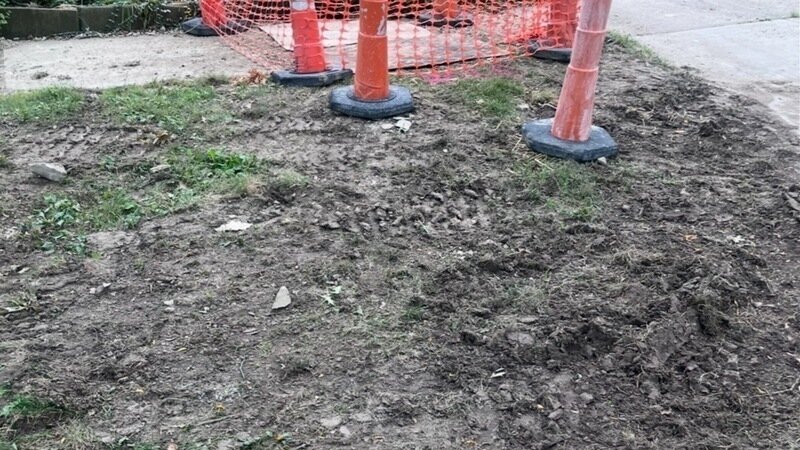
It is time to write the EPA immediately and show them this is community priority. If we do not prevent excavation of the tree lawn here, the city may use this as a precedent to continue the SSO work excavating in the tree lawns all along Lomond. The city continues to avoid answering this charge.
We urgently need to voice our concerns through letters/emails to Julia Martin at the EPA.
Two ways to do it.
- Copy and paste from text below, edit as needed, sign, email to Ms. Martin
- Email Ms. Martin using your own words.
Thank you! We CAN make our voices heard!
Julia Martin, Project Officer
State and Tribal Programs and Support Branch
Water Division
U.S. EPA Region 5
Office: 312-353-7632 / Martin.Julia@epa.gov
SAMPLE TEXT FOR LETTER BELOW:
August 15, 2026
To: US EPA Region 5 Staff
Re: Lomond Boulevard / Lynnfield Road SSO Project — Request for Full Environmental Review and Denial of Revised CATEX, City of Shaker Heights, Cuyahoga County, Ohio
Dear EPA Officials:
We are residents of the Lomond Boulevard and Lynnfield Road neighborhoods in Shaker Heights, Ohio, and we respectfully request that the Environmental Protection Agency not issue a revised Categorical Exclusion (CATEX) for the City of Shaker Heights’ Lomond/Lynnfield Sanitary Sewer Overflow (SSO) Project until appropriate studies have been completed and communicated with the city’s taxpayers.
Instead, we ask the EPA to require an appropriate environmental assessment of the project and its actual and reasonably foreseeable impacts on neighborhood homes, mature trees, drainage and groundwater conditions, wildlife habitat, soil stability, stormwater management, and the surrounding residential environment.
Our request is not based merely on disagreement with the City’s decision to address its sanitary sewer infrastructure. We recognize the importance of correcting SSO problems and improving aging infrastructure. Our concern is that the project has proceeded under an environmental characterization that does not accurately reflect either the conditions known to exist at the project site or the impacts that have become apparent during construction.
The basis for the original CATEX appears materially incomplete
The original CATEX was presented to the EPA as though this were a relatively minor infrastructure project with limited environmental implications. However, important facts and circumstances concerning the project area were either omitted or inadequately disclosed.
Among the information that residents believe should have been disclosed and evaluated are:
• The project was characterized as “minor,” despite its location within an established residential neighborhood and its substantial impacts on mature trees, residential properties, drainage, soils, and the public right-of-way, as well as a plan to work within a roadway for which the city acknowledges they do not have full and accurate documentation of underground utilities.
• The existence of a problematic underground creek beneath Lomond Boulevard was not identified in the environmental characterization provided to the EPA. The presence of subsurface water in the project area is highly relevant to excavation, boring, soil stability, groundwater movement, erosion, settlement, and potential impacts to nearby homes and infrastructure, as well as on-going impacts to the integrity of our important underground water resources.
• Photographs submitted in connection with the original environmental review did not depict the nine mature legacy oak trees located within the project area. These trees are not incidental landscaping. They are substantial, mature trees that provide shade, stormwater interception, habitat, urban heat control, carbon storage, and other ecological services accumulated over many decades. Some of these trees are already harmed due to previously failed de-watering pumps at their roots and contractors driving trucks over tree lawns. Further de-watering will destroy the canopy whether or not the SSO construction can continue. This activity must be stopped from proceeding until a full study is undertaken and plans approved.
• EPA was reportedly assured that there was no public disagreement concerning the project before the City had even informed the affected public that the project existed. A representation that there was no public disagreement cannot reasonably establish the absence of public concern when the affected residents had not yet been informed of the project.
These omissions are particularly concerning because the environmental review process depends upon an accurate description of the project and the environment in which it will occur.
To move the project into the tree lawn would now affect the decision of the Ohio State Historic Preservation Officer. The character of the neighborhood and the presence of mature legacy trees are important components of the physical and cultural environment that will be affected by construction.
Construction has now demonstrated that the project presents environmental risks that cannot reasonably be dismissed as minimal
More than a year of construction activity has provided residents with direct evidence of conditions and impacts that were not apparent from the City’s original characterization. Residents have observed what we believe to be substandard construction practices and inadequate environmental controls on both Lomond Boulevard and Lynnfield Road, including:
1. Significant and prolonged impacts to mature trees
Construction activities have resulted in careless damage to trees and their surrounding root zones. The project has also placed the nine legacy oak trees at substantial risk.These trees cannot simply be considered replaceable landscaping. Their age, size, ecological function, and contribution to the neighborhood make their loss effectively permanent on any meaningful human timescale.
The City had previously recognized the importance of its urban forest through its 2021 Master Tree Plan, yet the treatment of mature trees during this project appears inconsistent with the protection of that resource.
2. Prolonged inadequate erosion and sediment control
Residents have lived with construction activity for more than a year in an area that has already been identified as vulnerable to flooding. Despite this vulnerability, erosion-control measures have, at various times, been inadequate, incomplete, or poorly maintained. This raises legitimate concerns regarding sediment movement, stormwater conveyance, drainage patterns, soil loss, and potential impacts to downstream properties and receiving waters.
The issue is not simply the temporary appearance of a construction site. It is whether construction practices are altering drainage and sediment conditions in an already flood-sensitive residential area.
3. Prolonged high levels of construction dust
Residents, vegetation, and wildlife have been exposed for many months to substantial quantities of construction dust. The duration of the exposure is significant. Dust has not been an isolated or unavoidable momentary consequence of construction; it has been an ongoing condition associated with inadequate dust-mitigation practices. This raises questions regarding impacts on neighboring homes, vegetation, wildlife, soil, stormwater runoff, and the general residential environment.
4. Subsurface conditions and the underground creek
The known or reported presence of an underground watercourse beneath Lomond Boulevard raises particularly serious questions about whether the project’s environmental and engineering review adequately characterized subsurface conditions. Residents understand that an underground stream or significant subsurface water feature exists at approximately 30 feet below portions of the construction area. Such a condition should not be treated as irrelevant to a project involving excavation, boring, sewer installation, groundwater movement, and changes to subsurface soils. The environmental consequences of disturbing such a feature should be established through appropriate professional investigation rather than assumed away.
The project’s actual construction history makes a revised CATEX inappropriate
The purpose of environmental review is not simply to determine whether a project sounds environmentally benign on paper. It is to determine whether the project, as actually designed and constructed, may cause significant adverse environmental effects. The circumstances now before the EPA are substantially more consequential than the description that supported the original CATEX.
The project involves:
• mature and historically significant urban forest resources;
• a residential neighborhood containing established homes immediately adjacent to construction;
• known or reported subsurface water conditions;
• an area vulnerable to flooding;
• prolonged soil disturbance;
• prolonged erosion and sediment-control concerns;
• prolonged construction dust;
• impacts to mature trees and their root systems;
• substantial excavation and/or boring activities;
• and a demonstrated history of construction practices that residents believe have not adequately protected the surrounding environment.
These circumstances warrant actual investigation and analysis, not simply an administrative revision of the previous categorical exclusion.
EPA’s own environmental-review materials recognize that when environmental conditions or project circumstances change significantly, additional environmental review may be warranted rather than simply allowing the prior determination to stand.
We respectfully request the following
We ask the EPA to:
1. Decline to issue a revised CATEX based solely upon the City’s existing environmental documentation.
2. Require an appropriate environmental assessment of the Lomond/Lynnfield project before additional environmental approvals are granted.
3. Independently verify the project’s subsurface and hydrologic conditions, including the reported underground creek and groundwater conditions beneath and adjacent to the construction area.
4. Evaluate potential impacts on neighboring homes, including risks associated with excavation, de-watering, subsidence, soil movement, groundwater alteration, drainage changes, vibration, and construction activity.
5. Require an independent assessment of the project’s impacts on mature trees, including the nine legacy oak trees, their root zones, and the cumulative ecological value of the urban forest being affected.
6. Evaluate the project’s erosion, sediment, stormwater, and flood-related impacts, including whether construction practices have increased risks to surrounding properties or altered existing drainage patterns.
7. Evaluate the project’s prolonged dust impacts and the adequacy of dust-control measures.
8. Review the factual accuracy and completeness of the information upon which the original CATEX was based, including the project’s characterization as “minor,” the omission of the underground creek, the historic-district status of Lomond Boulevard, the photographs that failed to depict the legacy oak trees, and the representation concerning the absence of public disagreement.
9. Require the City to provide the engineering, geotechnical, environmental, arboricultural, construction, and project-selection documentation necessary for an independent assessment of the project’s impacts and alternatives.
10. Provide affected residents with an opportunity for meaningful public participation before the EPA makes a new environmental determination.
This request is about responsible infrastructure, not opposition to infrastructure
We support responsible investment in sanitary sewer infrastructure and the elimination of sanitary sewer overflows. We also believe that infrastructure projects should be designed and constructed in a manner that protects the homes, trees, waterways, wildlife, and neighborhoods in which they are located.
A categorical exclusion should not become a mechanism for avoiding meaningful environmental scrutiny when the facts demonstrate that a project may have significant environmental consequences.
The residents of Lomond Boulevard and Lynnfield Road have now experienced the consequences of this project for more than a year. We respectfully ask the EPA to consider that firsthand evidence, rather than relying exclusively upon the City’s original characterization of the project.
We therefore respectfully request that the EPA deny or decline to issue a revised CATEX for the Lomond/Lynnfield SSO Project and require an appropriate environmental study before allowing the project to proceed under an abbreviated environmental review.
We appreciate your consideration of this request and ask that the EPA place this letter and the accompanying resident comments and documentation in the project record.
Respectfully,
Concerned Residents of Lomond Boulevard, Lynnfield Road and Shaker Heights
Name
Address
Signature / Date