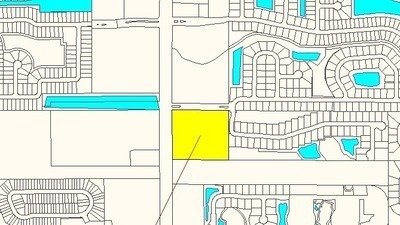
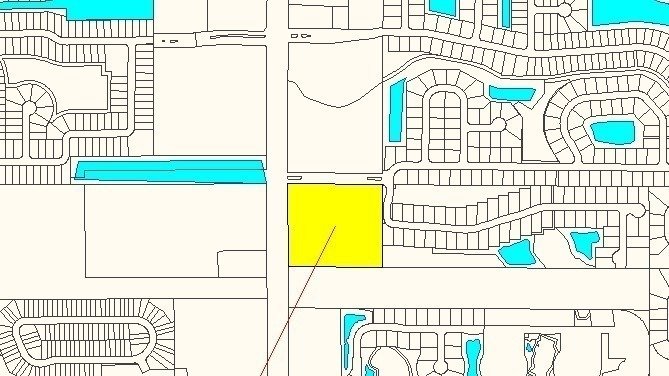
Stop Cumberland Farms Development at Wickham Rd. and Summerbrook Community Preserve
The Issue
We, the undersigned residents affected by the requested zoning change at N Wickham Road at Summerbrook Preserve Communities do hereby oppose the proposed change at the said location.
This proposed Cumberland Farms Mega Gas Station / Convenience Store is out of character with its surrounding area. Should the proposed change be approved, our community will be changed in many significant ways for the worse. For example:
We will be next door to a commercial hub not unlike rest areas on major highways barely buffered by a thin layer of screening trees and shrubs. We will lose our peaceful enjoyment and privacy to the noise, the fumes, stress and hassle.
As our community loses its sense of enclosure, it loses a fundamental appeal associated with any desirable communities, leading to an inevitable decline in property value.
Additional traffic due to the development will significantly exacerbate the existing congestion on Wickham Rd. making it dangerous, if not impossible, to enter Wickham Road South from the Summerbrook Communities especially during peak hours when it matters the most.
The increased traffic and changed traffic pattern will render this section of Wickham Rd. pedestrian unfriendly or even hostile, unsafe for local residents, either walking or driving.
A mega gas station + convenience store at the proposed location will most likely draw heavy traffic, especially out-of-towners from through traffic on I-95, causing unwanted congregations, conducive to drugs, violence and crime.
The gas station will pose a hazard to our environment and health as is well established of all gas stations adjacent to residential areas.
While the detriments to us are severe and obvious, there is no justification beyond self-interest of Cumberland Farms. The service provided by the proposed Cumberland Farms Mega Station is neither unique nor needed, as evidenced by the abundance of similar businesses in close proximity. The harms it causes are neither necessary nor reasonable for residents of local community.
We submit to the Board that this is a radical zoning adjustment request. It is inappropriate, and is harmful to the local residents. We trust that the Board will consider all the detriments this request will cause to the residents directly and immediately affected as well as its negative impact to the City of Melbourne in the long run, and act in accordance with the city's land use plan and the spirit of zoning laws / regulations and best practice.
Some other things to consider:
Convenience Stores & Gas Stations
While convenience stores provide benefits, they can have a severe quality of life impact when allowed too close to homes and other inappropriate locations. In fact, new stores and stations can even harm existing establishments, particularly when predatory pricing is employed to eliminate competition.
What Is A Convenience Store...Now?
When the first convenience store opened in 1927, they were mostly small, Mom and Pop establishments where one could buy snacks, basic kitchen-health supplies, beverages, prepared foods, etc. Beginning in the 1980s, convenience stores were combined with gas stations. Today, a growing number offer simple vehicle maintenance as well.
Today, there are more than 140,000 convenience stores in the USA. It is this attribute which prompts 80% of Americans to prefer shopping at a convenience store vs. supermarkets. In fact, 100 million Americans shop at convenience stores every day.
Crime
Convenience store hold-ups account for about 6% of all robberies in the nation. One study noted that:
"Convenience store employees suffer from high rates of workplace homicide, second only to taxicab drivers."
Criminal activity, loitering etc, increases most notably between the hours of 10 PM and 4 AM. This also increases exponentially with establishments selling alcohol.
Health Effects
The health issue as it relates to high volume locations is a relatively new concern. The reason is that historically the traditional gas stations never pumped that much fuel per year, so the issue never arose. However, with the advent of hypermarkets (large format c-stores; grocery stores and mass merchandisers) that pump large volumes, anywhere from 2 to 8 times more than a traditional gas station, the concentration of ozone became an issue. These higher volume locations create lines of cars and that adds to the ozone issue.
A number of compounds injurious to human health can be emitted while fueling a vehicle and from the exhaust of idling engines. Health effects range from nausea to cancer. The problem is particularly severe at ultra-high volume gas stations, like those associated with some big-box stores.
A typical station dispenses about a million gallon of fuel annually. At least one state recommends a minimum 50-foot separation between homes and a typical station.
Ultra-high volume stations dispense 3.6 million gallons or more per year. The current minimum recommended separation distance for these stations is 300 feet, though a much greater setback may be needed under some circumstances.
Idling engines, particularly those in large diesel trucks, emit a large quantity of particulates into the local atmosphere. These particulates can pose a significant health risk for those living (including our endangered species preserve) near convenience store/truck stops.
Following are a couple of other examples of health effects associated with convenience stores.
A California study noted a 50% increase in smoking among adolescents exposed to tobacco advertising during weekly visits to small grocery, convenience or liquor stores;
Poor, inner city neighborhoods tend to lack access to supermarkets with convenience stores and fast food establishments serving as poor substitutes. An East Harlem study found that children with a convenience store on their block were significantly more likely to have a high Body Mass Index.
Lighting Impacts
There's a phenomenon known as ratcheting where one business installs bright lights. The new lights cause nearby establishments to look darker than before, so they install brighter lights and on the upward spiral goes. Ratcheting can greatly increase light trespass impacts to area residents.
Noise
Between back-up beepers, loud car stereos, and customers shouting across the gas bays, convenience stores can be extremely noisy. Add the sound of air-guns from service bays and noise worsens. Make it a late-night or all-night establishment and you have a use which definitely does not belong near homes.
So how close is too close? Recommendations are typically a minimum separation of 300 feet between homes and late-night/all-night stores. However, a site-specific noise analysis may show a lesser setback will adequately protect area homes. Such an analysis should distinguish between rural and urban settings. A nighttime noise level of 55 dBA may be OK in a city or suburb while 45 dBA is more appropriate for rural areas.
Blighting
Every community has boarded up stores and even entire blocks or shopping centers that have been abandoned. These lost commercial opportunities are frequently poorly maintained, making them unattractive and unpleasant neighbors. This is known as blight.
One of the causes of blight is excessive or unfair competition. There is an upper limit to the number of retail establishments any area can handle. In urban areas with high traffic volumes there can be a thriving gas station-convenience store on nearly every corner. Whereas rural settings may only support a single store at only one out of every ten or so major intersections.
Some localities have adopted limits on how many convenience stores or gas stations can exist within a given area. Others require a market analysis to demonstrate that an area can accommodate another store. But applying these planning tools can be tricky in situations where an aging c-store would be put out of business by a new establishment with four times the floor space.
Predatory Pricing
Many establishments use low gas prices to attract customers into the store. Profit margins are generally much higher on the goods sold in the store when compared to gas sales. National chains can purchase and sell gas at much lower prices when compared to smaller (Mom and Pop) stores.
It is not uncommon for the national chains to sell gas so low that it draws many customers away from existing stores. This is known as competition or predatory pricing depending upon whether you are the national chain or the Mom or Pop. However, once the competition goes out of business gas prices frequently rise. Some jurisdictions have laws against predatory pricing, but enforcement can be challenging.
Visual Impacts
In upscale areas, some convenience stores are almost attractive. But few homeowners would chose a convenience store as a prominent item in their view shed. The problem is compounded if blighting forces owners to cut back on store upkeep or to close.
Aquatic Resource Impacts
Because of the high traffic volume and refueling, convenience stores-gas stations pose an unusually severe threat to ground and surface waters. Adding vehicle servicing facilities increases the threat. One study found that contaminant levels in convenience store-gas station runoff were 5- to 30-times higher when compared to residential runoff.
Fuel storage tanks and pipelines pose another source of contamination, though the design of both has improved dramatically over the past couple of decades. Spillage at the pump is a more likely source of fuel release into nearby waterways. In fact, Johns Hopkins University researchers found that an average of 40 gallons of gasoline is spilled at a typical gas station per year at the pumps. The JHU researchers also found that a significant portion of the spilled gasoline can migrate through the concrete pads at many fueling stations.
So how far should a gas station be from a well or surface waters to reduce the likelihood of contamination to a reasonable level? Well, the key question is actually how far can one anticipate that a plume of spilled gasoline will travel underground. One review of scientific studies of plume travel indicated that the 90th percentile distance is 400 feet. Add another 100 feet for installing grout curtains or other containment measures and a gas station should be no closer than 500 feet to a well, wetland, spring, stream, river, pond, lake, reservoir or tidal waters.
Best Management Practices (BMPs) are available that reduce the probability of contamination. One study indicated bioretention facilities could remove 80% - 95% of hydrocarbons in synthetic stormwater runoff. But even the most effective BMPs may not be enough if a store or station adjoins highly sensitive waters.
Community Character
Originally, most commercial uses were located in downtown areas. With the automobile new convenience stores and other commercial uses were increasingly located in strips or along major highway off ramps. This ugly form of growth is only accessible by car.
Modern planning philosophy calls for locating convenience stores in neighborhood scale commercial areas accessible by walking, bicycling or car. Of course there will always be a need to locate convenience stores and gas stations along major highways. However, managing growth to bring convenience stores and other retail outlets back to downtown areas could do much to revitalize blighted areas and enhance our quality of life.
The Nitty Gritty:
Parcel ID: 26-37-31-00-00262.0-0000.00
Tax ID: 2620515
Owner Information:
Owner Name: WICKHAM SUMMERBROOK LLC
Mailing Address: 4053 MAPLE RD
City, State, Zip Code: AMHERST, NY 14226

Petition Closed
The Issue
We, the undersigned residents affected by the requested zoning change at N Wickham Road at Summerbrook Preserve Communities do hereby oppose the proposed change at the said location.
This proposed Cumberland Farms Mega Gas Station / Convenience Store is out of character with its surrounding area. Should the proposed change be approved, our community will be changed in many significant ways for the worse. For example:
We will be next door to a commercial hub not unlike rest areas on major highways barely buffered by a thin layer of screening trees and shrubs. We will lose our peaceful enjoyment and privacy to the noise, the fumes, stress and hassle.
As our community loses its sense of enclosure, it loses a fundamental appeal associated with any desirable communities, leading to an inevitable decline in property value.
Additional traffic due to the development will significantly exacerbate the existing congestion on Wickham Rd. making it dangerous, if not impossible, to enter Wickham Road South from the Summerbrook Communities especially during peak hours when it matters the most.
The increased traffic and changed traffic pattern will render this section of Wickham Rd. pedestrian unfriendly or even hostile, unsafe for local residents, either walking or driving.
A mega gas station + convenience store at the proposed location will most likely draw heavy traffic, especially out-of-towners from through traffic on I-95, causing unwanted congregations, conducive to drugs, violence and crime.
The gas station will pose a hazard to our environment and health as is well established of all gas stations adjacent to residential areas.
While the detriments to us are severe and obvious, there is no justification beyond self-interest of Cumberland Farms. The service provided by the proposed Cumberland Farms Mega Station is neither unique nor needed, as evidenced by the abundance of similar businesses in close proximity. The harms it causes are neither necessary nor reasonable for residents of local community.
We submit to the Board that this is a radical zoning adjustment request. It is inappropriate, and is harmful to the local residents. We trust that the Board will consider all the detriments this request will cause to the residents directly and immediately affected as well as its negative impact to the City of Melbourne in the long run, and act in accordance with the city's land use plan and the spirit of zoning laws / regulations and best practice.
Some other things to consider:
Convenience Stores & Gas Stations
While convenience stores provide benefits, they can have a severe quality of life impact when allowed too close to homes and other inappropriate locations. In fact, new stores and stations can even harm existing establishments, particularly when predatory pricing is employed to eliminate competition.
What Is A Convenience Store...Now?
When the first convenience store opened in 1927, they were mostly small, Mom and Pop establishments where one could buy snacks, basic kitchen-health supplies, beverages, prepared foods, etc. Beginning in the 1980s, convenience stores were combined with gas stations. Today, a growing number offer simple vehicle maintenance as well.
Today, there are more than 140,000 convenience stores in the USA. It is this attribute which prompts 80% of Americans to prefer shopping at a convenience store vs. supermarkets. In fact, 100 million Americans shop at convenience stores every day.
Crime
Convenience store hold-ups account for about 6% of all robberies in the nation. One study noted that:
"Convenience store employees suffer from high rates of workplace homicide, second only to taxicab drivers."
Criminal activity, loitering etc, increases most notably between the hours of 10 PM and 4 AM. This also increases exponentially with establishments selling alcohol.
Health Effects
The health issue as it relates to high volume locations is a relatively new concern. The reason is that historically the traditional gas stations never pumped that much fuel per year, so the issue never arose. However, with the advent of hypermarkets (large format c-stores; grocery stores and mass merchandisers) that pump large volumes, anywhere from 2 to 8 times more than a traditional gas station, the concentration of ozone became an issue. These higher volume locations create lines of cars and that adds to the ozone issue.
A number of compounds injurious to human health can be emitted while fueling a vehicle and from the exhaust of idling engines. Health effects range from nausea to cancer. The problem is particularly severe at ultra-high volume gas stations, like those associated with some big-box stores.
A typical station dispenses about a million gallon of fuel annually. At least one state recommends a minimum 50-foot separation between homes and a typical station.
Ultra-high volume stations dispense 3.6 million gallons or more per year. The current minimum recommended separation distance for these stations is 300 feet, though a much greater setback may be needed under some circumstances.
Idling engines, particularly those in large diesel trucks, emit a large quantity of particulates into the local atmosphere. These particulates can pose a significant health risk for those living (including our endangered species preserve) near convenience store/truck stops.
Following are a couple of other examples of health effects associated with convenience stores.
A California study noted a 50% increase in smoking among adolescents exposed to tobacco advertising during weekly visits to small grocery, convenience or liquor stores;
Poor, inner city neighborhoods tend to lack access to supermarkets with convenience stores and fast food establishments serving as poor substitutes. An East Harlem study found that children with a convenience store on their block were significantly more likely to have a high Body Mass Index.
Lighting Impacts
There's a phenomenon known as ratcheting where one business installs bright lights. The new lights cause nearby establishments to look darker than before, so they install brighter lights and on the upward spiral goes. Ratcheting can greatly increase light trespass impacts to area residents.
Noise
Between back-up beepers, loud car stereos, and customers shouting across the gas bays, convenience stores can be extremely noisy. Add the sound of air-guns from service bays and noise worsens. Make it a late-night or all-night establishment and you have a use which definitely does not belong near homes.
So how close is too close? Recommendations are typically a minimum separation of 300 feet between homes and late-night/all-night stores. However, a site-specific noise analysis may show a lesser setback will adequately protect area homes. Such an analysis should distinguish between rural and urban settings. A nighttime noise level of 55 dBA may be OK in a city or suburb while 45 dBA is more appropriate for rural areas.
Blighting
Every community has boarded up stores and even entire blocks or shopping centers that have been abandoned. These lost commercial opportunities are frequently poorly maintained, making them unattractive and unpleasant neighbors. This is known as blight.
One of the causes of blight is excessive or unfair competition. There is an upper limit to the number of retail establishments any area can handle. In urban areas with high traffic volumes there can be a thriving gas station-convenience store on nearly every corner. Whereas rural settings may only support a single store at only one out of every ten or so major intersections.
Some localities have adopted limits on how many convenience stores or gas stations can exist within a given area. Others require a market analysis to demonstrate that an area can accommodate another store. But applying these planning tools can be tricky in situations where an aging c-store would be put out of business by a new establishment with four times the floor space.
Predatory Pricing
Many establishments use low gas prices to attract customers into the store. Profit margins are generally much higher on the goods sold in the store when compared to gas sales. National chains can purchase and sell gas at much lower prices when compared to smaller (Mom and Pop) stores.
It is not uncommon for the national chains to sell gas so low that it draws many customers away from existing stores. This is known as competition or predatory pricing depending upon whether you are the national chain or the Mom or Pop. However, once the competition goes out of business gas prices frequently rise. Some jurisdictions have laws against predatory pricing, but enforcement can be challenging.
Visual Impacts
In upscale areas, some convenience stores are almost attractive. But few homeowners would chose a convenience store as a prominent item in their view shed. The problem is compounded if blighting forces owners to cut back on store upkeep or to close.
Aquatic Resource Impacts
Because of the high traffic volume and refueling, convenience stores-gas stations pose an unusually severe threat to ground and surface waters. Adding vehicle servicing facilities increases the threat. One study found that contaminant levels in convenience store-gas station runoff were 5- to 30-times higher when compared to residential runoff.
Fuel storage tanks and pipelines pose another source of contamination, though the design of both has improved dramatically over the past couple of decades. Spillage at the pump is a more likely source of fuel release into nearby waterways. In fact, Johns Hopkins University researchers found that an average of 40 gallons of gasoline is spilled at a typical gas station per year at the pumps. The JHU researchers also found that a significant portion of the spilled gasoline can migrate through the concrete pads at many fueling stations.
So how far should a gas station be from a well or surface waters to reduce the likelihood of contamination to a reasonable level? Well, the key question is actually how far can one anticipate that a plume of spilled gasoline will travel underground. One review of scientific studies of plume travel indicated that the 90th percentile distance is 400 feet. Add another 100 feet for installing grout curtains or other containment measures and a gas station should be no closer than 500 feet to a well, wetland, spring, stream, river, pond, lake, reservoir or tidal waters.
Best Management Practices (BMPs) are available that reduce the probability of contamination. One study indicated bioretention facilities could remove 80% - 95% of hydrocarbons in synthetic stormwater runoff. But even the most effective BMPs may not be enough if a store or station adjoins highly sensitive waters.
Community Character
Originally, most commercial uses were located in downtown areas. With the automobile new convenience stores and other commercial uses were increasingly located in strips or along major highway off ramps. This ugly form of growth is only accessible by car.
Modern planning philosophy calls for locating convenience stores in neighborhood scale commercial areas accessible by walking, bicycling or car. Of course there will always be a need to locate convenience stores and gas stations along major highways. However, managing growth to bring convenience stores and other retail outlets back to downtown areas could do much to revitalize blighted areas and enhance our quality of life.
The Nitty Gritty:
Parcel ID: 26-37-31-00-00262.0-0000.00
Tax ID: 2620515
Owner Information:
Owner Name: WICKHAM SUMMERBROOK LLC
Mailing Address: 4053 MAPLE RD
City, State, Zip Code: AMHERST, NY 14226
The Decision Makers
Petition Updates
Share this petition
Petition created on January 7, 2016