Petition updateExpel an Animal Slaughterer from New York UniversityImpact Statement from Pacific Rim Conservation

Timothy PhamHonolulu, HI, United States
Jul 8, 2017
It has been less than two days and we have reached over 12,000 signatures. This was a simple petition that I did not expect to receive such an incredible community effort. Thank you to those that made suggestions to the text of the petition and recipients (growing from 1 to 8!).
Below is one of the impact statements from Pacific Rim Conservation. These impact statements were requested by the court and PRC gave 5 impacts of individual birds themselves. Please visit https://www.facebook.com/prconservation/ if you would like read them all. We hope after reading these, we can recruit more signatures and continue to impact the decision making process of the NYU Board.
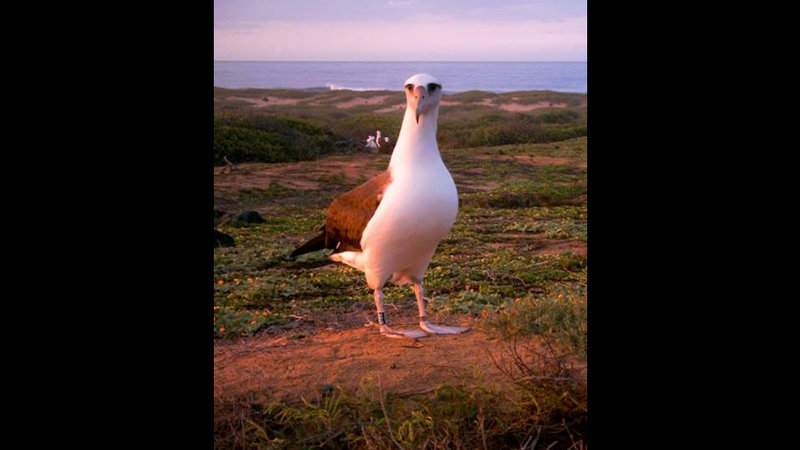
"Lonesome George was one of the first birds we banded at Kaena Point in early 2004 when our study began. He was an adult that already had a mate and a nest, so we knew he was at least eight years old, but it is likely that he was much older because Laysan Albatross can live for more than 65 years. He returned faithfully to the same small hill at Kaena Point year after year, where he shared in the duties of raising a chick with his mate. But in 2008, his mate didn’t return. Each year since 2008, George returned to his former nest site and called to birds flying overhead, in hopes that one of them was his long-lost mate, but each year she did not return. Scientists are taught to not anthropomorphize or name their study subjects, but it was unavoidable in this case. He was now Lonesome George, named after the Galapagos Tortoise who was the last of his species. Alone on his little hill, Lonesome George waited and waited for her, but she never returned. He became so accustomed to us walking by that he would hardly move when we approached. After several years we assumed that George was destined to remain a bachelor. Whether by his choice or by design, we were not sure.
On December 8th 2015, we were ecstatic to find that George was sitting on an egg- his first in eight years! In albatrosses, after a female has laid her egg, she will leave for up to three weeks to feed at sea in order to regain her energy. George sat faithfully on the egg from December 8th until sometime after December 20th, when his new mate returned to resume her incubation duties. However, when we visited Kaena Point on the morning of December 29th, all we found was George standing over a smashed egg and a pair of feet with no bands on them. After waiting for eight years and finding a new mate, George was lonesome again. George returned for just a single day after his mate was murdered, and we have not seen him again. We do not know if he abandoned Oahu for another island, if decided to live the rest of his life at sea, or if he died, perhaps of a broken heart. Below is a photo of George standing on his ruined nest. Albatross, like many humans, will pair for life. George waited more than eight years before finding a new mate only to have her killed and dismembered just a few days after he had finally found her. George was the most faithful and confiding bird we had at Kaena- if you walked by him, he would playfully nibble on your shoes or whistle a greeting to birds flying overhead. We miss seeing him on his regular hill, and his absence, perhaps more than any other bird, reminds us that things are different as a result of the actions of those teenagers.
We could write stories like this for virtually every bird at Kaena. Every bird in some way has contributed to knowledge that we didn’t have before, not only about albatrosses, but in many cases, about birds general, Hawaiian natural history, and even people. This knowledge relies on knowing the history of every individual and accounting for those individuals throughout their lives. Without knowing the fate of each individual bird, the long-term value of these data is compromised to some degree. When the perpetrators of this crime killed the birds and stole their bands as trophies, the contributions the birds could have made toward understanding their species also were destroyed. Kaena Point represents one of the longest and most complete research programs on albatrosses anywhere in the world. The discoveries and stories we’ve told are only a small fraction of this research. It was not just the birds that were lost that night, but a portion of a long-term research program aimed at better understanding animal behavior and ecology. We hope that tomorrow at Christian Gutierrez’s sentencing, Hawaii’s environmental court understands this importance and registers the outrage that we all feel over this case."
Pacific Rim Conservation maintains and restores native bird diversity, populations, and ecosystems in Hawaii and the Pacific Region. If you would like to do more for the birds, consider making a donation or volunteering at this link: http://www.pacificrimconservation.org/take-action/
Copy link
WhatsApp
Facebook
Nextdoor
Email
X