REQUIRE MICRO-PLASTIC FILTERS ON WASHING MACHINES
The Issue
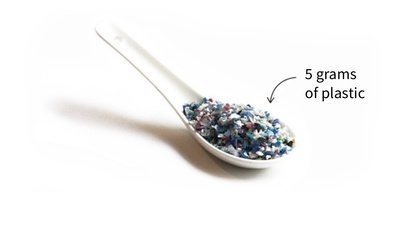
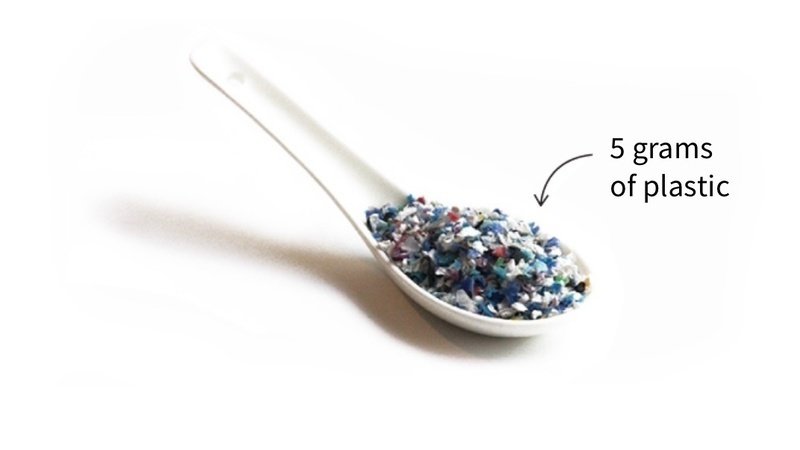
The above image is how much micro plastic you are ingesting per week (5 grams, the size of a credit card), primarily from drinking water. Micro and nano plastics have been found in significant amounts in our rainwater, aquifers, bottled water, tap water, snowfall in Colorado and Norway, farm soil in America, and even in human placentas and fetuses in Italy. The top 3 sources of micro and nano plastics entering our waterways are: synthetic clothing, car tires, and paint.
A simple, inexpensive step that will significantly reduce the amount of micro and nano plastics entering our water is to require manufacturers to include micro plastic filters on all new washing machines. 2/3's of all clothing made and sold use synthetic materials - most of which are types of plastic made from oil (polypropylene). The average wash cycle of clothing produces hundreds of thousands to millions of micro plastic fibres as the wash cycle causes plastic fibres to shed from the garment, which are then washed into local waterways and continue to breakdown over time becoming smaller and smaller.
Just as drying machines for clothing have lint filters, manufacturers could install micro plastic filters on washing machines to remove these toxic pollutants before they escape into our environment where wildlife and humans end up ingesting them.
You do NOT need to be from America or any particular country to sign this petition, ANY PERSON on Planet Earth can sign this petition, and once we have a significant number of signatures (100k+), ANYONE can use this petition to lobby your local city, state/province, or national government to pass a law requiring manufacturers to install micro plastic filters on new washing machines.
The health implications of ingesting micro and nano plastics daily are not fully known, but it is clear they have negative effects on human and wildlife health. Initial research has shown that plastics and their additives can cause inter-generational impacts on hormones and DNA, weakening of the immune system, and the reduction of fertility in men and women. Styrene, a chemical found in plastic and some food packaging, is linked to nervous system problems, hearing loss and cancer. Plastic particles can also accumulate polychlorinated biphenyls (PCBs) that are linked to various cancers, a weakened immune system, and reproductive problems. Please see links to various scientific sources below for evidence.
THANK YOU FOR SIGNING, PLEASE SHARE WITH AS MANY AS YOU CAN!
JAMES ALOFS
The contribution of washing processes of synthetic clothes to microplastic pollution - Nature
Microfiber Masses Recovered from Conventional Machine Washing of New or Aged Garments - ESC
Arctic Ocean water filled with micro plastic - CNN
Pervasive distribution of polyester fibres in the Arctic Ocean - Nature
Humans ingest 5 grams of microplastic per week - Newcastle University
Human ingestion of Microplastics - University of Victoria
You're literally eating microplastics! - Washington Post

Petition Closed
The Issue
The above image is how much micro plastic you are ingesting per week (5 grams, the size of a credit card), primarily from drinking water. Micro and nano plastics have been found in significant amounts in our rainwater, aquifers, bottled water, tap water, snowfall in Colorado and Norway, farm soil in America, and even in human placentas and fetuses in Italy. The top 3 sources of micro and nano plastics entering our waterways are: synthetic clothing, car tires, and paint.
A simple, inexpensive step that will significantly reduce the amount of micro and nano plastics entering our water is to require manufacturers to include micro plastic filters on all new washing machines. 2/3's of all clothing made and sold use synthetic materials - most of which are types of plastic made from oil (polypropylene). The average wash cycle of clothing produces hundreds of thousands to millions of micro plastic fibres as the wash cycle causes plastic fibres to shed from the garment, which are then washed into local waterways and continue to breakdown over time becoming smaller and smaller.
Just as drying machines for clothing have lint filters, manufacturers could install micro plastic filters on washing machines to remove these toxic pollutants before they escape into our environment where wildlife and humans end up ingesting them.
You do NOT need to be from America or any particular country to sign this petition, ANY PERSON on Planet Earth can sign this petition, and once we have a significant number of signatures (100k+), ANYONE can use this petition to lobby your local city, state/province, or national government to pass a law requiring manufacturers to install micro plastic filters on new washing machines.
The health implications of ingesting micro and nano plastics daily are not fully known, but it is clear they have negative effects on human and wildlife health. Initial research has shown that plastics and their additives can cause inter-generational impacts on hormones and DNA, weakening of the immune system, and the reduction of fertility in men and women. Styrene, a chemical found in plastic and some food packaging, is linked to nervous system problems, hearing loss and cancer. Plastic particles can also accumulate polychlorinated biphenyls (PCBs) that are linked to various cancers, a weakened immune system, and reproductive problems. Please see links to various scientific sources below for evidence.
THANK YOU FOR SIGNING, PLEASE SHARE WITH AS MANY AS YOU CAN!
JAMES ALOFS
The contribution of washing processes of synthetic clothes to microplastic pollution - Nature
Microfiber Masses Recovered from Conventional Machine Washing of New or Aged Garments - ESC
Arctic Ocean water filled with micro plastic - CNN
Pervasive distribution of polyester fibres in the Arctic Ocean - Nature
Humans ingest 5 grams of microplastic per week - Newcastle University
Human ingestion of Microplastics - University of Victoria
You're literally eating microplastics! - Washington Post
The Decision Makers
Petition Updates
Share this petition
Petition created on January 11, 2021