Petition updateMayor Tory: Declare Homelessness An Emergency To Prevent More Deaths And Suffering
Homelessness in Toronto: The facts.

Shelter and Housing Justice Network
Nov 30, 2019
Background on a human social welfare disaster.
- According to Toronto Public Health statistics there are approximately two homeless deaths a week in the City of Toronto. This number is considered low, as hospitals do not participate in the information gathering.
- Eight deaths were recorded over a four-week period October-November, 2019.
- Currently there are hundreds and hundreds of people who are forced to sleep outside. Front-line workers have never seen the situation so severe.
- Tent communities are now popping up in places where they have never been seen before.
- The City has a seasonal response to homelessness. Beginning in November it expands the emergency component of the shelter system, and then contracts it in the spring. This response does not acknowledge that homelessness is 365 days a year, and leaves people on the streets for seven months of the year.
- The City’s response avoids creating real solutions to homelessness such as building transitional, supportive, RGI and social housing, and permanent shelters.
- Over 7,000 men, women and children remain in crowded emergency shelters and overflow motel programs. They are full.
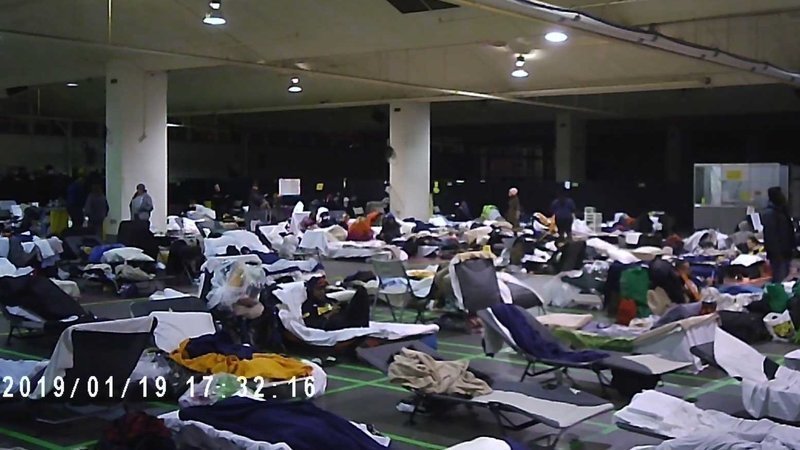
- Between 700 and 1,000 people are forced to sleep year-round in Respite Centres and two overnight drop-ins for women. They are full.
- In winter the faith-based and volunteer run Out of the Cold program provides additional relief with 700 spaces per week. They are full.
- Only one 24-hr warming centre (50 cots), located in a hallway at Metro Hall, opens during Extreme Cold Alerts for the entire city.
- Respite Centres and the Out of the Cold program do not comply with shelter standards. People sleep inches apart in overcrowded facilities. These conditions lead to frequent outbreaks of infectious diseases, lice and bedbugs. The poor conditions, extreme stress and chronic exhaustion experienced in these facilities are causing illness.
- The City's Assessment and Referral Centre on Peter Street has had fifty people a night sleeping in chairs and has turned people away because the system is full.
- The City is issuing eviction notices to people who are visibly squatting outside.
- Over 100,000 households are on Toronto's Centralized Waiting List for social housing. The waiting list ranges from two to fourteen years depending on unit size. Another 14,000 people await supportive housing.
- “Renovictions” rise as landlords take advantage of a 1.1 per cent rental vacancy rate.
- Research shows that 2,000 new shelter beds are required to bring shelter capacity to 90% and to end the reliance on overnight drop-ins and respites for basic shelter.
Photo: Image from a Respite Centre 19/01/19. Provided by Cathy Crowe
Copy link
WhatsApp
Facebook
Nextdoor
Email
X