Aggiornamento sulla petizioneMake it Safe to Cross: Demand for Adequate Pedestrian InfrastructureThis is More Than a Crosswalk. This is a Demand for Safe Streets.

Iggy DwyerOH, Stati Uniti
12 apr 2026
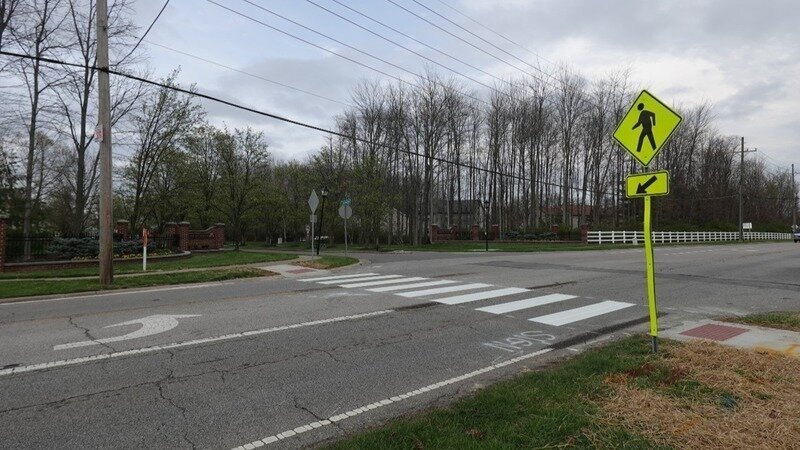
It is absolutely wonderful to see this finished product. From the signs, to the paint, to the tactile pads, it is a tangible fruit of our labor. Thank you, everyone, so much for making this possible.
I feel it is necessary to clarify our mission, given recent social media dissension around this crosswalk.
- This is just one simple crosswalk that doesn’t do much. What’s the real meaning behind this labor?
- It may seem like a small project, but this is part of something called bottom-up reform. It involves seeing a complex problem and tackling it via several small steps. The crosswalk is just one of these small steps, and the big problem is the issue of pedestrian safety. The next small step to achieving this big goal of safety could be sidewalks, or curb bump-outs, or speed reductions, and so on.
- Since Branch Hill Guinea is dangerous, why can’t we just tell drivers to go slower?
- Reducing speed by lowering the number shown on the speed limit sign, increasing policing, or having public awareness campaigns does not work. Picture this: you’re driving your car in a highway-like environment, but the speed limit sign, instead of saying 65, says 25. Will you drive 25? On a street that is designed like a highway, driving 25 feels unnatural. The reality is, driving is a subconscious activity for most people. One will drive the speed they are comfortable with, often without strict regard to the posted speed limit. The street design makes this happen. People are more comfortable driving 65 down a highway environment rather than a local street. The inverse also applies. When we design Branch Hill Guinea to be accommodating for high speed, people will drive at this high speed, despite what the speed limit sign says. If we want to change the speed, then we need to change the design. And yes, speed is very much a problem. As vehicle speed increases, likelihood for a struck pedestrian to die increases almost exponentially. We need to do something about the design of Branch Hill Guinea to make it slower.
- This is an expensive waste of tax dollars!
- This pedestrian infrastructure is not expensive. When compared to car infrastructure, there is very little spending that goes toward pedestrians and other vulnerable road users. On Branch Hill Guinea, cars are treated to up to four lanes at times. Guardrails, large signage, elaborate traffic signals, and other car infrastructure also exists for cars. What do pedestrians get? A noncontinuous thin strip of pavement that connects to very few places—a sidewalk. Only on one side of the street, with few points of crossing. For other vulnerable road users such as cyclists, infrastructure is nonexistent. Oh yeah, and this crosswalk? Some may reasonably assert that it is car infrastructure, because the whole reason it is needed is due to cars. It is to offer a tiny amount of protection to people from these many dangerous two-ton metal boxes traveling at lethal speeds. Without the auto-oriented environment that Branch Hill Guinea is, this crosswalk would not be necessary.
- Why can’t we just tell road users to watch out for each other?
- Much like the answer to the question about speed, telling drivers to “just watch out” does not work. Many North American streets are deadly by design. Take for example, level of service. Level of service is a grading system to judge the speed and volume of a street. Many streets are built to maximize level of service, which inherently takes away safety for all road users. Anything that impedes traffic flow and volume, such as crosswalks or speed bumps, is discouraged. Vulnerable road users do not fare well in an environment where many cars travel at lethal speeds. The design of many streets, including Branch Hill Guinea prioritizes the convenience of vehicles rather than the safety and lives of pedestrians. So no, telling people to “just watch out” does not work in an environment designed for people to make inevitable and mistakes.
Sostieni ora
Firma questa petizione
Copia il link
WhatsApp
Facebook
X
E-mail