
Address Aichi Target 10
The Issue
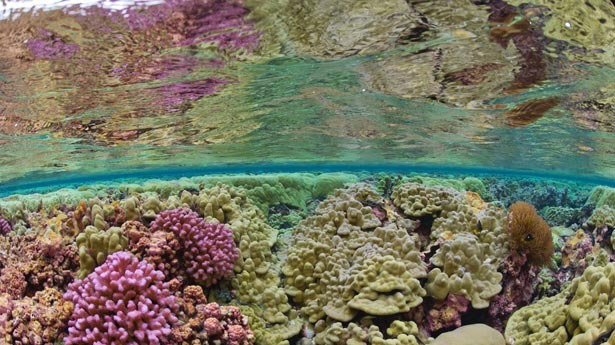
Coral reefs are one of the Earth's most valuable ecosystems. Accounting for less than 0.25% of the oceans, they are habitat to 25% of all marine organisms, including 25% of the world's fish, a critical source of protein for people. Reefs act as barriers against tropical storms and hurricanes to vulnerable coastal nations. These ecosystems even provide medicines for cancer and HIV, with potential for many more to be discovered.
Unfourtunately, coral reefs are also one of the Earth's most fragile ecosystems, under serious threat by the warming climate and acidifying oceans from current CO2 levels. When ocean temperatures become too warm for corals, they lose their ability to produce food. As ocean pH drops, the components of coral skeletons diminish and they can't grow.
Reducing additional stress on coral reefs will make them more resistant to climate change and ocean acidification over a limited amount of time. This time can then be used to tackle these larger issues before coral reefs disappear forever.
In 2010, the 20 Aichi Biodiversity Targets were developed in order to protect global biodiversity. Aichi Target 10 states that human-caused pressures on vulnerable ecosystems impacted by climate change, such as coral reefs, will be minimized by 2015.
It is now 2015 and while CO2 levels continue to rise, Canada has yet to make any real progress towards protecting coral reefs.

Petition Closed
The Issue
Coral reefs are one of the Earth's most valuable ecosystems. Accounting for less than 0.25% of the oceans, they are habitat to 25% of all marine organisms, including 25% of the world's fish, a critical source of protein for people. Reefs act as barriers against tropical storms and hurricanes to vulnerable coastal nations. These ecosystems even provide medicines for cancer and HIV, with potential for many more to be discovered.
Unfourtunately, coral reefs are also one of the Earth's most fragile ecosystems, under serious threat by the warming climate and acidifying oceans from current CO2 levels. When ocean temperatures become too warm for corals, they lose their ability to produce food. As ocean pH drops, the components of coral skeletons diminish and they can't grow.
Reducing additional stress on coral reefs will make them more resistant to climate change and ocean acidification over a limited amount of time. This time can then be used to tackle these larger issues before coral reefs disappear forever.
In 2010, the 20 Aichi Biodiversity Targets were developed in order to protect global biodiversity. Aichi Target 10 states that human-caused pressures on vulnerable ecosystems impacted by climate change, such as coral reefs, will be minimized by 2015.
It is now 2015 and while CO2 levels continue to rise, Canada has yet to make any real progress towards protecting coral reefs.
The Decision Makers

Petition Updates
Share this petition
Petition created on March 30, 2015