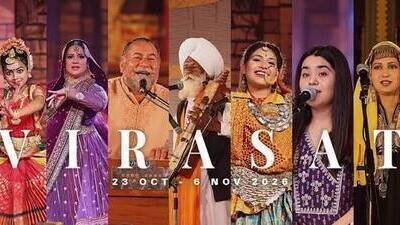

Keep Virasat Free: Let Culture Belong to Everyone
The Issue
Dehradun has always been more than a beautiful city nestled in the foothills of the Himalayas. It is a city of readers, students, teachers, artists, and curious minds—where traditional values coexist with progressive thinking and a love for learning.
For 31 years, Virasat has been a part of that identity.
Organised by REACH, founded in 1995 to preserve India's cultural heritage and connect its folk and classical traditions, Virasat has brought artisan bazaars, craft workshops, scholarly conversations, and extraordinary performances to Dehradun. It has offered people the opportunity to experience India's living cultural heritage, often for the first time.
But what made Virasat particularly special was that you did not need to be an expert, a regular concertgoer, or someone with money set aside for cultural outings to be part of it. You could simply show up.
When I was new to Dehradun, Virasat was the first cultural event I attended in the city. I remember the open ground, the mild October chill, the evenings filled with music and dance, and the joy of walking in, finding a place to sit, and discovering something beautiful. I remember elderly couples watching performances with quiet, satisfied smiles, and young people looking on in awe as classical dancers brought unfamiliar art forms to life. There was something lovely about seeing different generations occupy the same space, sharing an evening without needing anything in common except the willingness to experience it. You could arrive without knowing who was performing, stop to listen to a musician whose name you had never heard, or watch a dance form you had never encountered. You might come for an hour and stay much longer.
That freedom was part of the experience.
And I suspect many people in Dehradun have their own memories of Virasat—of an artist they discovered, a performance that stayed with them, or an evening they spent with family and friends.
For Virasat 2026, entry to the cultural performances has reportedly become ticketed at ₹299 and ₹499, alongside a shift to a closed auditorium.
I understand that organising an event of this scale involves logistical and administrative challenges. Artists deserve fair remuneration and professional performance conditions, and auditoriums offer advantages in seating, acoustics, and weather protection. These are legitimate considerations. But should administrative convenience come at the cost of the very openness that has defined Virasat for 31 years?
When we put a price on entry, we do more than regulate a crowd. We restrict who gets the opportunity to discover art.
A student curious about classical music may hesitate to spend ₹299 on an unfamiliar performance. A family may reconsider the cost of attending together. Someone who has never watched Kathak, Bharatanatyam, or a classical music recital may simply stay away, unsure whether they will enjoy it. These are not necessarily people who do not value culture. They may be people who have never had the opportunity to discover how much they could value it.
At a free public event, you do not have to make that decision in advance. You can arrive, listen, watch, become curious, and allow the performance to win you over.
We also often speak about encouraging the next generation to appreciate India's classical and folk traditions. But appreciation grows through exposure, curiosity, and the experience of encountering something that moves you. If we want young people to engage with these traditions, we must make room for that first encounter.
The question is not whether ₹299 or ₹499 is affordable to everyone or unaffordable to everyone. The question is why a cultural celebration with such a long-standing public-facing tradition should remove the option of attending without paying.
And if the open-ground format is no longer feasible, why should a genuinely free public-access option not be considered?
There may be practical reasons for changing the venue or entry arrangements. But those challenges deserve creative solutions that preserve public access, not an automatic shift towards paid entry. Sponsorships, institutional partnerships, and a dedicated free-access component are avenues worth exploring. The organisers, ONGC, and relevant public authorities can work together to consider a model that sustains excellent programming without making payment the sole gateway to cultural participation.
The goal should be to expand the audience for these art forms, not inadvertently narrow it.
Our appeal to Dehradun
We call upon REACH, ONGC, and the relevant authorities in Uttarakhand to:
- Remove mandatory ticketing for the cultural performances at Virasat 2026 and restore free public access.
- Preserve the traditional open-ground format wherever feasible, or provide a genuinely free and accessible alternative if the auditorium format continues.
- Consult citizens, artists, cultural practitioners, and regular attendees before making changes that fundamentally alter access to this long-standing event.
- Explore a sustainable funding model that ensures fair support for artists and high-quality programming while keeping cultural participation open to people across economic backgrounds.
Virasat has been part of Dehradun for approximately three decades. It has helped bring India's cultural traditions into the lives of people who might otherwise never have sought them out. I want it to continue. I want it to grow. And I want the next generation of Dehradun residents to have the same opportunity to walk into a cultural gathering without knowing what awaits them—and to leave having discovered something wonderful.
Let us not turn 31 years of open cultural discovery into an experience that begins with a payment.
If Virasat has given you a memory, introduced you to an artist, or simply made Dehradun feel a little more culturally alive, please sign and share this petition.
Let us ask REACH, ONGC, and the relevant authorities to keep Virasat accessible to the people who have made it part of this city's story.
Keep Virasat free. Keep Dehradun's cultural doors open.

15
The Issue
Dehradun has always been more than a beautiful city nestled in the foothills of the Himalayas. It is a city of readers, students, teachers, artists, and curious minds—where traditional values coexist with progressive thinking and a love for learning.
For 31 years, Virasat has been a part of that identity.
Organised by REACH, founded in 1995 to preserve India's cultural heritage and connect its folk and classical traditions, Virasat has brought artisan bazaars, craft workshops, scholarly conversations, and extraordinary performances to Dehradun. It has offered people the opportunity to experience India's living cultural heritage, often for the first time.
But what made Virasat particularly special was that you did not need to be an expert, a regular concertgoer, or someone with money set aside for cultural outings to be part of it. You could simply show up.
When I was new to Dehradun, Virasat was the first cultural event I attended in the city. I remember the open ground, the mild October chill, the evenings filled with music and dance, and the joy of walking in, finding a place to sit, and discovering something beautiful. I remember elderly couples watching performances with quiet, satisfied smiles, and young people looking on in awe as classical dancers brought unfamiliar art forms to life. There was something lovely about seeing different generations occupy the same space, sharing an evening without needing anything in common except the willingness to experience it. You could arrive without knowing who was performing, stop to listen to a musician whose name you had never heard, or watch a dance form you had never encountered. You might come for an hour and stay much longer.
That freedom was part of the experience.
And I suspect many people in Dehradun have their own memories of Virasat—of an artist they discovered, a performance that stayed with them, or an evening they spent with family and friends.
For Virasat 2026, entry to the cultural performances has reportedly become ticketed at ₹299 and ₹499, alongside a shift to a closed auditorium.
I understand that organising an event of this scale involves logistical and administrative challenges. Artists deserve fair remuneration and professional performance conditions, and auditoriums offer advantages in seating, acoustics, and weather protection. These are legitimate considerations. But should administrative convenience come at the cost of the very openness that has defined Virasat for 31 years?
When we put a price on entry, we do more than regulate a crowd. We restrict who gets the opportunity to discover art.
A student curious about classical music may hesitate to spend ₹299 on an unfamiliar performance. A family may reconsider the cost of attending together. Someone who has never watched Kathak, Bharatanatyam, or a classical music recital may simply stay away, unsure whether they will enjoy it. These are not necessarily people who do not value culture. They may be people who have never had the opportunity to discover how much they could value it.
At a free public event, you do not have to make that decision in advance. You can arrive, listen, watch, become curious, and allow the performance to win you over.
We also often speak about encouraging the next generation to appreciate India's classical and folk traditions. But appreciation grows through exposure, curiosity, and the experience of encountering something that moves you. If we want young people to engage with these traditions, we must make room for that first encounter.
The question is not whether ₹299 or ₹499 is affordable to everyone or unaffordable to everyone. The question is why a cultural celebration with such a long-standing public-facing tradition should remove the option of attending without paying.
And if the open-ground format is no longer feasible, why should a genuinely free public-access option not be considered?
There may be practical reasons for changing the venue or entry arrangements. But those challenges deserve creative solutions that preserve public access, not an automatic shift towards paid entry. Sponsorships, institutional partnerships, and a dedicated free-access component are avenues worth exploring. The organisers, ONGC, and relevant public authorities can work together to consider a model that sustains excellent programming without making payment the sole gateway to cultural participation.
The goal should be to expand the audience for these art forms, not inadvertently narrow it.
Our appeal to Dehradun
We call upon REACH, ONGC, and the relevant authorities in Uttarakhand to:
- Remove mandatory ticketing for the cultural performances at Virasat 2026 and restore free public access.
- Preserve the traditional open-ground format wherever feasible, or provide a genuinely free and accessible alternative if the auditorium format continues.
- Consult citizens, artists, cultural practitioners, and regular attendees before making changes that fundamentally alter access to this long-standing event.
- Explore a sustainable funding model that ensures fair support for artists and high-quality programming while keeping cultural participation open to people across economic backgrounds.
Virasat has been part of Dehradun for approximately three decades. It has helped bring India's cultural traditions into the lives of people who might otherwise never have sought them out. I want it to continue. I want it to grow. And I want the next generation of Dehradun residents to have the same opportunity to walk into a cultural gathering without knowing what awaits them—and to leave having discovered something wonderful.
Let us not turn 31 years of open cultural discovery into an experience that begins with a payment.
If Virasat has given you a memory, introduced you to an artist, or simply made Dehradun feel a little more culturally alive, please sign and share this petition.
Let us ask REACH, ONGC, and the relevant authorities to keep Virasat accessible to the people who have made it part of this city's story.
Keep Virasat free. Keep Dehradun's cultural doors open.
The Decision Makers
Petition Updates
Share this petition
Petition created on 15 October 2026