Justice for the Shompen tribe- governments mega development project = mega disaster
The Issue
KEY ISSUE FOR THE PETITION
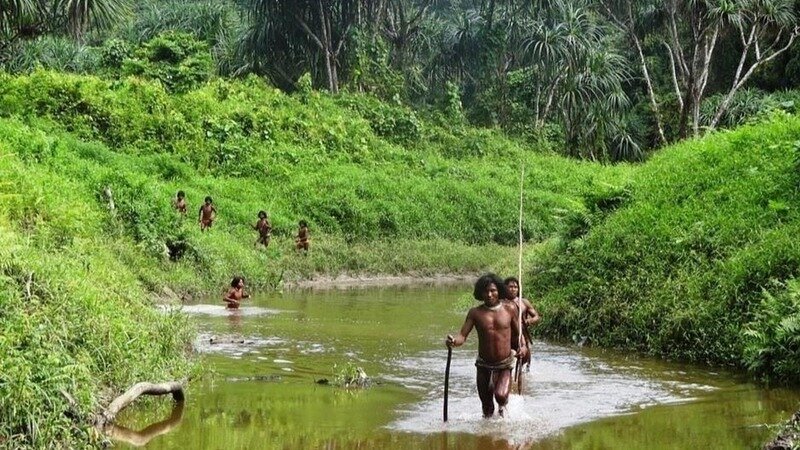
The Shompen, a Particularly Vulnerable Tribal Group of fewer than 300 mostly uncontacted hunter-gatherers who have lived on Great Nicobar for up to 10,000 years, face existential threat from the ₹91,000-crore mega-project. Officials have openly stated they “cannot continue” their traditional forest life and must adopt a modern lifestyle; the project’s scale will destroy their sacred rainforest home, where every tree, plant, leaf and flower holds spiritual value, and expose them to diseases against which they have no immunity.
The project seeks to turn the island into the “Hong Kong of India” through a mega-port, international airport, power plant near Shompen settlements at Galathea, defence base, industrial park, township, tourism zones and further plans for hotels, malls, theme parks, nightclubs and a casino. It will clear more than 130 sq km of the island’s 95% rainforest cover (part of over 244 sq km overall), destroying unique biodiversity that includes 11 endemic mammal species, 32 birds, 7 reptiles and 4 amphibians found nowhere else, along with monitor lizards, crocodiles, macaques, giant turtles, dugongs and dolphins.
Neither the Shompen nor the neighbouring Nicobarese have given free, prior and informed consent. Consent processes have been widely criticised as deceptive or fraudulent, with forest rights under the Forest Rights Act allegedly left unsettled and official certificates later disputed by the Tribal Council. In February 2024, 39 international genocide experts wrote to the President calling the project a “death sentence for the Shompen, tantamount to the international crime of genocide.”
Government claims of no direct displacement and “offsetting” rainforest loss by planting trees in distant North Indian scrublands fail to protect the Shompen’s territory or the island’s irreplaceable ecology. The cumulative impact—massive deforestation, population influx of hundreds of thousands, and irreversible cultural and biological destruction—violates Indian and international law protecting indigenous peoples and their habitats.
Our demands :
1. Legal recognition of the Shompen tribe
Grant full legal recognition and protection to the Shompen as a Particularly Vulnerable Tribal Group (PVTG) of fewer than 300 mostly uncontacted hunter-gatherers who have lived on Great Nicobar for up to 10,000 years. Their traditional forest way of life, where every tree, plant, leaf and flower is sacred, must be safeguarded against forced transition to modern living as claimed by officials during the July 16 Tribal Council meeting.
2. Immediate halt of the mega-project
Immediately stop the entire ₹91,000-crore Great Nicobar Island project (mega-port, international airport, power plant at Galathea, defence base, industrial park, city, tourism zones, and possible AI data centre, hotels, malls, theme parks, nightclubs and casino) that will clear over 130 sq km of the island’s 95% rainforest and devastate the Shompen and Nicobarese who have never given free, prior and informed consent.
3. Investigation into deceptive consent
Order an independent investigation into the process of obtaining “consent,” including the July 16 meeting where the then-Chief Secretary stated the Shompen “cannot continue” their traditional life and must adopt the modern lifestyle brought by the project, and take action against any deceptive or coercive practices that violate Indian and international law.
4. Protection of habitable regions
Strictly protect and expand the Shompen’s ancestral forest habitat so no living beings are harmed, preserve the island’s unique biodiversity (11 endemic mammals, 32 birds, 7 reptiles, 4 amphibians plus monitor lizards, crocodiles, macaques, giant turtles, dugongs and dolphins), and reject false “offsetting” of rainforest loss by planting trees in distant North India.

6
The Issue
KEY ISSUE FOR THE PETITION
The Shompen, a Particularly Vulnerable Tribal Group of fewer than 300 mostly uncontacted hunter-gatherers who have lived on Great Nicobar for up to 10,000 years, face existential threat from the ₹91,000-crore mega-project. Officials have openly stated they “cannot continue” their traditional forest life and must adopt a modern lifestyle; the project’s scale will destroy their sacred rainforest home, where every tree, plant, leaf and flower holds spiritual value, and expose them to diseases against which they have no immunity.
The project seeks to turn the island into the “Hong Kong of India” through a mega-port, international airport, power plant near Shompen settlements at Galathea, defence base, industrial park, township, tourism zones and further plans for hotels, malls, theme parks, nightclubs and a casino. It will clear more than 130 sq km of the island’s 95% rainforest cover (part of over 244 sq km overall), destroying unique biodiversity that includes 11 endemic mammal species, 32 birds, 7 reptiles and 4 amphibians found nowhere else, along with monitor lizards, crocodiles, macaques, giant turtles, dugongs and dolphins.
Neither the Shompen nor the neighbouring Nicobarese have given free, prior and informed consent. Consent processes have been widely criticised as deceptive or fraudulent, with forest rights under the Forest Rights Act allegedly left unsettled and official certificates later disputed by the Tribal Council. In February 2024, 39 international genocide experts wrote to the President calling the project a “death sentence for the Shompen, tantamount to the international crime of genocide.”
Government claims of no direct displacement and “offsetting” rainforest loss by planting trees in distant North Indian scrublands fail to protect the Shompen’s territory or the island’s irreplaceable ecology. The cumulative impact—massive deforestation, population influx of hundreds of thousands, and irreversible cultural and biological destruction—violates Indian and international law protecting indigenous peoples and their habitats.
Our demands :
1. Legal recognition of the Shompen tribe
Grant full legal recognition and protection to the Shompen as a Particularly Vulnerable Tribal Group (PVTG) of fewer than 300 mostly uncontacted hunter-gatherers who have lived on Great Nicobar for up to 10,000 years. Their traditional forest way of life, where every tree, plant, leaf and flower is sacred, must be safeguarded against forced transition to modern living as claimed by officials during the July 16 Tribal Council meeting.
2. Immediate halt of the mega-project
Immediately stop the entire ₹91,000-crore Great Nicobar Island project (mega-port, international airport, power plant at Galathea, defence base, industrial park, city, tourism zones, and possible AI data centre, hotels, malls, theme parks, nightclubs and casino) that will clear over 130 sq km of the island’s 95% rainforest and devastate the Shompen and Nicobarese who have never given free, prior and informed consent.
3. Investigation into deceptive consent
Order an independent investigation into the process of obtaining “consent,” including the July 16 meeting where the then-Chief Secretary stated the Shompen “cannot continue” their traditional life and must adopt the modern lifestyle brought by the project, and take action against any deceptive or coercive practices that violate Indian and international law.
4. Protection of habitable regions
Strictly protect and expand the Shompen’s ancestral forest habitat so no living beings are harmed, preserve the island’s unique biodiversity (11 endemic mammals, 32 birds, 7 reptiles, 4 amphibians plus monitor lizards, crocodiles, macaques, giant turtles, dugongs and dolphins), and reject false “offsetting” of rainforest loss by planting trees in distant North India.
Petition Updates
Share this petition
Petition created on 11 September 2026