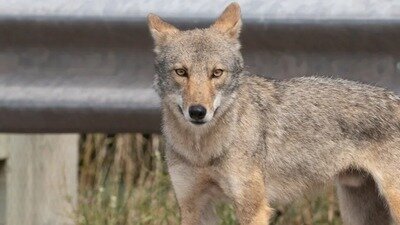
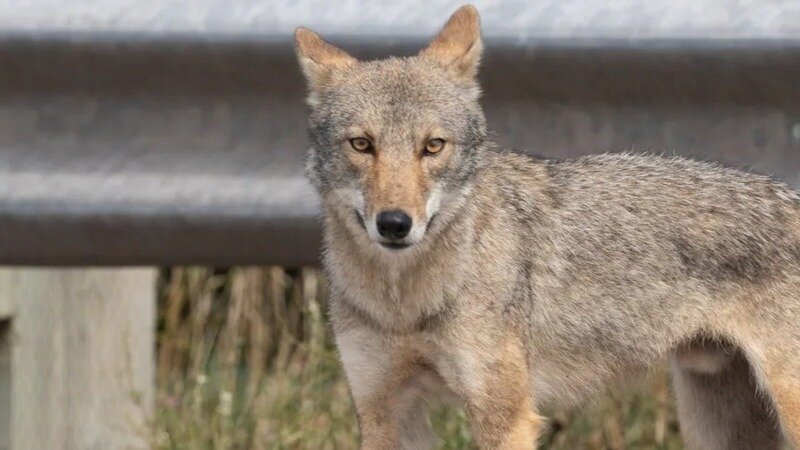
Justice for Brett! Stop the killing of coyotes in Cape Breton Highlands
The Issue
On Saturday, September 26th, Cape Breton Highlands National Park hired a hunter trapper to shoot a random coyote who was approaching staff, after a camper named Alex Radu was bitten Thursday and got nipped on his leg. “While retreating to the cook shelter, the visitor fell and sustained bite wounds to their leg from the coyote. The visitor sustained minor injuries and has since received medical attention.". Alex was hazing, but then ran when the coyote "fly snapped" (clacking their jaws to say "you are bugging me") instead of continuing the hazing and backing off. Alex admitted to the mistake and is very upset by the outcome for the coyote. He was startled by the coyote and ran off without thinking. Alex only hazed the coyote for 10 seconds before running. That is not long enough for hazing to work, and running turns the incident into a game.
According to Coyote Watch Canada, a coyote who does not immediately retreat when hazed has not been hazed before. The hazing needs to be repeated until the coyote leaves. The fly snapping suggests the coyote was already getting annoyed by the hazing, and would have left if the hazing continued. It is frustrating that Parks Canada doesn't seem to recognize this fact and had people walking around with guns to shoot any coyotes who didn't immediately run off. Despite no more incidents, Parks Canada is still patrolling for coyotes.
The coyote was NOT trying to harm or eat Alex Radu. The coyote was just being curious about the hazing and running and accidentally caused a minor injury. This is dispersal time, when coyotes leave their parents for the first time. Brett Coyote would have been acting like a college partier, and would have matured by next year. He merely saw Alex Radu as a new friend. Coyotes are a lot like dogs.
It is even doubtful whether or not a coyote even bit Alex. "In the dark, I could barely see it. But it came right at me".
Alex may have gotten scratched from falling over. According to the resources manager Jared Tomie, "The visitor ran toward the campground’s cook shelter and fell before reaching the shelter. They realized they had a bite on one of their legs once they were inside. The visitor self-administered first aid after the bite and received medical attention the next day."
We are shocked the park shot a coyote instead of banning barbecues, picnics, and camping until the coyote could be properly hazed. https://www.facebook.com/share/p/1GGH3nDxmi/
The park had no clue if the coyote who was shot was the same one who bit. We have named the slain coyote Brett, after Cape Breton. Bob Bancroft, a biologist from Nature Nova Scotia, said a coyote allegedly nipped Alex because he ran, making this into a game of tag. The coyote was likely fed by people. Coyotes are heavily persecuted in Nova Scotia and rarely live longer than two, though their lifespan is the same as a dog. https://www.cbc.ca/news/canada/nova-scotia/coyote-killed-in-cape-breton-highlands-national-park-but-closures-still-in-place-9.7360443
Cape Breton has a broken relationship with the coyotes ever since Taylor Mitchell was killed in 2009. Her death was one of only two fatal coyote bites in all of recorded history. She never wanted animals killed, yet the park leghold trapped, snared, and shot several coyotes in 2009. The culls and bounties after her death caused years of burned relationships between humans and coyotes. These grieving coyotes lost family members in the war and have experienced intergenerational trauma. The only way to heal this wound is to stop killing the coyotes. Cape Breton has just reopened this wound by killing another coyote, destroying yet another coyote family, once again tearing apart the slowly healing relationship between humans and coyotes.
In both the 2023 and 2026 bite incidents the coyotes caused minor bite injuries by accident, out of curiosity and playfulness, not aggression nor were they trying to eat or harm people. Coyotes do not see people as prey anywhere, not even in Cape Breton.
The park admitted the coyotes in every single bite case were being fed by people. People don't just feed one coyote, so killing coyotes is not effective. This is dispersal time, and the coyote shot will quickly be replaced by others. Brett coyote would have moved out on their own. There was no need to shoot. Instead, Brett the coyote could have been relocated to a more appropriate location and hazed. The people feeding them should be banned from the park.
Culling canids is universally condemned by the Global Alliance for Rabies Control.
Please stop all efforts to leghold trap, snare, and shoot coyotes after a bite incident. Bites are always because someone fed the coyotes. It is very unlikely the staff killed the one who bit, but even if they did, that was pointless because people who feed coyotes feed all sorts of animals. The coyotes killed are quickly replaced. This is a natural dispersal time, and the coyotes who bit are likely young and inexperienced animals. Please, instead of more killing, keep the areas closed longer until Coyote Watch Canada can haze and retrain the coyotes.
But even human habituated coyotes require hazing, not bullets.
Cape Breton Highlands National Park holds a special place in my heart, cherished for its breathtaking landscapes and diverse wildlife. However, it is disheartening to witness the park's response to incidents involving coyotes. Recently, a tourist was bitten at MacIntosh Brook on the evening of September 24, 2026, prompting Parks Canada to close several areas as a precaution. While safety is paramount, the park's history of dealing with such incidents raises serious concerns. https://www.facebook.com/share/p/19c4Auy261/
In the past, incidents like these have led to the hunting and killing of coyotes through methods such as shooting, leghold trapping, and snaring. This reactionary approach is not only cruel but also ineffective. Coyotes are transient creatures, often passing through areas temporarily. Removing one coyote does not address the root of the issue—attractants that draw them in. It is only a matter of time before another coyote fills the purportedly vacated territory.
Cape Breton Highlands National Park's approach needs re-evaluation. There are more effective and humane alternatives available, such as improving garbage management to reduce attractants, using non-lethal deterrents, and educating the public about safely sharing space with wildlife. Studies have shown that killing coyotes does not significantly diminish their numbers in the long term, as these resilient animals quickly rebound due to their complex social structures.
By implementing a compassionate and science-based management plan, we can ensure the safety of both visitors and wildlife. It is essential for Parks Canada to lead by example, showing that coexistence is not just a possibility, but a priority.
I urge Parks Canada to halt the killing of coyotes in Cape Breton Highlands National Park. Instead, let's work towards sustainable strategies that protect both our valuable ecosystems and the tourists who visit them.
Sign this petition to demand that Cape Breton Highlands National Park abandons lethal management and adopts humane, long-term wildlife coexistence strategies.
⚠️Update on MacIntosh Brook coyote incident
Parks Canada continues to respond to the September 24 incident involving a visitor who was bitten by a coyote at MacIntosh Brook. The visitor sustained minor injuries and has since received medical attention.
On September 26, Parks Canada staff destroyed a coyote in the MacIntosh Brook area after it repeatedly approached patrolling staff, indicating a loss of natural fear toward humans and behaviour consistent with food conditioning.
Parks Canada staff are not certain this individual was involved in the September 24 incident, and will continue to patrol and monitor the area, assess and address potential food attractants, and install additional wildlife warning signage.
Temporary closures at MacIntosh Brook, Lone Shieling and nearby look-offs remain in place while Parks Canada continues to assess the situation.
Visitors and local residents are asked to respect all closures and signage, never feed wildlife and report concerning wildlife behaviour to Parks Canada staff.
Parks Canada will provide further updates as appropriate.
Temporary closures in Cape Breton Highlands National Park ⚠️
Parks Canada is responding to an incident in which a visitor was bitten by a coyote at MacIntosh Brook on the evening of September 24, 2026. As a precaution while staff assess the situation, the following areas are temporarily closed:
• MacIntosh Brook
• Lone Shieling
• Pull-offs in the surrounding area
Parks Canada staff are actively monitoring the affected area.
Visitors are asked to respect all closures and signage.
Visitors and local community residents are reminded to use caution around wildlife and give animals plenty of space. If you encounter a coyote, do not run. Make yourself appear large, make noise and slowly back away. Never feed wildlife.
Parks Canada will provide updates as more information becomes available.

528
The Issue
On Saturday, September 26th, Cape Breton Highlands National Park hired a hunter trapper to shoot a random coyote who was approaching staff, after a camper named Alex Radu was bitten Thursday and got nipped on his leg. “While retreating to the cook shelter, the visitor fell and sustained bite wounds to their leg from the coyote. The visitor sustained minor injuries and has since received medical attention.". Alex was hazing, but then ran when the coyote "fly snapped" (clacking their jaws to say "you are bugging me") instead of continuing the hazing and backing off. Alex admitted to the mistake and is very upset by the outcome for the coyote. He was startled by the coyote and ran off without thinking. Alex only hazed the coyote for 10 seconds before running. That is not long enough for hazing to work, and running turns the incident into a game.
According to Coyote Watch Canada, a coyote who does not immediately retreat when hazed has not been hazed before. The hazing needs to be repeated until the coyote leaves. The fly snapping suggests the coyote was already getting annoyed by the hazing, and would have left if the hazing continued. It is frustrating that Parks Canada doesn't seem to recognize this fact and had people walking around with guns to shoot any coyotes who didn't immediately run off. Despite no more incidents, Parks Canada is still patrolling for coyotes.
The coyote was NOT trying to harm or eat Alex Radu. The coyote was just being curious about the hazing and running and accidentally caused a minor injury. This is dispersal time, when coyotes leave their parents for the first time. Brett Coyote would have been acting like a college partier, and would have matured by next year. He merely saw Alex Radu as a new friend. Coyotes are a lot like dogs.
It is even doubtful whether or not a coyote even bit Alex. "In the dark, I could barely see it. But it came right at me".
Alex may have gotten scratched from falling over. According to the resources manager Jared Tomie, "The visitor ran toward the campground’s cook shelter and fell before reaching the shelter. They realized they had a bite on one of their legs once they were inside. The visitor self-administered first aid after the bite and received medical attention the next day."
We are shocked the park shot a coyote instead of banning barbecues, picnics, and camping until the coyote could be properly hazed. https://www.facebook.com/share/p/1GGH3nDxmi/
The park had no clue if the coyote who was shot was the same one who bit. We have named the slain coyote Brett, after Cape Breton. Bob Bancroft, a biologist from Nature Nova Scotia, said a coyote allegedly nipped Alex because he ran, making this into a game of tag. The coyote was likely fed by people. Coyotes are heavily persecuted in Nova Scotia and rarely live longer than two, though their lifespan is the same as a dog. https://www.cbc.ca/news/canada/nova-scotia/coyote-killed-in-cape-breton-highlands-national-park-but-closures-still-in-place-9.7360443
Cape Breton has a broken relationship with the coyotes ever since Taylor Mitchell was killed in 2009. Her death was one of only two fatal coyote bites in all of recorded history. She never wanted animals killed, yet the park leghold trapped, snared, and shot several coyotes in 2009. The culls and bounties after her death caused years of burned relationships between humans and coyotes. These grieving coyotes lost family members in the war and have experienced intergenerational trauma. The only way to heal this wound is to stop killing the coyotes. Cape Breton has just reopened this wound by killing another coyote, destroying yet another coyote family, once again tearing apart the slowly healing relationship between humans and coyotes.
In both the 2023 and 2026 bite incidents the coyotes caused minor bite injuries by accident, out of curiosity and playfulness, not aggression nor were they trying to eat or harm people. Coyotes do not see people as prey anywhere, not even in Cape Breton.
The park admitted the coyotes in every single bite case were being fed by people. People don't just feed one coyote, so killing coyotes is not effective. This is dispersal time, and the coyote shot will quickly be replaced by others. Brett coyote would have moved out on their own. There was no need to shoot. Instead, Brett the coyote could have been relocated to a more appropriate location and hazed. The people feeding them should be banned from the park.
Culling canids is universally condemned by the Global Alliance for Rabies Control.
Please stop all efforts to leghold trap, snare, and shoot coyotes after a bite incident. Bites are always because someone fed the coyotes. It is very unlikely the staff killed the one who bit, but even if they did, that was pointless because people who feed coyotes feed all sorts of animals. The coyotes killed are quickly replaced. This is a natural dispersal time, and the coyotes who bit are likely young and inexperienced animals. Please, instead of more killing, keep the areas closed longer until Coyote Watch Canada can haze and retrain the coyotes.
But even human habituated coyotes require hazing, not bullets.
Cape Breton Highlands National Park holds a special place in my heart, cherished for its breathtaking landscapes and diverse wildlife. However, it is disheartening to witness the park's response to incidents involving coyotes. Recently, a tourist was bitten at MacIntosh Brook on the evening of September 24, 2026, prompting Parks Canada to close several areas as a precaution. While safety is paramount, the park's history of dealing with such incidents raises serious concerns. https://www.facebook.com/share/p/19c4Auy261/
In the past, incidents like these have led to the hunting and killing of coyotes through methods such as shooting, leghold trapping, and snaring. This reactionary approach is not only cruel but also ineffective. Coyotes are transient creatures, often passing through areas temporarily. Removing one coyote does not address the root of the issue—attractants that draw them in. It is only a matter of time before another coyote fills the purportedly vacated territory.
Cape Breton Highlands National Park's approach needs re-evaluation. There are more effective and humane alternatives available, such as improving garbage management to reduce attractants, using non-lethal deterrents, and educating the public about safely sharing space with wildlife. Studies have shown that killing coyotes does not significantly diminish their numbers in the long term, as these resilient animals quickly rebound due to their complex social structures.
By implementing a compassionate and science-based management plan, we can ensure the safety of both visitors and wildlife. It is essential for Parks Canada to lead by example, showing that coexistence is not just a possibility, but a priority.
I urge Parks Canada to halt the killing of coyotes in Cape Breton Highlands National Park. Instead, let's work towards sustainable strategies that protect both our valuable ecosystems and the tourists who visit them.
Sign this petition to demand that Cape Breton Highlands National Park abandons lethal management and adopts humane, long-term wildlife coexistence strategies.
⚠️Update on MacIntosh Brook coyote incident
Parks Canada continues to respond to the September 24 incident involving a visitor who was bitten by a coyote at MacIntosh Brook. The visitor sustained minor injuries and has since received medical attention.
On September 26, Parks Canada staff destroyed a coyote in the MacIntosh Brook area after it repeatedly approached patrolling staff, indicating a loss of natural fear toward humans and behaviour consistent with food conditioning.
Parks Canada staff are not certain this individual was involved in the September 24 incident, and will continue to patrol and monitor the area, assess and address potential food attractants, and install additional wildlife warning signage.
Temporary closures at MacIntosh Brook, Lone Shieling and nearby look-offs remain in place while Parks Canada continues to assess the situation.
Visitors and local residents are asked to respect all closures and signage, never feed wildlife and report concerning wildlife behaviour to Parks Canada staff.
Parks Canada will provide further updates as appropriate.
Temporary closures in Cape Breton Highlands National Park ⚠️
Parks Canada is responding to an incident in which a visitor was bitten by a coyote at MacIntosh Brook on the evening of September 24, 2026. As a precaution while staff assess the situation, the following areas are temporarily closed:
• MacIntosh Brook
• Lone Shieling
• Pull-offs in the surrounding area
Parks Canada staff are actively monitoring the affected area.
Visitors are asked to respect all closures and signage.
Visitors and local community residents are reminded to use caution around wildlife and give animals plenty of space. If you encounter a coyote, do not run. Make yourself appear large, make noise and slowly back away. Never feed wildlife.
Parks Canada will provide updates as more information becomes available.
The Decision Makers

Supporter Voices
Petition Updates
Share this petition
Petition created on September 26, 2026