
- I took my eyes off of this petition for awhile, focusing on my newest petition . . . which involves the exoneration of my own rape case and that of two other women . . .
- https://www.change.org/Justice4AricaWaters2021
***PLEASE SEND LETTERS OF ENCOURAGEMENT TO STEVE DONZIGER: (address is below)
. . .and low and behold . . . this one has taken off! This is so reassuring to me, that people actually DO CARE ABOUT THE AMAZON INDIANS and the JUSTICE FOR STEVE DONZIGER!
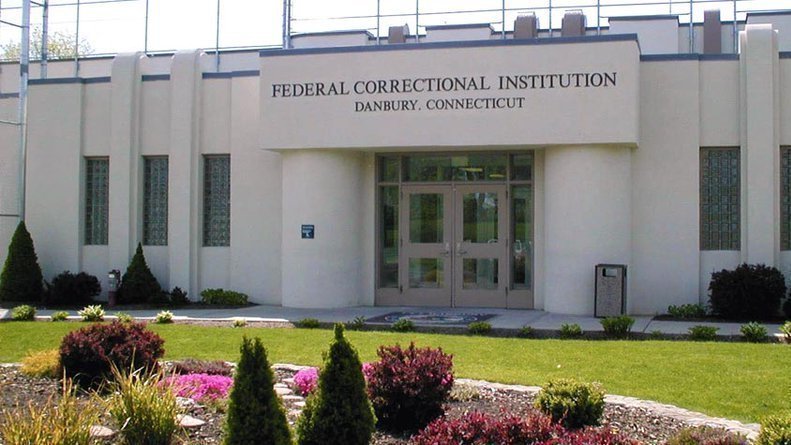
Sadly, I have just found out that he is in Federal Prison . . . and would appreciate receiving encouraging letters!
- "My friend, unjustly jailed human rights lawyer @SDonziger is being held in federal prison for his work to make Chevron clean up the Amazon.
- Pls send letters of support: Steven Donziger Register No: 87103-054 Federal Correctional Institution Pembroke Station Danbury, CT 06811" -Steve Donziger Team via Twitter
- Below you will find an article that is somewhat neutral in this situation. I thought it was well researched. Although the author of this article failed to mention that one of the female judges actually had prior interest in Chevron. Seems like a conflict of interest to me!
- Please read the second listed article FULLY, as it provides more details about the apparent judicial corruption behind all of this!
- All I can say is the judicial system can be quite messy and doesn't always vote in favor of the victims. In my opinion, in Steve Donziger's case, he gave this case his ALL but the OIL GIANT appears to have won at this point. May the truth come out and may evil bend it's ugly head down in shame!
- #FREESTEVEDONZIGER #AMAZONINDIANS
******************************************************************************
#1 ARTICLE: (2ND BEST ARTICLE OF THE TWO)
By Joe Nocera
Published Nov. 6, 2021Updated Nov. 9, 2021, 8:40 a.m. ET
"Ten days ago, Steven Donziger began a six-month prison sentence at a minimum-security facility in Danbury, Conn.
Most of the time, when DealBook writes about someone going to prison, it is for insider trading, or securities fraud.
The Donziger affair is different. It is in some ways both a more important and more instructive case, which is why it has become the subject of such fascination for Big Oil, Wall Street, climate activists, politicians — and even among TikTokers.
Mr. Donziger was the star lawyer who spent decades suing first Texaco and then Chevron (after Chevron bought Texaco in 2001) for damaging the environment and despoiling the Amazon rainforest in Ecuador, harming the tribespeople who lived there. He was profiled in numerous publications and was the central character in a 2009 documentary, “Crude.” Almost always he was characterized as a courageous David taking on the evil Goliath.
Finally, in 2011, an Ecuadorean court ruled in favor of Mr. Donziger’s clients, and awarded them $18 billion (later reduced to $9.5 billion). Chevron had long argued that it was not responsible for any waste left behind — in part because Texaco had conducted a $40 million cleanup effort in the early 1990s, and the government of Ecuador had deemed that to be sufficient. Determined to avoid paying a judgment the company felt was unwarranted, it began digging into Mr. Donziger’s methods.
It got a court order forcing the director of the documentary, Joe Berlinger, to turn over hundreds of hours of footage from the outtakes about Mr. Donziger’s legal approach. “We have concluded that we need to do more, politically, to control the court, to pressure the court,” Mr. Donziger said in one especially damning clip. “We believe they make decisions based on who they fear the most, not based on what the laws should dictate.” It uncovered evidence that the plaintiffs had ghostwritten an expert report the court relied on. A witness said that Mr. Donziger’s team had bribed the judge. Chevron argued that the Ecuadorean judgment should not be enforced because it was obtained through illegal tactics.
So Chevron turned the tables on Mr. Donziger and brought a RICO case against him in the United States. And in 2014, Judge Lewis A. Kaplan, of the United States District Court in Manhattan, ruled in Chevron’s favor. In a scorching 485-page decision, he wrote that Mr. Donziger had foisted “fraudulent evidence on an Ecuadorean court,” and accused Mr. Donziger and “his co-conspirators” of attempting to use the court to extort money from Chevron. Therefore, he said, Chevron did not have to pay the $9.5 billion. Courts in other countries where Chevron does business came to the same conclusion. (Mr. Donziger has always denied the bribery allegation, or that he did anything wrong in handling the case.)
By any normal standard, this should have been the end of the case. After all, what was left to litigate? But it wasn’t the end — not even close. In 2018, after Judge Kaplan’s judgment had finally been affirmed, the company brought another case against Mr. Donziger. Among other things, it wanted him to turn over his computer and other electronic devices. Judge Kaplan agreed. But Mr. Donziger refused to comply, saying it would give the oil company “backdoor access to confidential attorney-client communications.”
In 2019, the judge took the extraordinary measure of bringing in a private law firm to prosecute Mr. Donziger for criminal contempt of court. This case was presided over by another district court judge, Loretta A. Preska, who quickly ordered that he be placed under house arrest and wear an electronic ankle monitor. After a short trial earlier this year, she found Mr. Donziger guilty, and sentenced him to the six months he is now serving. He was also disbarred.
Along the way, something surprising has happened: Outside the courtroom, it was as if the ghostwritten report and the alleged bribe of the Ecuadorean judge had never happened. Mr. Donziger’s victory in Ecuador was praised as legitimate, and he was widely viewed by progressives as an environmental hero. Sting, the musician, helped raise money for his defense. Greta Thunberg offered her support. Representative Alexandria Ocasio-Cortez and several of her Democratic colleagues sent a letter to Attorney General Merrick Garland, asking him to review the case. The Harvard Law professor Charles Nesson rallied to his cause. Campaigns have been started to #FREEDONZIGER. A group of experts from the United Nations said in a report that his pretrial detention was “arbitrary” and therefore illegal. And on, and on. To them, this was a classic example of a fossil fuel company using its might to punish someone brave enough to stand up to it. , , , , , "-dealbook
https://www.nytimes.com/2021/11/06/business/dealbook/steven-donziger.html
*******************************************************************************
#2 ARTICLE: (BEST ARTICLE OF THE TWO)
Steven Donziger Was Imprisoned by the 1 Percent’s Favorite Judge
By
Branko Marcetic
"Loretta Preska, the judge who did Chevron’s bidding in the case against activist Steven Donziger, has a history of conflicts of interest and pro-corporate rulings. And she's not alone — corporate influence and conflicts of interest are rampant in the courts.
Last week, Chevron finally secured judicial retaliation against Steven Donziger, the human rights lawyer who helped secure a historic $9.5 billion judgment against the company ten years earlier over their pollution of the Amazon rainforest in Ecuador. After an unprecedented 787 days in pretrial home detention, Donziger was sentenced last Friday to a maximum six months in prison for contempt of court by Loretta Preska, judge for the Southern District of New York, who said that “only the proverbial two-by-four between the eyes will instill in him any respect for the law.”
Preska’s conduct had been a focal point of the trial ever since she was, against local rules, handpicked to oversee the case by judge Lewis A. Kaplan, the Chevron-invested former tobacco industry lawyer who had blocked the judgement against the company and launched the contempt case. Preska denied Donziger’s request for a jury trial, barred Zoom access to the trial for the public, and consistently ruled against Donziger’s legal team. She refused to hear from Donziger’s lawyers about why he had drawn the contempt charge by not turning over his laptop and phone — namely, to protect attorney-client privilege — and at one point sat and read newspapers while presiding over the proceedings.
Critics pointed to Preska’s seat on the advisory board of the New York chapter of the Federalist Society, the right-wing judicial lobby of which Chevron is a donor. But even before then, Preska’s history of business ties and pro-corporate rulings made her an ideal pick to carry out the company’s reprisal on Kaplan’s behalf.
Confluence of Interest
The Donziger case isn’t the first time those connections created a conflict of interest for the judge. Back in 1995, three years after she had been approved for the court, Preska presided over a copyright case involving the Twin Cities–based West Publishing Company, despite her and her husbands’ connections to the firm. (Preska’s husband, Thomas Kavaler, is a nearly forty-year veteran of and partner at Cahill Gordon & Reindel, a top corporate law firm that specializes in the world of finance). It was only when pressed by one of the litigants, forcing her to admit relationships with two West employees, including a lawyer who was key to the case, that she recused herself.
Seventeen years later, Preska presided over the case of “hacktivist” Jeremy Hammond who was under trial for hacking into various law enforcement agencies and private security firms, including Strategic Forecasting Limited, or Stratfor, which counted the Pentagon and Department of Homeland Security among its clients.
As the hacking group Anonymous pointed out, and noted by almost no news outlets besides the likes of RT, Rolling Stone, or journalists like Chris Hedges, Preska’s husband was one of the Stratfor customers whose data had been hacked, and who would have been eligible for a payout from the multimillion-dollar class-action suit against the company that resulted. Sratfor had also spied on the Occupy Wall Street movement, a movement in direct opposition to Preska’s husband’s client base, and more than twenty of his firm’s clients had been caught up in the hack, including Merrill Lynch.
Despite this clear conflict of interest — and despite telling senators at her confirmation hearing decades before that “through my husband, I might be thought to have an indirect financial interest in the profits of the law firm of Cahill Gordon & Reindel” — Preska refused to recuse herself from the case. Doing so, she said, “would only encourage supporters of this defendant — or other defendants — to allege unsubstantiated conflicts of interest against any of my brothers and sisters of the Court until no judge remained qualified to hear his case.”
With echoes of the Donziger case, Preska denied Hammond bail, leaving him in federal prison for a year, much of it spent in solitary confinement, before sentencing him to the maximum ten years in prison, citing a “need for adequate public deterrence.”"-jacobinmag