The Fugitive Slave Acts - Petitioned Hundreds of Thousands of Times

Hello petition signers, I am providing some motivation and encouragement today. By providing consistent documentation, wide-spread education, and collective pressure, we can continue doing good work. "Give me liberty, or give me death!" - Patrick Henry on March 23, 1775.
Liberty refers to the state of being free from oppressive restrictions or control by authority on one's way of life, behavior, or political views. It is the power to act, speak, and live as one pleases, balanced by the rights of others and the law. Negative liberty is freedom from interference. This protects individuals from outside forces, such as government overreach, physical restraint, or unwarranted censorship. Positive liberty is the freedom to achieve one's potential. Emphasizing having the capacity, agency, and resources (such as education and equal opportunity) to pursue personal goals within society. Civil liberties are the legal guaranteed rights that protect individuals from government action (e.g. freedom of speech, religion, and press). Political liberty is the autonomy to make individual choices regarding one's own body, family, and personal lifestyle.
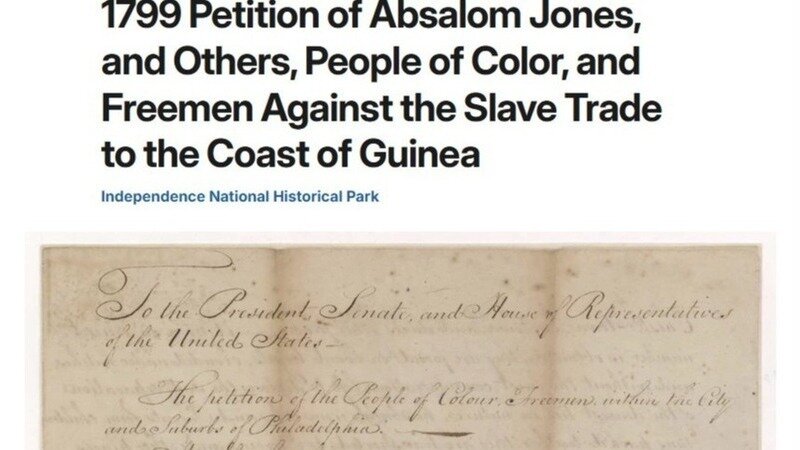
The Fugitive Slave Act of 1793, signed by George Washington, was petitioned by Reverend Absalom Jones and 70 other free-Black men from Philadelphia. They requested the end of the International Slave Trade, Eventual Emancipation for enslaved colored people in the U.S. and the protections for free-Blacks from being kidnapped. They were successful in sparking debate, but was ultimately denied.
Throughout the outcries during the 1830s, hundreds of thousands of individual petitions were submitted to the House of Representatives, all tabled or denied under the "gag rule". John Quincy Adams led a multi-year campaign fighting against proslavers, arguing it violated the First Amendment right to petition. He was able to successfully appeal the "gag rule" in 1844.
Two decades later, in New York, after the Fugitive Slave Act of 1850, the Woman's Loyal Nationalist League began a petition drive. From 1863-1864, they circulated multiple petitions in their local communities, churches, and towns demanding the full abolishing of slavery. Led by Elizabeth Casy Staton and Susan B. Anthony, the league successfully (along with other outside-forces such as "Narrative of the Life of Frederick Douglass an American Slave".) pressured Congress to pass the Thirteenth Amendment.